Seated on plastic chairs, women over sixty scroll through their phones, pausing on the same headline: “homemade collagen trick” that claims to upset dermatologists. One woman, silver bob framed by red lipstick, zooms in and mutters that if it works, she’s done paying 120 euros for a cream. Outside, pharmacy windows shout promises of anti-age and collagen boost. Inside bathrooms, shelves sag with jars that promised everything and delivered lighter wallets. The pushback is quieter now—spoons, oils, a kitchen bowl, and a small mirror ritual.
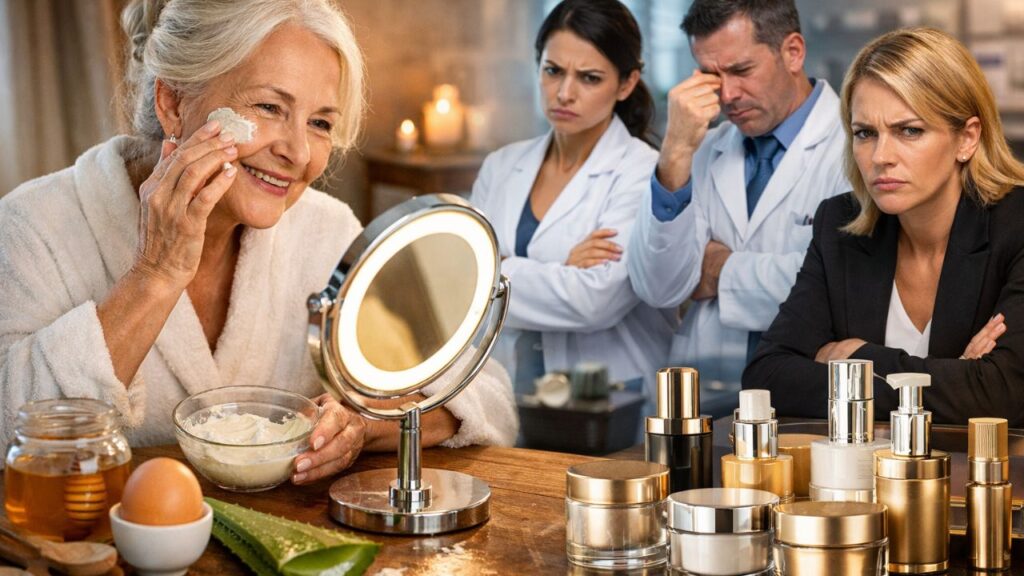
Behind this gentle shift, a question keeps returning: what if the softest answer to wrinkles after sixty was already at home?
Why the “kitchen facial” suddenly caught fire
Like many modern movements, it began with a grainy bathroom video. A retired nurse in her sixties massaged her face with a homemade blend, laughing at a luxury jar left untouched behind her. The clip spread fast, especially among women tired of miracles in pretty packaging. The routine looked almost suspiciously simple—no syringes, no lasers, no clinic lights—just a slow massage with a thick, glossy mix, repeated every other evening. It didn’t shout “anti-age”; it whispered gentle self-care.
 Goodbye steaming : the best way to cook broccoli to keep nutrients plus easy recipes to try
Across France, Italy, and the UK, women over sixty shared unfiltered selfies. Not perfection—just slightly fuller cheeks, softer lines, and that “well-rested look”. Comments felt quietly defiant: done paying for marketing, choosing their own terms. Professionals pushed back, warning of allergies, false hopes, and the limits of skin science. They weren’t entirely wrong. Collagen doesn’t appear by stirring a bowl. Yet the deeper shift was about taking power back, not chasing magic.
The well-known kitchen ritual, explained simply
The circulating method is straightforward: in a clean bowl, mix cold-pressed oil (often olive or sweet almond), a small amount of aloe vera gel, and a couple of drops of vitamin E oil. Some add honey or gelatine, believing it feeds collagen from the outside. The texture is rich and slightly sticky, like a sleeping mask. Applied to clean, damp skin, it’s warmed between the hands and pressed onto the face, neck, and chest with slow, upward motions.
The emphasis isn’t the recipe alone but the application ritual: five to ten minutes of calm, almost meditative massage. One woman in Lyon, sixty-seven, uses organic olive oil and pharmacy aloe. She stopped a 150-euro cream and noticed not a dramatic lift, but a quiet return of volume and a softer eye area. This blend doesn’t rebuild collagen like medical devices. What it supports is the skin environment—hydration, barrier comfort, and reduced micro-inflammation.
Massage matters. Light pressure improves local blood flow, delivering oxygen and nutrients to cells that produce collagen and elastin. Repeated gentle stretching can change how skin rests on muscles. The result isn’t “anti-age” so much as pro-comfort skin: lines less etched, features less collapsed by evening.
Doing it safely, without harming skin or trust
The version that upsets both brands and experts sits between tradition and rebellion. In the evening, cleanse gently and leave skin slightly damp. In your palm, mix a teaspoon of gentle oil, half a teaspoon of pure aloe vera gel, and one or two drops of vitamin E or rosehip oil. Press the blend in with flat hands, then massage from the center outward—nose to temples, chin to ears, chest to jaw—three passes per area. After five to seven minutes, blot excess. Consistency matters more than complexity.
The real risk is excess. Too much oil can clog pores; strong essential oils may burn; honey doesn’t suit everyone; and gelatine doesn’t turn into collagen—the body must make that itself. Missing nights is normal. Switching oils is normal. Listening to redness or itchiness is essential. The only mistake is pushing through discomfort because a video promised ten years gone overnight.
- Patch test first, especially with reactive or rosacea-prone skin.
- Keep massage gentle if using medical treatments like retinoids or peels.
- Never skip SPF; sunlight remains collagen’s main enemy.
- Mix fresh each time to limit bacteria and oxidation.
- Consult a professional for persistent redness or burning.
Wrinkles, choice, and the quiet power of refusal
Something generational is unfolding in these bowls of oil and aloe. After decades of being told to fight age, many women are choosing softness and comfort. Wrinkles haven’t vanished, and they won’t. What’s changed is the relationship with them. Collagen is shaped by hormones, sun, sleep, and genetics; a kitchen ritual won’t erase deep furrows. Still, reclaiming the ritual changes the story—from buying acceptance to choosing care.
In harsh mirror moments, this routine doesn’t fix life. It offers a pause: ingredients understood, gestures chosen, a pace that belongs to you. As trends adapt and science catches up on massage and barrier support, the real question remains who has the final word on your face—the slogan, the white coat, or the quiet conversation between your hands and your skin.
Key takeaways for readers
- Simple home ritual: a gentle oil and aloe mix offers an accessible alternative to costly creams after sixty.
- Indirect collagen support: hydration, massage, and calmer barrier explain what the ritual can—and cannot—do.
- Safety framework: testing, gentle technique, SPF, and professional advice reduce irritation and disappointment.