
The cardboard box felt heavier than Max expected. Inside were old action movies, a handful of early-2000s rom-coms, and that one indie film nobody ever liked except him. He had pulled the box from the back of his closet after years of pretending it wasn’t there. DVDs belonged to a different era, he thought. Streaming had replaced everything — even the simple ritual of standing in front of a shelf and choosing a movie by touch.
So he did what many people do when clutter and guilt collide. He wiped off the dust, sealed the box with tape, and dropped it at the charity shop down the street. A small good deed, quickly forgotten.
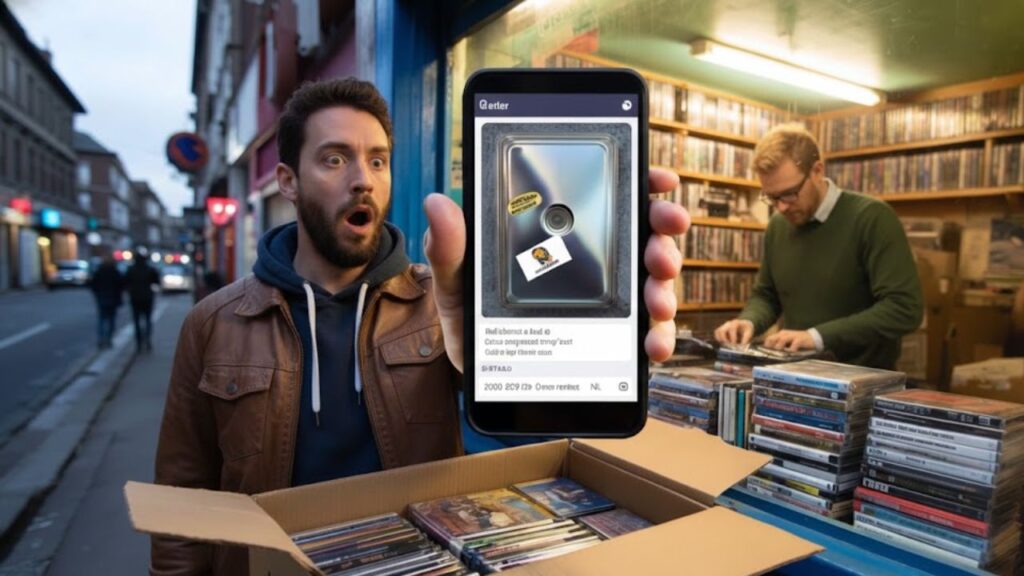
Three weeks later, half-awake and scrolling on his phone, Max froze. A rare collector’s edition DVD he had donated was now listed online — priced at five times what he originally paid.

When forgotten DVDs quietly become collectibles
That evening, Max zoomed in on the listing photo. He recognized the dented corner, the faded sticker from a video store that had closed years ago. The description read: “Vintage steelbook – extremely rare, highly sought-after edition.” The price: 120 euros. He had given away the entire box without even opening it.

He posted a short rant on social media. Replies poured in. Friends shared similar experiences — a donated vinyl spotted in a boutique, a childhood game console rebranded as “retro gaming gold.” Acts of generosity transformed into someone else’s resale opportunity.
The emotion wasn’t pure anger. It was a strange mix of feeling naive and strangely disconnected from his own memories.
A good deed that took an unexpected turn
The charity shop sat between a bakery and a nail salon. Max remembered walking in, placing the box on the floor, signing a quick form. The volunteer thanked him and mentioned they would “sort items by quality.” He imagined students finding cheap movies or parents picking up cartoons for quiet Sunday mornings.
Weeks later, a friend sent him a link. Same city. Same charity mentioned in the listing as a “source for hidden gems.” The seller proudly described hunting for “undervalued media” and curating it.
Max clicked through the seller’s profile. Dozens of DVDs appeared — many marked with the same charity stamp — resold at three or even ten times the original price. A small resale operation built on other people’s donations.
Why physical media is fading — and gaining value at the same time
This small story reflects a modern contradiction. Physical media is disappearing from everyday life, yet its value is rising in niche markets. The rarer the DVD, the more streaming ignores it, the more collectors chase it. Limited editions, director’s cuts, region-locked releases that never reached platforms quietly increase in price.
Donors live in a different mindset. To them, DVDs feel disposable. To collectors, they are the new vinyl. Two realities collide on the same dusty shelf.
What bothered Max most wasn’t the money. It was the feeling that his gesture had been repurposed into a quick flip — far removed from the charitable intent he had in mind.

Decluttering without giving away hidden value
One simple habit could have changed everything for Max: taking one extra hour before donating. Not to hoard, not to obsess — just to check. A quick phone search can reveal whether a strange import or box set has become valuable.
Search the exact title along with terms like “collector’s edition,” “steelbook,” “out of print,” “OOP,” or an edition number. Always look at recent sold prices, not unrealistic listings. The truth usually sits somewhere in between.
If something is worth more than a casual expense, you have options. Sell it and donate the money. Give it directly to someone who will treasure it. That short pause turns an automatic donation into a thoughtful one.
The mental shortcut that makes us lose value
Most donations happen in a rush — between errands, with a car full of things. Items are unloaded, forms signed, and the moment passes. The box becomes someone else’s responsibility, or someone else’s business idea.
Once we label something as “clutter,” our brain stops seeing its value. That’s how rare games end up in cardboard boxes and special DVDs sit beside broken cables. It’s not carelessness — it’s fatigue.
The goal isn’t to inspect everything. It’s to recognize categories that often hide value: out-of-print media, special editions, imports, complete series. That’s where overlooked worth tends to sit.
A simple way to stay in control
- Scan: Look up unusual editions, box sets, and foreign releases.
- Sort: Create three piles — keep, donate, resell-to-donate-money.
- Decide: Set a value limit so you don’t overthink every item.
- Inform: Let charities know when something is genuinely valuable.
- Accept: Once you give intentionally, let go — even if it’s resold.
Between generosity, regret, and the value of memory
What stayed with Max wasn’t the 120-euro DVD. It was the blurred line between sharing and feeling taken advantage of. He wanted his movies to live on in living rooms, not travel in padded envelopes labeled “collector gold.”
The experience changed how he looked at the objects still stacked at home. We rarely consider what our belongings are worth — emotionally or financially. The market sees scarcity and demand. Memories don’t always survive that translation.
Somewhere between generosity and regret, there is a way to give that doesn’t feel blind. A way to pause just long enough to choose who benefits — and then truly let go.
The next time you stand at a charity shop door holding a box of “junk,” you might stop for a moment. Not to keep it — but to ask one quiet question: who do you really want this value to reach?
 Goodbye Hair Dyes: The Natural Grey Coverage Movement Making Youthful Hair Look Effortless Again
| Key point | Detail | Value for the reader |
|---|---|---|
| Scan before you donate | Look up rare editions, box sets, imports, and out-of-print DVDs online | Avoid giving away items that could fund bigger projects or targeted donations |
| Set a simple rule | Define a price threshold where below you donate, above you resell or gift intentionally | Reduces decision fatigue and guilt while decluttering faster |
| Choose where value goes | Decide if the gain should go to a charity, a loved one, or your own budget | Transforms random decluttering into a conscious, satisfying act |
