
The first silver lines along her parting looked unforgiving under the bathroom light, as if they had been traced with a dull pencil. Her hand moved toward the box dye under the sink, then hesitated. She remembered the itchy scalp, the sharp chemical smell, and the towels ruined by dark stains. Instead, she picked up her phone and typed a phrase countless people search every night: natural gray coverage. Most results felt either confusing or overly complex, somewhere between folklore and science. Then one simple recipe kept appearing, quietly shared like a trusted secret.
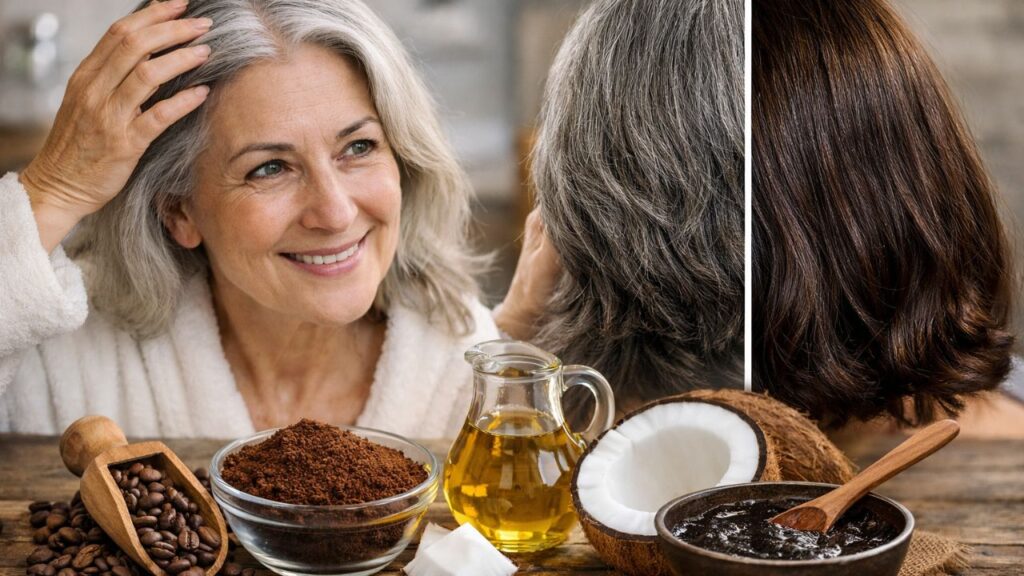
Why Gray Hair Appears Earlier Than Expected
You often notice gray hair first in unplanned moments. A candid photo in a WhatsApp group. Harsh office lighting near the coffee machine. The hair at your temples looks lighter, almost see-through. You laugh it off, but the thought lingers. What was once linked to later life is now showing up in people in their late twenties and early thirties. Chronic stress, poor sleep habits, processed diets, and urban pollution all play a role. Hair follicles lose melanin sooner, and pale strands appear like quiet reminders of pressure and pace.
Dermatologists are seeing this shift clearly. One London trichologist tracks how often patients say, “I’m too young for this.” Over five years, cases of premature graying under 35 have nearly doubled. She points to stress hormones, crash dieting, late-night scrolling, and fast lunches as daily contributors. While some proudly embrace silver hair, others struggle with how it changes first impressions at work or school. It’s not about vanity. It’s about identity, perceived age, and self-confidence.

Gray hair itself isn’t unhealthy. It signals that melanocytes, the cells producing pigment, are slowing down. Conventional dyes simply mask this by coating the hair, which is why roots reappear so quickly. Plant-based methods work differently. They gently stain the outer layer, offering softer blending with kinder ingredients. The goal isn’t reversal. It’s learning to work with your hair instead of battling it every few weeks.

The Simple Two-Ingredient Homemade Dye
The recipe shared in kitchens and group chats is surprisingly basic: ground coffee and conditioner. Not instant coffee, but strong, dark grounds that leave marks on your mug. Mixed with a gentle conditioner, it forms a smooth, cocoa-colored paste. You brew a very strong coffee, let it cool, then mix two to three tablespoons of used grounds with four tablespoons of plain conditioner and a little liquid coffee. The pigment clings to lighter, more porous gray strands, acting like a natural tint.
People treat it more like a hair mask than a dye. Hair is clean and damp, sectioned carefully. The mixture is applied from roots to ends, focusing on the temples, parting, and crown. The scent is comforting, like a café at home. Once coated, hair is twisted into a loose bun and covered. The wait is longer than chemical dye, usually 45 to 60 minutes. Rinsing takes patience, using lukewarm water until mostly clear.
 Chair-based hip routine after 60 builds strength better than squats and supports stair climbing
The result isn’t jet black or salon-perfect. Instead, gray strands soften into warm, coffee-toned highlights. This method works best on dark blond to medium brown hair. On black hair, it adds sheen and reduces contrast. On very light blond, it may appear caramel or slightly copper. Dry or porous hair often absorbs more color, so repeating weekly for a few weeks can deepen the effect. Most people then switch to a rhythm that fits real life.
How This Small Ritual Changes Daily Life
On paper, it’s just coffee and conditioner. In real life, it changes how you relate to your reflection. Instead of rushing into harsh dyes, you have a low-pressure option at home. On busy weeks, you skip it without guilt. On quiet Sundays, you mix the bowl and claim an hour for yourself. The effect is subtle, but the ritual feels grounding. It shifts focus from hiding flaws to choosing how you show up.
As gray blends more gently, attention moves away from individual strands and back to your face. Friends might simply say you look rested. Some people later choose to go fully gray, others keep this as a middle ground. The method isn’t about proving anything. It’s a tool. Practically, it saves money, reduces chemical exposure, and cuts down on waste. Personally, it offers control and calm. With a towel over your shoulders and the smell of coffee nearby, you’re not fighting time. You’re meeting it halfway.
 Daily exercises for women over 55 tighten arm flab faster and improve shoulder definition safely
Practical Details Readers Care About
- Exact mixing ratio: Combine 2–3 tablespoons of used coffee grounds with 4 tablespoons of plain conditioner and 2–3 tablespoons of very strong, cooled coffee until thick enough not to drip.
- Best hair types: Most effective on dark blond to dark brown hair with scattered gray. On black hair, it softens contrast. On very light or bleached hair, it may turn warm caramel.
- How often to apply: Start once weekly for 3–4 weeks, then reduce to every 2–3 weeks or before important events.
- Protection and cleanup: Use old towels and clothing, and rinse surfaces promptly, as coffee can stain light fabrics and grout.
