Hip strength is one of the most overlooked factors influencing how well we age. With nearly four decades of experience helping older adults stay active, it’s clear that hip mobility and strength are often underestimated. As the years pass, building and maintaining strong, mobile hips delivers enormous benefits for daily movement and independence.
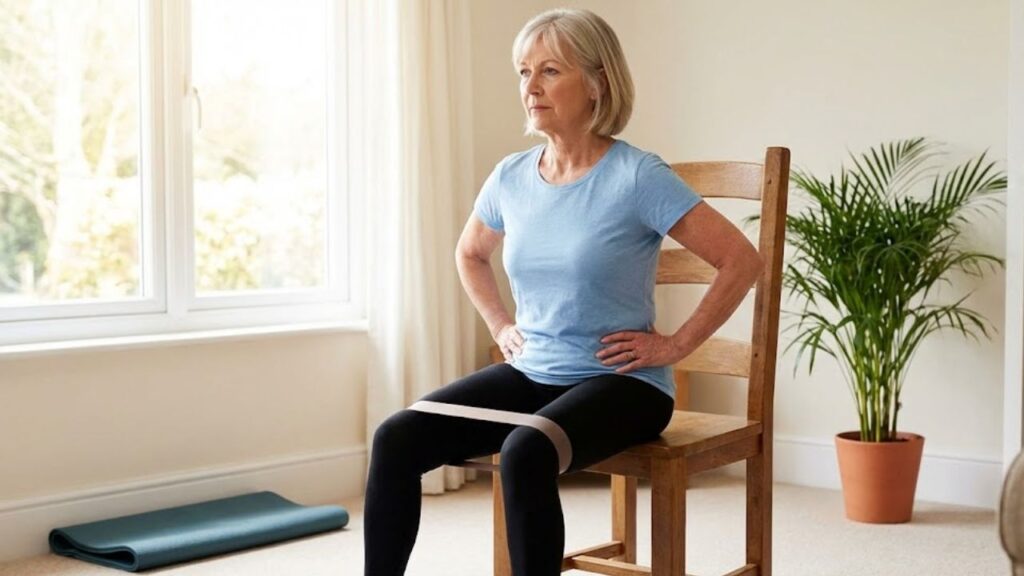
The encouraging part is that improving hip strength doesn’t require a gym, equipment, or even standing up. This 8-minute chair-based routine focuses on the muscles that naturally weaken over time—and it can be done comfortably at home.
How Weak Hips Limit Everyday Movement
Across years of training experience, the same patterns appear repeatedly. The hips gradually become tight, weak, and restricted, often without noticeable warning signs until everyday tasks start feeling harder.
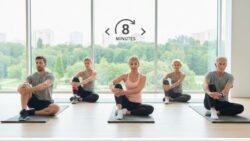 8-minute seated routine after 60 strengthens hips better than squats for safer daily movement
Simple actions begin to change. Getting out of a car feels awkward. Instead of stepping out naturally, both legs move together. Putting on socks or shoes turns into a challenge, often requiring sitting and lifting the foot onto the opposite knee. Stairs become more demanding, not just because of the knees, but because the hips no longer generate sufficient power.

This decline usually stems from three issues happening at the same time. First, front hip muscles shorten and tighten due to prolonged sitting. Second, the glute muscles weaken from lack of proper use. Third, the smaller muscles responsible for hip rotation lose both strength and flexibility.
Together, these changes create ongoing strain. Tight hip flexors pull the pelvis forward, increasing pressure on the lower back. Weak glutes force other muscles to compensate inefficiently. Reduced rotation limits turning, stepping sideways, and changing direction without twisting the entire body.
Walking patterns are affected as well. Stride length shortens because the hips cannot fully extend. Balance declines because the hips no longer stabilise movement effectively.
Many people assume this is simply part of getting older, but it isn’t. While aging brings natural changes, most hip problems result from lack of movement, not unavoidable decline. The hips are built to move forward, backward, side to side, and rotate. When those movements disappear from daily life, function follows.
Seated Knee Lifts
This movement directly strengthens the hip flexor muscles while keeping the core active. Performing it seated improves control and removes balance concerns, allowing full focus on hip engagement.
Muscles Trained: Hip flexors, core
How to Perform
- Sit near the front of a chair with feet flat and hip-width apart.
- Keep your spine tall, imagining the crown of your head lifting upward.
- Rest your hands lightly on the chair for balance.
- Slowly lift your right knee toward your chest as far as comfortable.
- Hold for two seconds, feeling the front hip muscles activate.
- Lower the foot with control and repeat on the left side.
Common Errors
- Leaning backward during the lift, shifting work away from the hips.
- Moving too quickly instead of maintaining slow, controlled motion.
- Gripping the chair tightly rather than using light support.
Recommended Volume: 20 reps per leg (approximately 2 minutes)
Seated Leg Pushes
This exercise targets the outer hip and glute muscles, which are essential for side-to-side stability. These muscles help prevent swaying while walking and support safe lateral movement.
Muscles Trained: Hip abductors, glutes
How to Perform
- Sit upright with knees bent and feet together.
- Place hands beside your hips on the chair seat.
- Slowly move your right knee outward while keeping the foot grounded.
- Pause for two seconds, then return to centre with control.
- Switch sides.
Common Errors
- Allowing the torso or hips to lean or tilt.
- Lifting the foot off the floor during the movement.
- Rushing instead of maintaining deliberate control.
Recommended Volume: 15 reps per side (approximately 2 minutes)
Seated Hip Press Backs
This movement reactivates the glute muscles and restores backward hip motion needed for walking, standing, and stair climbing. Prolonged sitting often causes these muscles to become underactive.
Muscles Trained: Glutes, hip extensors
How to Perform
- Sit toward the front of the chair with feet flat.
- Maintain an upright posture with hands resting on your thighs.
- Lift the right foot slightly and press the leg backward.
- Squeeze the glutes as you move, without forcing height.
- Hold briefly, return to start, and switch legs.
Common Errors
- Arching the lower back to increase range.
- Leaning forward during the movement.
- Feeling the effort in the lower back instead of the glutes.
Recommended Volume: 15 reps per leg (approximately 2 minutes)
Seated Hip Rotations
This exercise restores hip rotational movement, which is commonly lost over time. Rotation supports smoother turning, easier car entry, and improved directional changes.
Muscles Trained: Internal and external hip rotators
How to Perform
- Sit upright and lift one foot slightly with the knee bent.
- Rotate the leg inward, then outward, using the hip joint.
- Keep movements small and controlled.
- Complete repetitions before switching sides.
Common Errors
- Moving from the knee rather than the hip.
- Forcing range beyond comfort.
- Moving too quickly instead of maintaining control.
Recommended Volume: 10 rotations each direction per leg (about 1.5 minutes)
Seated Hip Circles
This movement blends all previous patterns and trains the hips to move smoothly through a full range of motion. It also highlights areas of stiffness that need improvement.

Muscles Trained: All hip muscles
How to Perform
- Sit upright and lift one foot off the floor.
- Move the knee in a smooth circular motion.
- Complete circles in one direction, then reverse.
- Switch legs.
Common Errors
- Making circles too large and losing control.
- Allowing one hip to lift during the movement.
- Ignoring tight or restricted sections of the circle.
Recommended Volume: 5 circles each direction per leg (30 seconds)
When Medical Advice Is Needed First
If you have undergone a hip replacement, consult your doctor before starting this routine. Certain movements may conflict with recovery guidelines.
Anyone with a recent hip injury or worsening hip pain should seek professional assessment before beginning. These exercises are intended for general weakness and stiffness, not acute conditions.
Individuals with severe hip osteoarthritis may need modified versions and medical guidance. While gentle movement can help symptoms, suitability varies.
Those experiencing balance issues or vertigo should proceed cautiously and ensure stable support when standing afterward.
If you take blood thinners, have a bleeding disorder, or live with pelvic or lower back conditions, medical clearance is recommended before starting.
Selecting a Suitable Chair
Choose a stable, firm chair that does not slide, tip, or roll. A solid dining chair is usually ideal. Soft seating or chairs with wheels should be avoided.
When seated with feet flat, knees should be close to a 90-degree angle. Adjust height with a book or step if needed.
A chair back is optional for reassurance, but avoid leaning on it. Sit upright using your own muscle control.
No equipment is required. Body weight alone provides sufficient resistance. Resistance bands may be added later if appropriate.
Ensure there is enough space around the chair to move your legs freely in all directions.
What Changes to Expect After 4–6 Weeks
Within the first week, movements typically feel smoother and easier. Early improvements come from better muscle coordination, not just strength.
After two weeks, daily tasks begin to improve. Standing up feels less demanding, and activities like dressing or climbing stairs require less effort.
By week four, consistent practice leads to noticeable gains. Walking feels more fluid, stride length increases, and getting in and out of cars becomes easier.
At six weeks, improvements are often visible to others. Hip strength and balance improve enough to restore confidence in movement.
Flexibility gains can be substantial, with many people regaining significant hip rotation. This directly affects comfort, balance, and ease of movement.
Discomfort in the hips or lower back often decreases as the body stops compensating and begins moving efficiently again.
These exercises won’t restore youthful mobility overnight, but they reliably rebuild lost function. The key is consistency. Practising three to four times per week delivers lasting improvements with minimal time investment.