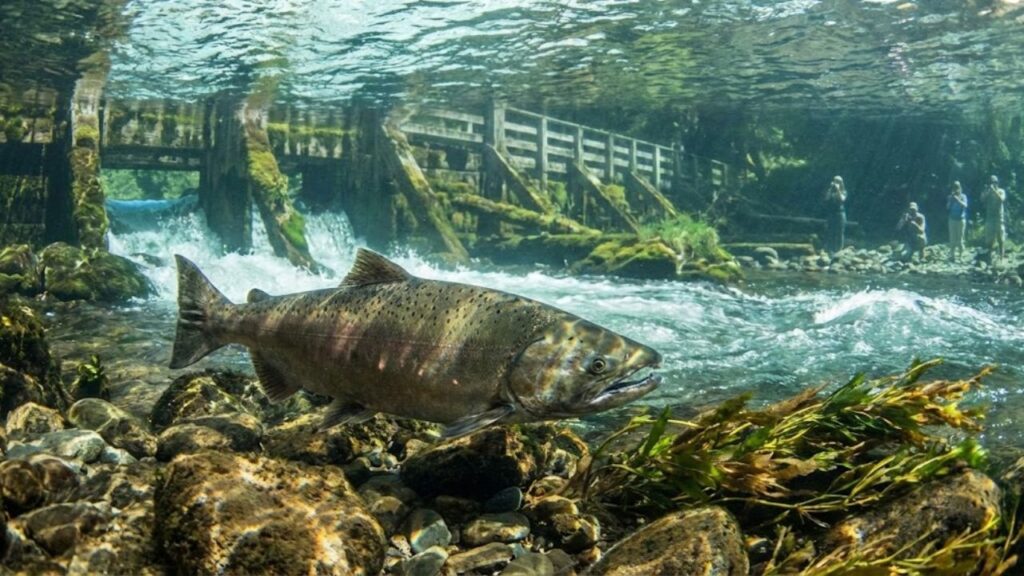
At the break of dawn, along a quiet stretch of the San Joaquin River near Fresno, a small group gathered in the chilly air, watching in awe as nature defied the odds. A ranger, clad in a worn green jacket, whispered as he pointed to the water. There, struggling against the current with a determined flick of its tail, a lone chinook salmon fought its way upstream. The river, which had once run dry for long stretches, was now alive again. For the first time in a century, a salmon had returned to the waters it was born in, journeying from the ocean back to its birthplace without any human assistance. Phones snapped pictures, boots crunched on gravel, and for a moment, even the hum of nearby highways seemed to fade. Something ancient was coming back to life.
The Journey of a Single Salmon: A Symbol of Revival
At first glance, it seemed like just another fish—about 30 inches long, with dark scales and silver sides, its body dotted with the marks of age. But for biologists, this salmon represented more than just a survivor. It was a living testament to the power of restoration and the resiliency of nature. The San Joaquin River, once dismissed as a hopeless cause, had become the unlikely host to this remarkable fish. Against all odds, the chinook made its way past dams, predators, and pollution to return to the river, ignoring every obstacle in its path. This single fish had become a symbol of hope, a reminder that even the most broken ecosystems could be healed.
Restoring the San Joaquin: A Herculean Effort
Restoring a river is no simple feat. It’s more akin to nursing a patient back to health than flipping a switch. The first step was ensuring water was flowing where it was needed—controlled releases from Friant Dam reconnected dry sections and cooled the water during summer. Alongside this, the river’s most aggressive diversions were moderated, and teams worked tirelessly to dig side channels and create shallow gravel bars where salmon could spawn. On the banks, cottonwood trees and willows were planted to provide shade and cool the waters, protecting the fish from the scorching heat of the Central Valley.
The Fragility of Success: A Delicate Balance
However, this success remains fragile. One bad winter, a policy shift, or an increase in water temperatures could undo all the progress made. Agriculture and urban development still rely heavily on the river’s water, and any shifts in priorities could threaten the salmon’s survival. But the return of this natural-origin chinook has changed the conversation about water allocation. It’s a living reminder that rivers can still do the impossible if given a chance. This single fish has become a symbol of hope and leverage in a long-standing debate over water rights and environmental restoration.
The Ripple Effect: What This Means for Us All
Though you may never visit the San Joaquin River, the story of this salmon resonates far beyond California. Salmon are a keystone species, connecting ecosystems from oceans to rivers to forests. Their return brings marine nutrients upstream, nourishing not just fish but insects, wildlife, and even the trees that stabilize riverbanks. When this chinook found its way home, it wasn’t just a victory for fish enthusiasts—it was a reminder of how interconnected our world truly is. The return of a single salmon proves that restoration doesn’t require perfection—it simply requires persistence and the belief that nature can heal if given the right conditions.
The Bigger Picture: Taking Action Locally
Stories like this one aren’t just feel-good moments to scroll past; they carry a powerful message. Whether you live near a river or not, the way we treat our environment impacts all of us. Supporting local restoration projects, protecting wetlands, and making small changes in our daily habits can have a profound impact on the health of our waterways. This salmon’s journey is a blueprint for how we can all contribute to a more sustainable future. It’s about connecting the dots between our daily choices and the larger picture of environmental health.While the return of a single salmon doesn’t erase the challenges facing the San Joaquin River, it does provide hope that recovery is possible. It reminds us that change doesn’t always happen in a straight line but often in small, surprising moments. As we witness the quiet but powerful return of nature, we are reminded of the role we each play in supporting the health of our environment—whether through small actions or larger movements. Every step, every choice, and every story shared can push the world toward a more sustainable future.
| Key point | Detail | Value for the reader |
|---|---|---|
| Restored rivers can rebound | The San Joaquin, once dry and written off, now hosts a returning chinook salmon | Shows that damaged ecosystems near you may still hold real comeback potential |
| Policy and patience matter | Two decades of legal battles, water releases, and habitat work set the stage for this single fish | Highlights how long-haul efforts, not quick fixes, often unlock dramatic moments |
| Individual choices ripple outward | Local support for restoration, better water use, and informed food choices all feed into river health | Offers concrete ways to turn a distant news story into personal, practical action |