The hum of your fridge, the solid ice cream in the freezer, and everything else seeming perfectly fine can create a false sense of security. However, a hidden issue could turn that calm into a real risk of food poisoning if you’re not careful.
When Your Freezer Could Be Hiding a Risk
Frozen food may feel safe, and most households treat their freezer like a secure vault. However, this “safety” is entirely dependent on one key factor: consistent cold. Freezing does not kill bacteria; instead, it slows or pauses bacterial growth. When frozen food begins to thaw, those bacteria wake up and start multiplying again, even if the food refreezes. A power cut or a brief rise in temperature could cause microbes to thrive, making that batch of cooked chicken from your freezer more hazardous than you realize. The food may look fine from the outside, but it could be teeming with bacteria that may lead to food poisoning if consumed.
Using a Coin to Track Power Outages
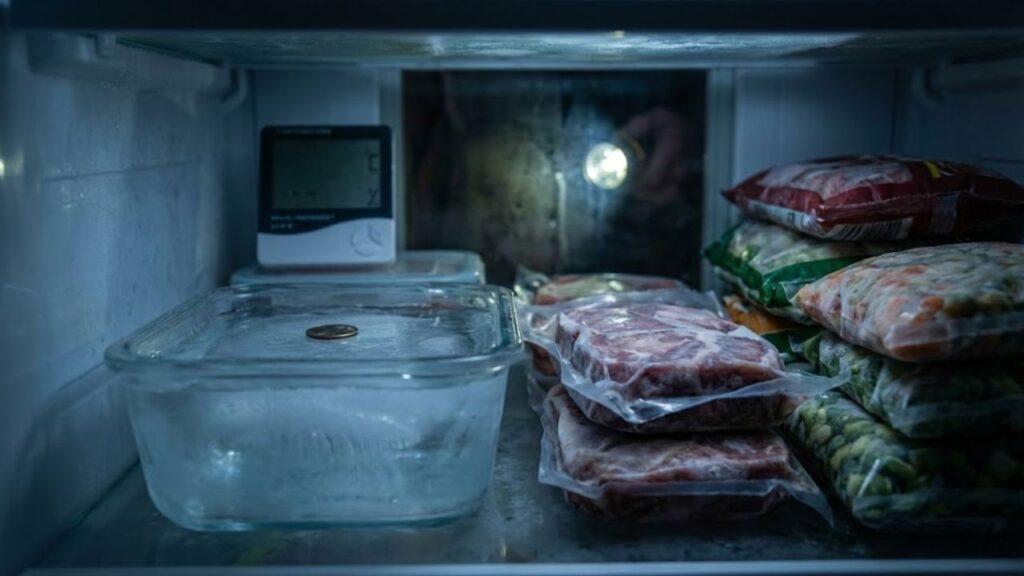
To avoid guessing what happens during a power outage, food safety experts recommend a simple hack: use a coin as your “witness.” This method involves freezing a small bowl of water, placing a coin on top of the ice, and leaving it in your freezer permanently. When you suspect a power failure, you can quickly check the coin’s position to understand whether the food inside was compromised. The coin offers a quick visual report, allowing you to act appropriately.
Setting Up the Coin Trick
Setting up the coin trick is easy:
- Fill a small bowl, ramekin, or plastic cup with tap water.
- Place the bowl in the freezer and let it freeze completely.
- Once the ice is rock solid, place a coin (any currency) on top of the ice.
- Return the bowl to the freezer in a visible spot, so you can easily monitor it.
If the freezer stays cold enough, the ice will remain solid, and the coin will stay on top. If the temperature rises, even slightly, the coin will sink or shift before the water refreezes.
What the Coin’s Position Tells You
The coin doesn’t measure exact temperatures but gives you an idea of what your food went through. Here’s what the position means:
- Coin still on top of ice: The freezer stayed cold enough, and the contents likely remained frozen. Check the food for any signs of thawing.
- Coin sunk halfway: There was partial thawing. Be cautious with high-risk items like meat or seafood, and use them quickly.
- Coin at the bottom: The food likely thawed completely before refreezing. Treat all food as unsafe, especially meats, dairy, and prepared meals.
Why Refreezing Thawed Food is Dangerous
Many people assume that refreezing thawed food makes it safe again, but this is a misconception. When food warms up, bacteria can multiply rapidly. Refreezing only locks in more bacteria, making the risk of food poisoning higher. Animal products, like meat, poultry, seafood, and dishes containing dairy or eggs, are particularly susceptible to bacterial growth. Once these foods thaw and remain above safe temperatures for a few hours, the bacterial count can increase drastically, even if the food looks and smells fine.
Steps to Take After a Suspected Power Outage
If you suspect a power cut, take these steps:
- Step 1: Check the coin immediately. It will give you an idea of what your freezer has been through.
- Step 2: Make decisions based on risk, not price. If the coin is still on top, most food is probably safe. If it’s partially sunken, handle meat and fish with care. If it’s at the bottom, discard most foods, particularly high-risk items like dairy or meat.
How Long Can Your Freezer Keep Food Safe Without Power?
Modern freezers are built to withstand power cuts. A full, unopened freezer can keep food at safe temperatures for up to 48 hours, but a half-full freezer will warm up faster. The key to maintaining safety is to avoid opening the freezer door, as cold air escapes every time it’s opened. For better protection, keep your freezer stocked with water bottles or ice packs to maintain cold longer. Also, position the coin near the front of the freezer so it’s easy to check at a glance.
What’s at Risk with Food Poisoning?
Food poisoning is often seen as a minor inconvenience, but for vulnerable populations like children, pregnant women, and the elderly, it can be life-threatening. Infections from bacteria such as Salmonella, Campylobacter, and Listeria can lead to dehydration, fever, and more severe complications. By using the coin trick in combination with good freezer habits, you can significantly reduce the risk of consuming unsafe food after a power failure.
Other Freezer Habits to Minimize Risk
In addition to the coin trick, there are other simple habits that can help keep your freezer safe:
- Label and date everything you freeze, so older items are used first.
- Freeze food in small portions for more even thawing.
- Always thaw high-risk foods in the refrigerator, not on the counter.
- Consider using a freezer thermometer to monitor the temperature regularly.
Real-Life Examples of How the Coin Trick Helps
Imagine you’re on vacation, and a storm knocks out the power for several hours. When you return, you check the coin, and it’s sunk to the bottom, indicating the freezer likely thawed and refroze. This simple observation prevents you from cooking potentially dangerous food. On the other hand, a short power outage while you’re at work may leave the coin only slightly moved, letting you handle food more safely.
A Small Habit That Makes a Big Difference
The coin trick is easy to set up, costs next to nothing, and can work for months without needing attention. It’s a simple habit that adds a layer of safety to your freezer, helping you make better decisions, avoid food waste, and most importantly, protect your health.