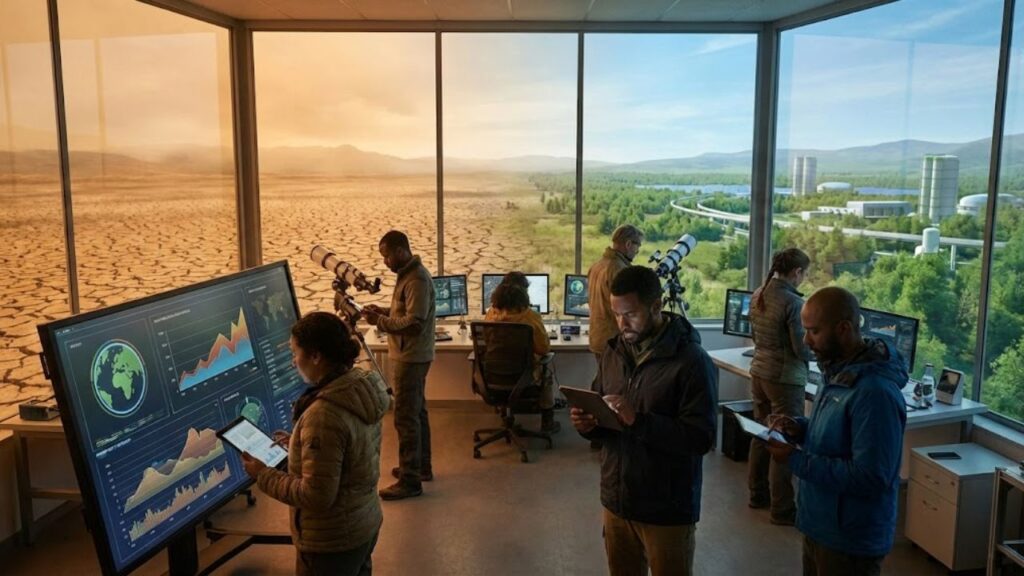
On a Monday morning, the bustling energy of a typical weekday was replaced by an unexpected stillness. Outside the research center, the usually busy road felt more like a calm Sunday morning, with fewer cars and more bicycles, as people strolled with reusable coffee cups and smartphones tracking live air-quality data. Inside, researchers gathered in a small, open office, fixated on a wall of screens displaying constantly fluctuating energy demands, erratic bird migratory patterns, and shifting consumer habits. As these numbers evolved, it became clear that something significant was happening: a quiet transformation in the way we live.
Changing Lives: The Subtle Shift in Behavior
In cities worldwide, a change is brewing that’s felt but hard to articulate. Offices aren’t as crowded, while cafes are bustling. Delivery bikes line intersections, and people are checking apps to track their energy consumption and health metrics. This shift is gradual and often overlooked, but it’s deeply rooted in our daily routines. Researchers refer to this as “behavioral inflection points” and “structural adjustments,” but at its core, it’s a recognition that what once felt like normal doesn’t quite fit anymore.
The Impact of Hybrid Work and Changing Routines
In Barcelona, a public health team has been tracking 2,000 residents since 2018. Before 2020, only a third of them worked from home occasionally. By last year, more than 70% worked remotely at least once a week. This shift triggered changes in daily life: energy consumption patterns moved from office buildings to homes, public transport times shifted, and local businesses near residential areas flourished. Researchers found that even a simple question about the start of a workday was a predictor for everything from eating habits to mental health outcomes.
How the World Adapts to Shifting Conditions
As weather patterns, energy costs, and public health concerns evolve, society is adjusting in real-time. A climate scientist likened it to watching society adapt to a moving target. With each change, such as a heatwave or a spike in fuel prices, the ripple effects are felt across every level of society. Researchers aren’t simply tracking these changes; they’re studying how everyday choices, like switching to bulk food or skipping the commute, help us cope with these shifting conditions.
Daily Choices: The Small Decisions That Shape Our Future
Behind the data, researchers are focusing on practical questions: How do our lives change when energy prices rise? What do we sacrifice first, and what do we hold onto? Volunteers in diary studies record small decisions, like turning off appliances early or opting for a bike ride instead of driving. Each of these decisions contributes to understanding how people adapt when faced with constant change. In Warsaw, a social science team spoke to parents who adjusted to hybrid work during the pandemic and never returned to the old schedule. Their daily decisions—from checking electricity rates to shortening commutes—painted a picture of how ordinary people navigate a world in flux.
Emerging Patterns from Everyday Adaptations
From the accumulation of daily decisions, researchers are beginning to see patterns emerge. Energy use shifts when governments issue clear, simple alerts about peak usage. Urban planners notice that bike lanes introduced as temporary measures during the pandemic have become permanent fixtures. Mental health teams track how flexible working hours reduce stress for some while creating challenges for others. The key takeaway is that society adapts in bursts, with fluctuations that mirror our personal lives.
How to Adapt to Change Without Feeling Overwhelmed
Adapting to shifting conditions doesn’t require drastic changes. Researchers suggest small, intentional experiments. Try a no-commute day if possible, or schedule energy-intensive activities during off-peak hours. By focusing on one metric—whether it’s energy use, transport, or screen time—you can better understand the impact of these shifts. The aim isn’t perfection but gradual, sustainable changes that make a tangible difference in your daily life.
The Role of Small, Deliberate Experiments
One mistake researchers warn against is aiming for a dramatic overhaul of lifestyle. Rather than trying to quit driving altogether or establish rigid boundaries in a hybrid work schedule, they recommend experimenting with one small change. By tracking something simple—like energy consumption or transport habits—you can see where adjustments can make a difference without overwhelming yourself. The goal is not perfection but noticing, adjusting, resting, and repeating.
Adapting Without Guilt: Simple Practices for Flexibility
Researchers highlight a simple truth: societal shifts don’t move in straight lines, and neither do we. Adaptation is not a grand project but the result of small, daily decisions. Sociologist Dr. Lina Gomez emphasizes that these ordinary choices accumulate to make a real difference. To cope, researchers suggest tracking one habit for a week, changing one small behavior, or introducing a reset ritual between roles. These minor adjustments help people maintain a sense of control amidst constant change.
| Key Point | Details | Value for the Reader |
|---|---|---|
| Everyday Choices Matter | Small habits around energy, transport, and work patterns feed into big societal trends | Shows that personal decisions are part of the larger shift, not separate from it |
| Conditions Keep Evolving | Climate, costs, health risks, and tech tools are all changing at once | Helps explain why life feels unstable and why flexible thinking can reduce stress |
| Start with Tiny Experiments | Track one metric, change one habit, add one reset ritual | Gives a realistic, concrete way to adapt without burning out |