In the rural département of Jura, a heated conflict is unfolding between anglers and conservationists regarding the future of the great cormorant, a fish-eating bird that is protected under European law. Despite its protection, the bird is blamed for depleting already vulnerable populations of trout and grayling in local rivers. This has sparked a contentious debate over the bird’s role in the ecosystem and the preservation of local fisheries.
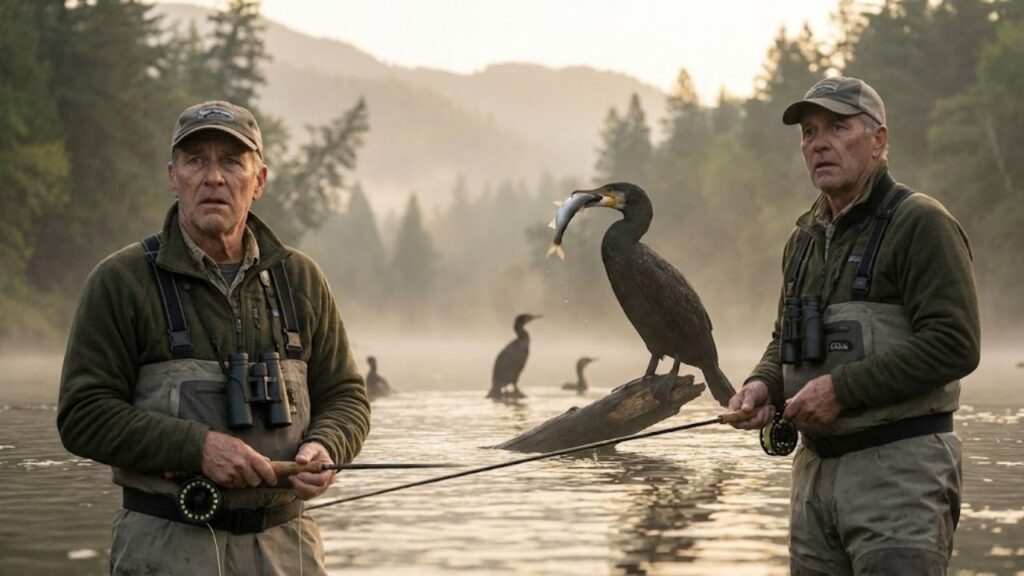
Anglers’ Frustration: Protected Bird Threatens Protected Fish
The argument centers around a simple calculation that has been circulating among Jura’s fishing communities: each great cormorant consumes about half a kilo of fish daily. The local branch of the French Bird Protection League (LPO) has recorded over 600 cormorants wintering in the département. From October to April, anglers estimate that this amounts to over 50 tonnes of fish being consumed by these birds. For Roland Brunet, president of the Jura departmental federation of anglers, this figure is deeply frustrating. The extensive efforts put into restoring aquatic habitats and managing fish stocks are undermined when these same fish are devoured by a protected predator. Brunet has publicly questioned whether it’s worth investing in ecosystem restoration if cormorants are allowed to feast on the results.
Legal Permission for Fish Farms but Not Rivers
On paper, the great cormorant is protected in France, but European and French laws provide exceptions through targeted “derogations.” These limited exemptions allow for controlled shooting of cormorants to prevent severe damage to fisheries or biodiversity in certain areas and during specific time periods. In November 2025, the Jura prefecture authorized the killing of up to 300 cormorants, but this permission only applies to “eaux closes” — enclosed waters like ponds, reservoirs, and fish farms, which are privately managed. While fish farmers are allowed to call in marksmen to protect their stocks, anglers on open rivers are left without any protection, despite the significant damage being done to local fisheries.
The Impact on Wild Rivers and Fish Populations
The real issue for many anglers lies with “eaux libres” — open waters such as rivers, natural lakes, and public canals. These bodies of water are vital to Jura’s ecosystem, hosting protected species like wild brown trout (truite fario), pike, and the sensitive grayling (ombre commun). Anglers argue that cormorants target these areas, especially where fish are already struggling to survive in cold, clear winter waters. With few places to hide, these fish are easy prey for the birds. Local fishing associations are pushing for a policy change that would extend the derogations to specific river sections, particularly spawning and nursery zones that have been the focus of costly restoration efforts. Without these protections, years of conservation work could be undone in just a few winters.
Why Cormorants Are Flourishing in Inland France
Once persecuted across Europe, the great cormorant population has rebounded since the 1970s, thanks to legal protections, cleaner waters, and the expansion of fish farms. Large colonies now breed along coastlines and in major lakes, and each autumn, tens of thousands of cormorants disperse inland. Jura’s lakes, reservoirs, and rivers provide ideal wintering conditions with ice-free areas and abundant fish. The birds are strong flyers, capable of traveling long distances to find food. For anglers, this means a constant influx of hungry cormorants, which can quickly replenish the numbers of birds already culled on fish farms.
Tension Between Two Protection Regimes
The conflict in Jura highlights a larger issue within European biodiversity policy. Both the cormorant and the fish it preys on are legally protected, creating a complicated situation. Environmental groups argue that any permission to shoot cormorants should be based on evidence that non-lethal deterrents, such as scare devices or habitat modifications, have failed. Anglers counter that these measures, like flashing tapes or gas cannons, are ineffective on fast-flowing rivers where cormorants can easily move to new hunting grounds.
What Local Anglers Are Observing
Many local fishing associations in Jura have reported fewer rising fish, smaller catches, and visible scars from bird attacks on fish that are caught. Winter surveys conducted by some clubs suggest that the number of cormorants in the area has increased over the past decade. However, the LPO acknowledges this estimate but also highlights other factors that contribute to declining fish populations, such as warming waters, low summer flows, and pollution from agriculture and urban areas. Despite this, anglers who have spent considerable time and effort restoring spawning beds are frustrated to see cormorants consuming the young trout they’ve worked so hard to protect.
Emerging Paths to a Potential Compromise
Behind the scenes, regional officials are considering several possible solutions to the conflict, although none of them are likely to satisfy everyone. Some of the options being discussed include extending derogations to certain sensitive river stretches for limited winter periods, funding fish refuges and woody debris structures to give fish shelter from predators, and conducting coordinated counts of cormorants and fish populations to improve data accuracy and reduce mistrust. In some European regions, such as parts of Germany and the Netherlands, adaptive management schemes already combine culling, deterrents, and habitat measures with annual reviews to set new quotas. Jura could adopt a similar approach, but this would require better monitoring and steady funding for both research and field operations.
Understanding Key Terms in the Debate
Two important terms frequently appear in the debate over cormorant control in Jura:
- Closed waters (eaux closes): These are artificial or enclosed bodies of water like ponds and fish farms where fish cannot migrate freely to other watercourses. Management is often private and access is controlled.
- Open waters (eaux libres): These are natural rivers, lakes, and public canals where fish move freely and are part of public aquatic ecosystems.
The current derogations only apply to closed waters, where the link between cormorant presence and economic damage to fish farms is easier to prove. In open rivers, where multiple factors affect fish populations, it is much harder to demonstrate that cormorants are solely responsible for a decline in fish stocks.
What This Conflict Means for Broader Conservation Efforts
The Jura case underscores the complex trade-offs that many regions will face as once-rare species, like the cormorant, make a comeback. While predator populations are recovering, prey species are in decline, creating tensions between conservationists, anglers, and fish farmers. One risk is that the debate could simplify into a binary “pro-bird” versus “pro-fish” argument, leaving little room for nuanced solutions. Another concern is shifting baselines, where younger generations may accept lower fish populations as normal. Carefully designed local experiments that combine habitat restoration with controlled cormorant management could offer valuable insights and help bridge the divide between the two sides. Until then, Jura’s rivers will continue to serve as a testing ground for how best to balance the needs of protected predators and their prey.