Kitchen design is entering a quiet but meaningful shift, and homeowners across the UK are already noticing the change. Once considered a must-have feature, kitchen islands are now being questioned for how much space they take versus how much they truly offer. In 2026, a more thoughtful layout is stepping into the spotlight, promising better flow, smarter storage, and a calmer visual feel. This emerging approach reflects how modern households actually live, cook, work, and gather, rather than how kitchens were designed to look in glossy catalogues.
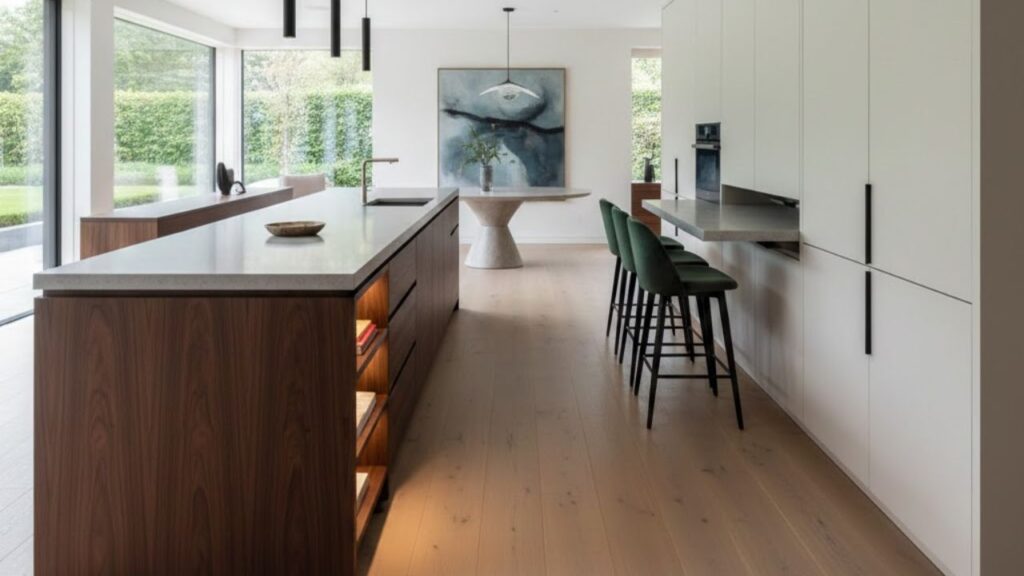
The 2026 kitchen island replacement trend explained
The trend replacing traditional islands focuses on layouts that prioritise movement and flexibility over fixed bulk. Instead of a large central block, designers are introducing wall-hugging workstations, slim peninsula tables, and modular prep zones. These ideas support better room flow while reducing visual clutter. Many UK homes benefit from this shift because it adapts well to smaller footprints and open-plan living. Homeowners are appreciating space-smart layouts that allow kitchens to feel open without sacrificing function. The approach also encourages multi-use surfaces, where cooking, dining, and working naturally blend. By removing barriers, the kitchen becomes a calmer, more welcoming part of the home rather than a crowded hub.
Why modern interiors are moving beyond kitchen islands
Kitchen islands often promise flexibility, but in practice they can limit how a space is used. Designers now point out how islands disrupt circulation paths and create awkward corners. The new direction supports unblocked walkways and easier access to storage and appliances. In UK households where kitchens double as social zones, this change enhances everyday usability. Without a central obstacle, light travels further and rooms feel larger. There is also a growing preference for clean sight lines, especially in open-plan homes. These interiors feel calmer, more intentional, and easier to maintain, aligning with a lifestyle that values simplicity over statement pieces.

More practical and elegant kitchen layouts for 2026
The replacement for kitchen islands isn’t about losing function, but redistributing it more thoughtfully. Built-in counters, concealed storage walls, and movable prep tables offer flexible kitchen zones that adjust to daily needs. This approach supports efficient meal prep without isolating the cook from the rest of the room. In UK renovations, designers are also favouring timeless design balance over trends that age quickly. Materials feel lighter, layouts feel calmer, and the kitchen blends more naturally with living areas. The result is a space that works harder, looks softer, and adapts better to changing routines.

How this shift reshapes everyday living spaces
This design movement reflects a broader change in how homes are used. Kitchens are no longer showpieces built around one dramatic feature, but living spaces shaped by real habits. Removing islands supports natural movement patterns and encourages rooms to feel connected rather than divided. For many UK homeowners, this means kitchens that support conversation, focus, and relaxation at different times of day. The emphasis on human-centred design also reduces wasted space and visual noise. Ultimately, these layouts deliver long-term practicality, proving that elegance often comes from thoughtful restraint rather than adding more furniture.
| Design Feature | Kitchen Island | 2026 Replacement Layout |
|---|---|---|
| Floor Space Use | High space consumption | More open and adaptable |
| Movement Flow | Often restricted | Smoother circulation |
| Visual Impact | Heavy focal point | Cleaner, lighter look |
| Flexibility | Fixed structure | Modular or multi-use |
| Suitability for UK Homes | Limited in small spaces | Works across all sizes |
Frequently Asked Questions (FAQs)
1. Are kitchen islands completely disappearing in 2026?
No, but they are being replaced more often by flexible and space-efficient layouts.

2. Is this trend suitable for small UK kitchens?
Yes, it is especially popular in smaller homes where space and flow matter most.
3. Does removing an island reduce kitchen functionality?
No, functionality is redistributed through smarter counters and storage solutions.
4. Will this design trend age well over time?
Yes, its focus on practicality and simplicity makes it more timeless than bold statement designs.