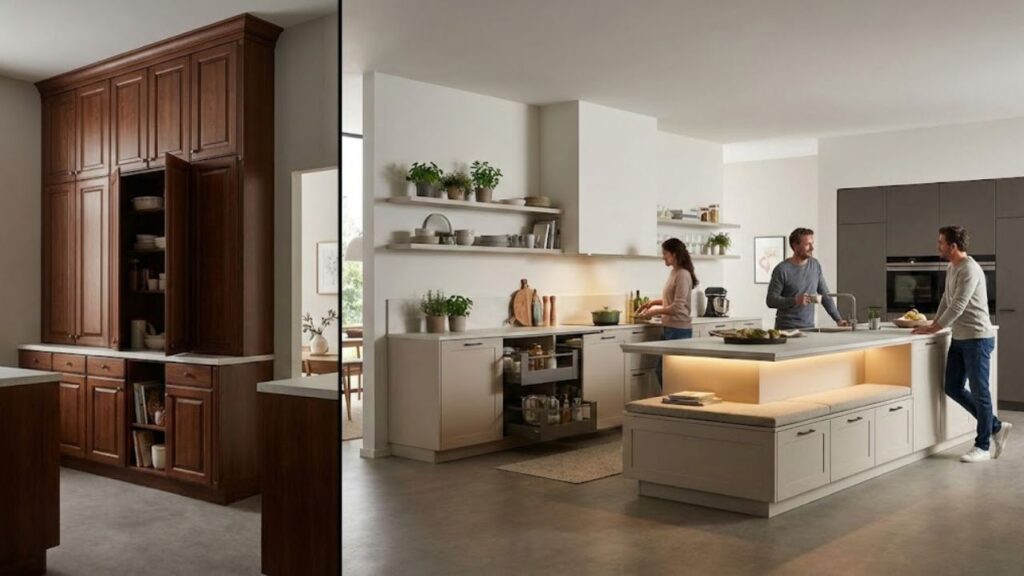
Across the US and Europe, a subtle yet transformative change is happening in kitchens. The once ubiquitous towering wall units that cluttered every corner are being replaced with open shelves, deep drawers, and bare walls. The goal is clear: reduce visual bulk, bring in more light, and create a kitchen layout that fits modern cooking and living habits.
Shifting Away from Vertical Clutter
For decades, the standard rule in kitchen design was simple: when floor space runs out, build upwards. High wall cabinets became the go-to solution for storage needs, holding everything from seasonal dishes to scattered Tupperware lids. While functional in theory, these towering cabinets often blocked natural light, made smaller kitchens feel cramped, and required precarious balancing just to reach everyday items. With work, socializing, and cooking all blending in one space, these designs began to feel outdated.
Interior designers now emphasize the concept of the “visual horizon” in a room. When a kitchen’s upper half is clogged with cabinets, the space feels fragmented and heavy. By clearing the top, the room opens up, appearing wider, more serene, and less crowded. Removing high units doesn’t mean sacrificing storage; it’s about storing more efficiently—at lower, more accessible levels.
Replacing Tall Wall Units with Smarter Alternatives
The shift away from high cabinets isn’t driven by a single new innovation but by two main elements: deep base drawers and minimal floating shelves. Together, these features are reshaping kitchen layouts, offering a smarter and more accessible way to organize everyday items.
Traditional kitchens often relied on narrow cupboards with doors. Today, designers favor wide, deep drawers and pull-out baskets that maximize storage space. These are placed in base units, sometimes in multiple stacked levels. The advantage is clear: drawers expose all contents, making it easier to locate what you need and reducing the likelihood of forgotten items buried in dark cabinets.
For example, deep drawers can hold stacks of plates, bowls, and cookware, while pull-out baskets neatly store dry goods like flour, canned items, and spices. With dividers, utensils and lids stay organized, making everything easily accessible. This system is particularly advantageous for children, seniors, or anyone with mobility issues, as it eliminates the need to reach or climb. A quick glance into a drawer reveals exactly what’s inside, minimizing wasted space and forgotten ingredients.
Minimal Shelves: A Breath of Fresh Air
Where bulky cabinets once dominated, many modern kitchens now feature sleek, floating shelves. Made from materials like timber, metal, or MDF, these shelves can either match or contrast with the countertops, adding a modern touch to the space. Not only do they enhance the kitchen’s aesthetics, but they also keep daily essentials within easy reach, such as coffee cups, glasses, and spice jars.
Designers recommend treating these shelves as a “display” area, where frequently used items are stored for easy access, while less attractive tools can be tucked away in drawers. This arrangement strikes a balance between functionality and decor, ensuring the kitchen is both organized and visually pleasing.
Why Minimalism Works in Small Spaces
This trend ties into the broader minimalist movement, as many households are reassessing how much they truly need to store. The absence of upper cabinets forces a decluttering process, often leading to more thoughtful storage and organization. Without tall units blocking the windows, natural light floods the space, making the kitchen feel more open and airy, especially in small apartments where the kitchen seamlessly merges with the living area.
Moreover, storing heavy items on lower shelves or in drawers reduces the risk of accidents, as it eliminates the need for balancing on stools or reaching for overhead items. Open shelves typically hold lighter, everyday objects, making them safer and more practical. This design choice allows the upper part of the room to breathe, transforming the space into a more inviting environment.
How to Transition to Lower Storage
Homeowners don’t need a full renovation to embrace this new trend. Depending on the budget and the existing kitchen layout, there are practical ways to make the shift. The first step often involves clearing out one or two upper cabinets and replacing them with open shelves. Once the clutter is reduced, existing lower cabinets can be repurposed with better organizational systems, such as pull-out drawers or dividers.
For a more extensive makeover, base cabinets can be swapped for drawer-based systems that slide into existing carcasses, converting traditional cupboards into pull-out storage without the need for a complete kitchen rebuild. This clever organization often results in more usable space than the previous combination of high and low cupboards.
Practical Storage Layout Example
When designing a kitchen without upper cabinets, many professionals recommend a zoning approach for organizing items:
- Top shelves: Mugs, glasses, small plates, plants, decorative jars.
- Upper drawer level: Cutlery, tea towels, wraps, and foils.
- Middle drawers: Plates, bowls, baking tins, mixing bowls.
- Lower drawers or pull-outs: Heavy pans, small appliances, bulk dry goods.
This layout keeps frequently used items within arm’s reach, while heavier or less frequently used items are stored lower, where they are easier to lift. The strategy encourages tidiness, as only a small portion of items are kept visible, which promotes a cleaner, more organized kitchen.
Considering the Risks and Who This Trend Suits
While this style suits many households, it’s not ideal for everyone. Larger families or serious home cooks may still require extra storage, especially for bulkier pantry items. Additionally, those who dislike open shelves might find them impractical, as they can attract dust and grease. Kitchens with weak ventilation or a lack of powerful extractor fans may not be the best environment for open shelves near cooking zones, as they can accumulate grease.
For renters or those hesitant to remove all upper cabinets, a partial solution—such as clearing one wall or a section of the kitchen—can still improve light and airiness without the need for a full renovation.
The Benefits: Resale Value and Comfort
Real estate experts have noted that buyers are increasingly drawn to kitchens that feel brighter and more spacious, aligning with the shift towards minimalism. A clean, uncluttered kitchen is easier to photograph, making it more appealing in listings and on social media. Beyond aesthetics, the reduction in visual noise provides a mental break, making cooking feel less like a chore and more like a relaxing activity after a long day.
As homeowners plan future kitchen renovations, questions about storage needs, lighting, and visibility often lead to the same conclusion: the era of towering kitchen wall units is fading, replaced by a simpler, more accessible approach to storage that makes cooking and living more enjoyable.