
You pull yesterday’s lasagna from the oven and notice it again — the dark, sticky film on the glass, cheese baked solid onto the racks, and that familiar smoky smell that shows up every time you preheat. You promise yourself you’ll clean it soon. Then the days pass, the door stays shut, and the mess quietly grows. Eventually, you flick on the oven light, stare at the hardened spills, and briefly wonder if replacing the oven might be easier.
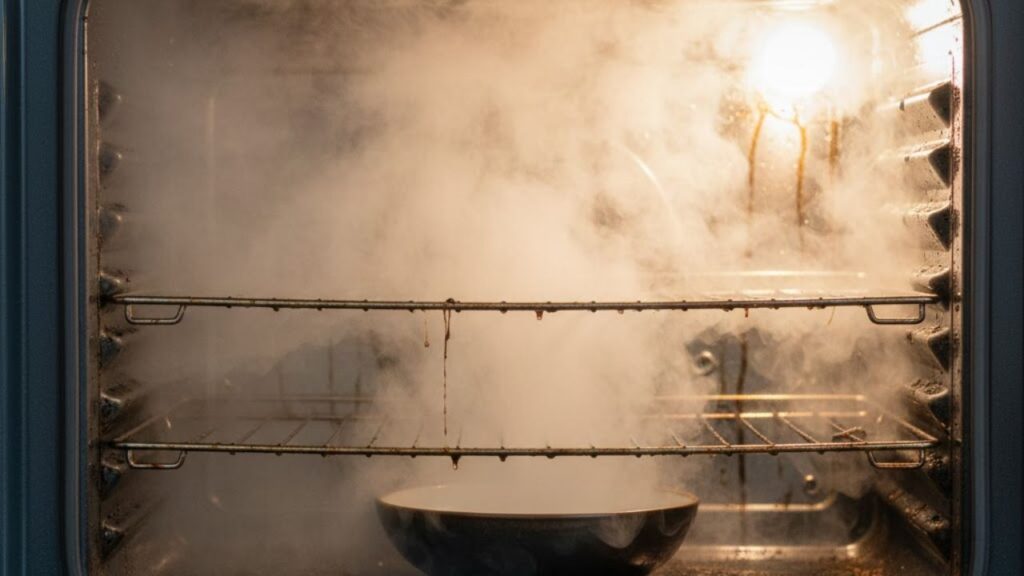
Then someone casually suggests, “Just steam-clean it.” It sounds too easy to be real. But the first time you watch old, stubborn grime loosen and wipe away with barely any effort, it feels like a small piece of household magic.
The Slow-Building Mess Hiding Behind the Oven Door
Ovens rarely become filthy overnight. Instead, they change gradually. A little cheese bubbles over. Fat splatters from a roast. A forgotten pie leaks onto hot metal. You wipe what you can see, close the door, and move on. Weeks later, you peer through cloudy glass and wonder when your once-clean appliance turned into a baked-on disaster.

One reader shared that she only noticed how bad things had become when her mother-in-law paused mid-motion while sliding in a tray, silently staring at the burnt rings before switching on the extractor fan. Another admitted she baked with the window open, not for fresh air, but to stop the smell of old grease clinging to the curtains.

The reason is simple chemistry. Heated oil, cheese, sugar, and sauce release tiny droplets into the oven air. Those droplets settle on cooler surfaces, where repeated heat darkens and hardens them over time. Dry heat alone keeps cooking the mess. Steam, however, can get underneath it.
A Step-by-Step Guide to Steam-Cleaning Your Oven
The idea is refreshingly straightforward: use hot steam to soften baked-on dirt so it almost wipes away on its own. Start by removing racks and trays and setting them aside for separate cleaning.
Place an oven-safe dish or deep baking tray inside and add about 1–2 cups of water with a generous splash of white vinegar or lemon juice. This mild acid helps break down grease. Set the oven to a low, steady heat — around 230–250°F (110–120°C) or the lowest bake setting — and let it steam for 25–40 minutes. You want moisture filling the oven, not extreme heat.
Once the time is up, switch the oven off and keep the door closed for another 10–15 minutes. This is when the steam penetrates hardened spills on the walls, ceiling, and glass. When you open the door and feel that warm, slightly vinegary air, the grime has already begun to loosen.

Using gloves and a soft cloth or sponge, gently wipe the interior. Brown streaks that once resisted scrubbing now slide away. For stubborn spots, press a cloth soaked in the warm leftover water against the area for a few seconds, then wipe again. Avoid metal tools or harsh pads, which can scratch enamel and glass. Let the moisture and heat do most of the work.
Common Mistakes That Reduce Results
The biggest mistake is impatience. Cutting the steam time short doesn’t fully soften caramelised grease, making the method seem ineffective. Another error is turning the heat too high, which causes water to evaporate too quickly. Adding strong cleaning chemicals to the water is also risky, as it can release unpleasant fumes in a hot, enclosed space.
This method works best as a regular reset every few weeks, not a once-in-a-decade rescue. For heavily soiled ovens, running the steam cycle twice or pairing it with a light baking soda paste may be necessary.
Small Tips That Make a Big Difference
- Use a wide, shallow tray to create more steam coverage.
- Clean the door glass while warm so condensation helps lift residue.
- Add lemon slices or a cinnamon stick for a fresher scent.
- Wipe when warm, not hot, to prevent grease from re-setting.
- Finish with a dry cloth to avoid streaks and water marks.
Turning an Unpleasant Task Into a Simple Routine
After using the steam method a few times, something changes. The oven stops feeling like a sealed box of shame and becomes just another appliance you maintain. You open the door more often, wipe small spills early, and the preheating smell returns to neutral. As one home cook put it, wiping away months of grime with little effort felt like winning a small battle with the house.
What starts as a quick trick can turn into a manageable habit — a simple mix of water, heat, and vinegar that removes not just grime, but the belief that oven cleaning is an overwhelming chore.

Why the Steam Method Works
- Steam does the hard work: Moist heat softens baked-on grease, reducing scrubbing time.
- Simple ingredients: Water with vinegar or lemon keeps it low-cost and low-chemical.
- Routine beats rescue: Regular steaming prevents heavy buildup and lingering smells.
