
The sideboard that once dominated every family holiday photo now sits quietly, dulled by years of fingerprints and layers of silicone polish. When you run your hand across it, you feel fine scratches you don’t remember making and pale rings left by coffee cups that were “only there for a moment.” Years ago, this would have felt final, like the piece was beyond saving. Today, restoration professionals are saying the opposite. They arrive with nothing more than a microfiber cloth and a small jar, and within minutes, the wood seems to come back to life.
The Subtle Method Sitting in Your Cleaning Drawer
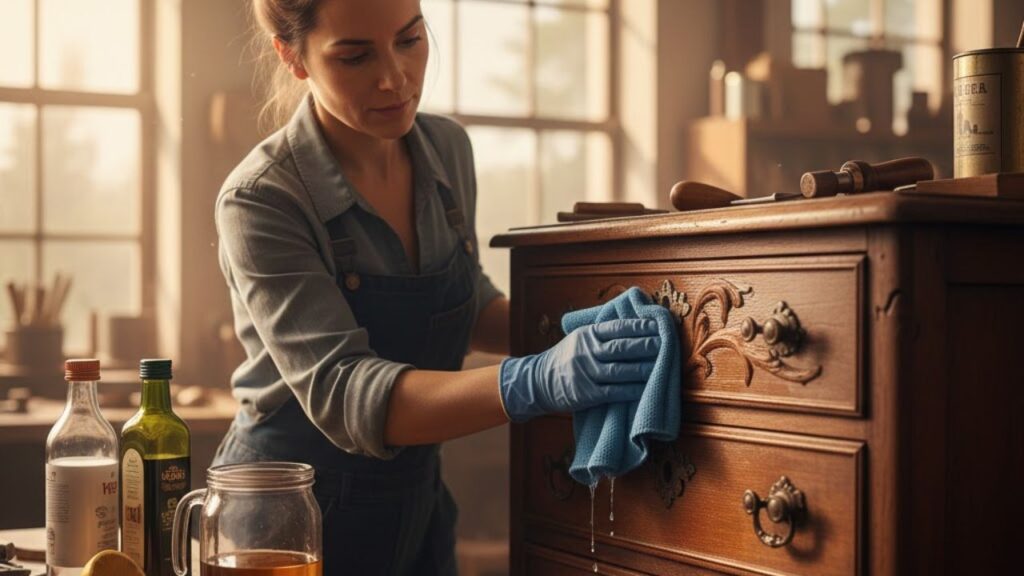
Watching a restorer work on a worn console table can be surprising. A microfiber cloth seems too gentle, something meant for glass or screens. Yet they fold it carefully and move it with the grain, not scrubbing but guiding it slowly. Old residue lifts away, leaving behind a soft sheen that feels natural, not freshly coated. The surface doesn’t look newly polished; it looks relieved.
That’s when the real secret comes out. The cloth matters, but what it holds matters more.

A Real-Life Restoration That Changed Everything
A furniture restorer in Paris once described working in a small apartment near Bastille. The client owned a 1960s oak dining table, marked by homework scratches, wine spills, and constant laptop use. She planned to sand it or sell it online. Instead, the restorer mixed warm water, white vinegar, mild dish soap, and a touch of olive oil. A microfiber cloth was dipped in, wrung nearly dry, and gently passed over the surface.

One half of the table instantly looked richer and deeper, while the untouched side remained grey and flat, like a live before-and-after comparison.
Why This Technique Works So Well
There’s no mystery involved. Microfiber’s ultra-fine strands grab residue that cotton leaves behind, lifting old wax, grease, dust, and polish buildup. The mild solution loosens grime without damaging the existing finish. Vinegar cuts through residue, soap helps remove it, and a small amount of oil rehydrates the surface layer of wood or varnish. Instead of adding shine, this process reveals the finish that was already there.
The Simple Mix Professionals Trust
While recipes vary slightly, the foundation stays the same. Use about one cup of warm water, add a tablespoon of white vinegar, three to four drops of gentle dish soap, and half to one teaspoon of a light oil such as olive, grapeseed, or mineral oil. Stir gently. Dip a microfiber cloth into the mixture, then wring it out until it feels almost dry. The cloth should be damp, never wet.

Work slowly along the grain in overlapping passes, turning the cloth as it collects residue.
When Too Many Products Make Things Worse
Many people panic when wood looks sticky or cloudy and start layering products. One New York restorer recalled a walnut dresser treated with window cleaner, multi-surface spray, and a high-gloss aerosol in a single day. The result was a plastic-looking haze. During the visit, the fix was simple: the same mild mixture and a microfiber cloth. Within minutes, the artificial shine disappeared, replaced by a calm, deep finish.
Restorers often repeat the same advice: don’t overdo it. The danger isn’t the mixture; it’s soaking the cloth, letting water pool, or using it on raw, unfinished wood. Professionals always test a small hidden area first and avoid harsh chemicals or strong oils that can turn sticky over time. Simple methods consistently win.
Professional Habits That Make the Difference
- Use a dense microfiber cloth: Tightly woven fibers trap grime instead of spreading it.
- Wring thoroughly: Excess water causes more damage than gentle cleaning.
- Work in sections: Cleaning one area at a time makes results easier to control.
- Buff with a dry cloth: This step creates a soft, natural finish.
- Repeat only when needed: Every few months is enough for most furniture.
Why This Small Habit Feels Meaningful
Restoring wood with such a simple routine often changes how you see the piece. Scratches from homework, faint candle wax marks, and outlines from plant pots don’t disappear. Instead, the surrounding dullness fades, and those marks feel like part of the story rather than damage. The furniture doesn’t look new; it looks cared for.
That may explain why this approach spreads quietly from restorer to carpenter, from designer to neighbor. It’s affordable, forgiving, and respectful of the material. Once you see tired wood regain depth in under half an hour, harsh sprays lose their appeal. Sometimes, the real upgrade isn’t replacing furniture, but learning how to treat what you already own.

Related Topics Readers Are Exploring
- A robot can now build a 200 m² home in 24 hours, reshaping modern construction.
- Psychology explains how certain adult fears form early in life.
- Hairstyles after 60 that professionals consider the most youthful.
- Why people place lemon slices in cold ovens and when it helps.
- Chernozem soil and why it’s known as the world’s agricultural black gold.
- How sleeping with your bedroom door open may improve air quality.
- Phrases often used by deeply unhappy people.
- Psychology identifies phrases commonly used by selfish individuals.
Key Takeaways at a Glance
- Microfiber and mild solution: Lifts residue while protecting the original finish.
- Follow the grain: Damp cloth, slow movement, and small sections reduce damage.
- Test and keep it simple: Gentle methods preserve value and build confidence.
