
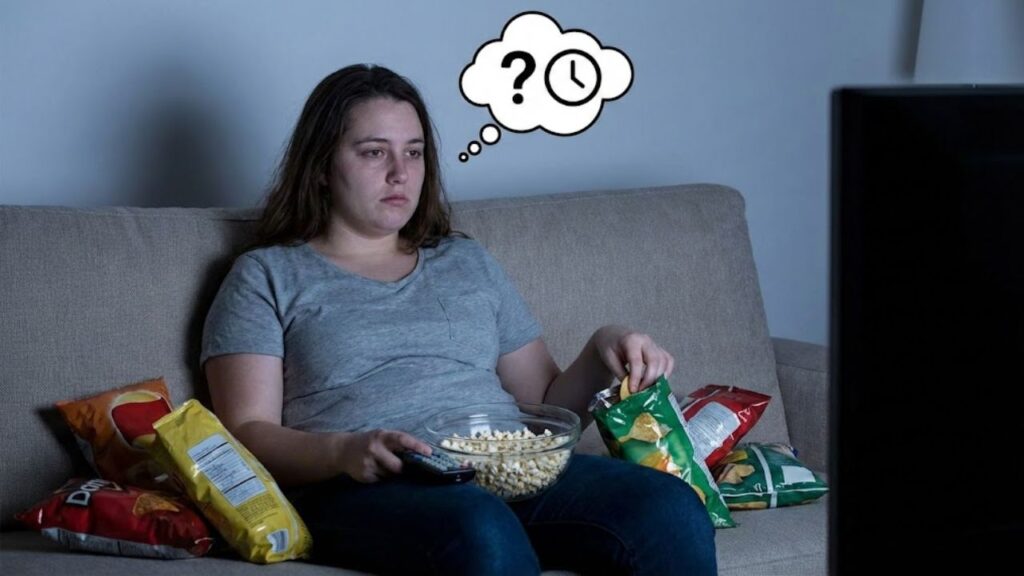
Your eyes shift away from the screen and land on the half-open drawer—there it is: the packet of biscuits you promised you’d “save for emergencies.” Your hand moves almost on its own. One biscuit, then three, and before you know it, you’re brushing crumbs off your keyboard, wondering when you even decided you were hungry. This same scene plays out in cars at red lights, on sofas in front of Netflix, and in kitchens at 10:47 pm. Your body whispers nothing, but your mind screams, “Snack.” Something here feels off.
When Your Body Isn’t Hungry, But Your Hands Reach for Food Anyway
There’s a moment, just before the snack hits your lips, when your body could still say no. Strangely, it rarely does. The packet opens with that familiar plastic sigh, and suddenly the day doesn’t feel so dull anymore. It’s not hunger you’re soothing; it’s the low hum of boredom.
Frequent snackers often describe it the same way: “I don’t even taste it after the first bite.” The food becomes background noise. The real action is happening in your head, where you’re trying to escape a task, a mood, or simply an empty space in the day.

One London marketing assistant called it her “desk autopilot.” At 3 pm, like clockwork, she heads to the vending machine—whether lunch was a salad or a burger. She knows she’s not starving. “It’s like taking a break with sugar,” she says, only half-joking. That daily chocolate bar isn’t just about calories; it’s about carving out a moment that feels different from the rest of the afternoon.

We’ve all seen the “small snacks add up” diagrams, but the more interesting detail lies beneath the numbers. On a dull commute, a handful of crisps makes the train ride feel less tedious. Late at night, scrolling on your phone, a bowl of cereal becomes a companion. People rarely overeat at a buzzing dinner with friends. They overeat alone, in quiet rooms, when nothing much is going on. The trigger isn’t hunger—it’s the void.
From a brain perspective, this makes eerie sense. Boredom is discomfort. It’s your mind saying, “Give me something.” Food is one of the fastest, cheapest ways to change your inner weather. A salty crunch or a sweet hit delivers a tiny dopamine spark, just enough to brighten the grey. You’re not feeding your stomach; you’re medicating your mood.
That’s why so many people who snack all day can’t remember feeling truly hungry. Their baseline is a slightly full but restless feeling. Genuine hunger starts as a slow physical sensation: a hollow feeling, a gentle pull, or perhaps a bit of lightness. Boredom, on the other hand, feels like leaning on the fridge door and thinking, “What could make this moment less boring?” The problem is that both questions—“What can I eat?” and “What can I do?”—often get the same answer: food.
How to Recognize Real Hunger Amid the Noise
The simplest trick is often the one most people skip: pause for 60 seconds before you grab the snack. Not ten seconds, a full minute. Let the urge sit there without acting on it immediately. During that minute, scan your body from the neck down. Is your stomach asking for food, or is your brain just bored and restless?
Real hunger tends to build slowly and feels low in the torso. Boredom-hunger is jumpy and impatient, more like a mental itch. *If you’d only eat crisps or chocolate but not a plain slice of bread, that’s a red flag.* You’re likely craving stimulation, not nutrition. The pause won’t erase the craving, but it gives you space to make a conscious choice instead of following a well-worn habit.
People who successfully reduce mindless snacking rarely rely on willpower alone. They redesign their routines. One tech worker started keeping a big glass of water and a notepad on his desk. When he felt the urge to raid the kitchen, he drank water and wrote one sentence: “What am I actually feeling?” Half the time, the answer was “bored, stuck on this task, want a break.” Once he saw that in writing, he opted for a five-minute walk or a change of task, rather than diving into half a packet of cookies.
Shifting Habits with the “Swap the Hand” Trick
Others play the “swap the hand habit” game. If your right hand always reaches into the snack drawer, give it something else to do during those weak moments of the day: a stress ball, a pen to doodle, or a fidget cube. One young mother told me she keeps cherry tomatoes ready on the counter. During long, dragging afternoons at home, she still grazes, but on something that doesn’t hijack her energy or mood. The boredom is still there, but at least she isn’t layering guilt on top of it.

There’s also value in calling out the lie directly. When the thought “I’m hungry” pops up, try answering, “Are you sure?” out loud. It may sound silly, but it interrupts the automatic script. Sometimes, you’ll still choose the snack, and that’s okay. The real win is in understanding why.
“The moment I realized I wasn’t hungry, just lonely and scrolling, everything changed. The crisps didn’t even taste that good once I admitted it,” said one person who shifted their habits.
Mindful Eating: Simple Strategies for Change
People often think mindful eating means sitting in silence and chewing each almond 32 times. Let’s be honest: **nobody does that every day**. What does help is a quick, honest check-in and some backup options when boredom strikes. The more you practice, the easier it becomes to distinguish between your stomach’s voice and your mind’s restlessness.
- Ask: “Would I eat a plain apple right now?” If no, it’s likely boredom.
- Change locations: Move away from the kitchen, sofa, or desk for two minutes.
- Drink a glass of water before making a decision.
- Set “snack windows” instead of snacking non-stop.
- Keep at least one non-food comfort ritual within reach.
Breaking the Cycle: Learning to Feed Your Day, Not Just Your Mouth
Those who break the constant-snacking loop don’t become saints—they become better planners of their energy. They build “anchors” into their day: real meals with protein, chunks of time outside, five minutes of doing absolutely nothing without a screen or snack. It may seem small, but these shifts can change the entire picture.
On a practical level, this might mean packing a proper lunch instead of grazing on random bites. It could be brewing your favorite tea at the time you usually hit the vending machine, so the ritual stays intact, just with a different prop. Or deciding that late-night snacks live in one small bowl, not an endlessly refillable packet. These small boundaries help your brain relearn what hunger feels like.
On a deeper level, it’s about giving boredom a different exit. When you reach for food, you’re often seeking comfort, distraction, or a sense of “something happening.” If you can find that feeling in a message to a friend, a quick walk around the block, or a playlist that lifts your mood, the urge to snack loses its power. We all know that moment where we’re halfway through the bag and not even enjoying it. This is where the shift begins.
Once you stop filling every quiet moment with food, you may notice emotions like fatigue, sadness, or anxiety bubbling up. That can feel uncomfortable at first. But it’s also where real change begins. Food is a beautiful part of life, but it wasn’t designed to carry the full weight of our boredom, loneliness, or stress.
So, the next time your hand is halfway to the snack drawer, pause for a moment, take a breath, and ask a different question: “What am I really hungry for right now?” The answer might still be “chocolate,” and that’s okay. **Sometimes that’s joy.** Other times, you may hear a different need: rest, movement, connection. That’s the start of a new relationship—not just with food, but with your day.

Key Takeaways
- Spot true hunger: Pause for 60 seconds and do a body scan before snacking.
- Redesign routines: Add small rituals and non-food breaks during trigger times.
- Give boredom other exits: Use movement, messages, or hobbies instead of snacks.
