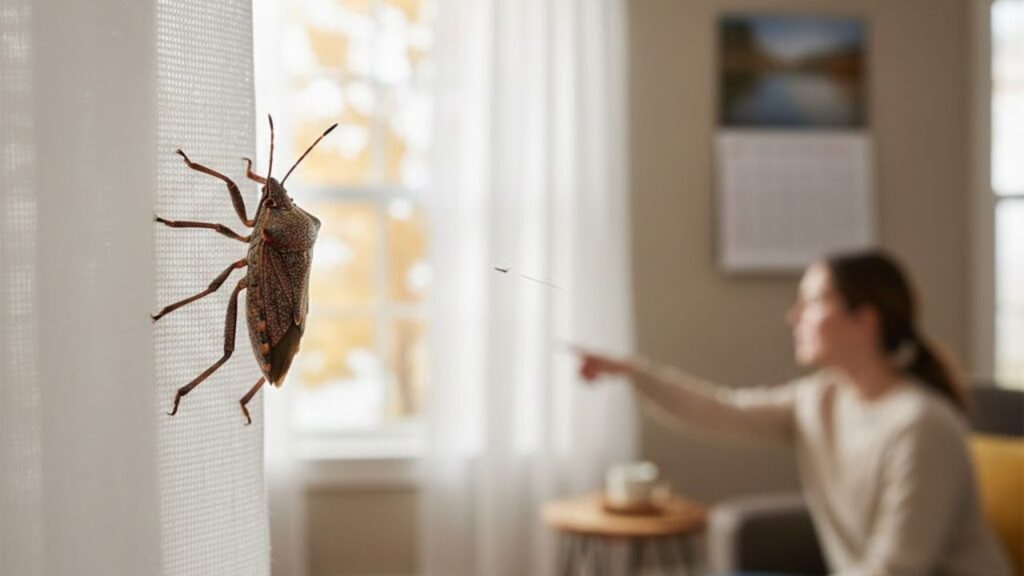
The first time a brown stink bug crawls across your living room wall, it barely registers as a problem. It looks awkward and slow, almost lost, as if it wandered into your evening routine by mistake. You reach for a tissue, pause, and remember the warning: don’t crush them. Suddenly, you’re frozen mid-move, negotiating with an insect that has no interest in rent or boundaries. A few days later, another appears near the window. Then another. At that point, it stops feeling random and starts feeling like a pattern. The question quietly forms: what does a brown stink bug in the house actually mean?
What a Brown Stink Bug Is Really Signaling
A brown stink bug indoors is rarely an accident. In most cases, it’s a clear sign that outdoor conditions are shifting and your home has become a pocket of light, warmth, and shelter. These insects aren’t following people; they’re following comfort. Heated walls, soft fabrics, and sunny windows mimic the protection they’d normally find in tree bark or natural crevices. From their perspective, your living room is simply a safer refuge. From yours, it feels like a tiny, armored intruder testing your patience.
How They Sneak In During Seasonal Changes
Early fall often sets the stage. A warm afternoon heats the sunny side of your house, and suddenly you notice several shield-shaped bugs clustering around window frames. Doors open and close, groceries come in, and a window stays cracked for “fresh air.” That’s enough. They slip inside quietly, hiding behind curtains, inside light fixtures, or along outlet frames. Weeks later, when cold weather arrives, they reappear, slow and disoriented, wandering your hallway like travelers stuck in an abandoned terminal.

What Their Presence Says About Your Home
The message is simple: your house has tiny gaps and drafts that overwintering insects can’t resist. The brown marmorated stink bug, the species most people encounter, is famous for exploiting these openings. Their presence doesn’t indicate dirt or neglect. It indicates opportunity. They can squeeze through spaces as thin as a credit card around doors, siding, vents, and windows. If they detect even a faint leak of warm air, they follow it. In that sense, each bug on the wall is a living map of where your home leaks heat.
 Say Goodbye to Gray Hair Using a Simple 2 Ingredient Homemade Dye People Are Trying at Home
How to Respond Without Making It Worse
The most effective first move is surprisingly gentle. Don’t crush the bug. When stressed or squashed, brown stink bugs release a strong odor that lingers far longer than your frustration. Instead, move slowly. Use a glass or cup to trap it against the wall, slide stiff paper underneath, and carry it outside away from entrances. Some people prefer a container of soapy water for a permanent fix. Either way, calm movements matter. Quick swats usually end in regret.
Why Vacuuming Often Backfires
Grabbing the vacuum feels efficient, but it often creates a new problem. Stink bugs can release their odor inside the hose or dust bag, turning the vacuum into a portable smell dispenser. A more controlled option is a simple jar with water and dish soap. Gently tap the bugs in and seal the lid. Doing this even a few times during peak season can significantly reduce repeat encounters.

Why Experts Call It a “Comfort Issue”
“When people ask me what a brown stink bug in the house means, I tell them your home is just very good at being cozy,” says entomologist Sarah Klein, who studies invasive insects in residential spaces. “They’re not reacting to cleanliness. They’re responding to heat and shelter.”
Simple Steps to Make Your Home Less Inviting
Experts often recommend a straightforward prevention checklist that reduces this accidental hospitality:
- Inspect and seal gaps around windows, doors, and utility lines
- Repair or replace torn screens, especially in attics and basements
- Add weatherstripping to exterior and garage doors
- Cover chimney flues and attic vents with fine mesh when not in use
- Turn off unnecessary outdoor lights at night during migration season
Each step sends the same message: this house is no longer an easy stopover.
Beyond the Annoyance: A Quiet Reminder
A brown stink bug on the wall is a subtle reminder that our homes aren’t completely sealed from the world outside. The boundary between inside and outside is thinner than we like to think. The insect simply follows warmth, light, and scent, unconcerned with furniture or schedules. For some, it’s just an inconvenience. For others, it raises a larger question about how we share space with the natural world—not in theory, but in everyday life.
 Goodbye Reliable Forecasts Why Sudden Climate Shifts Are Breaking Traditional Weather Predictions
Related Reads
- Biological threat: France announces world-first antidote to ricin
- This “mutant” animal surviving in the deep ocean might help us fight global warming
- If your dog gives you its paw, it’s not to play or say hello: experts explain why
- Why people in their 60s and 70s keep old-school habits—and seem happier
- How to remove scratches from glass ceramic cooktops in four simple steps
- The world’s longest underwater high-speed train and who really pays for it
- How China broke a hyperloop record in just two seconds
- A discovery called the find of the century reveals gold buried deep underground
Key Takeaways
- Seasonal signal: Indoor stink bugs usually mean they’re seeking winter shelter, not that your home is dirty
- House envelope: Drafts, gaps, and light leaks guide insects inside and show where sealing helps
- Calm response: Gentle removal and prevention work far better than panic or crushing