
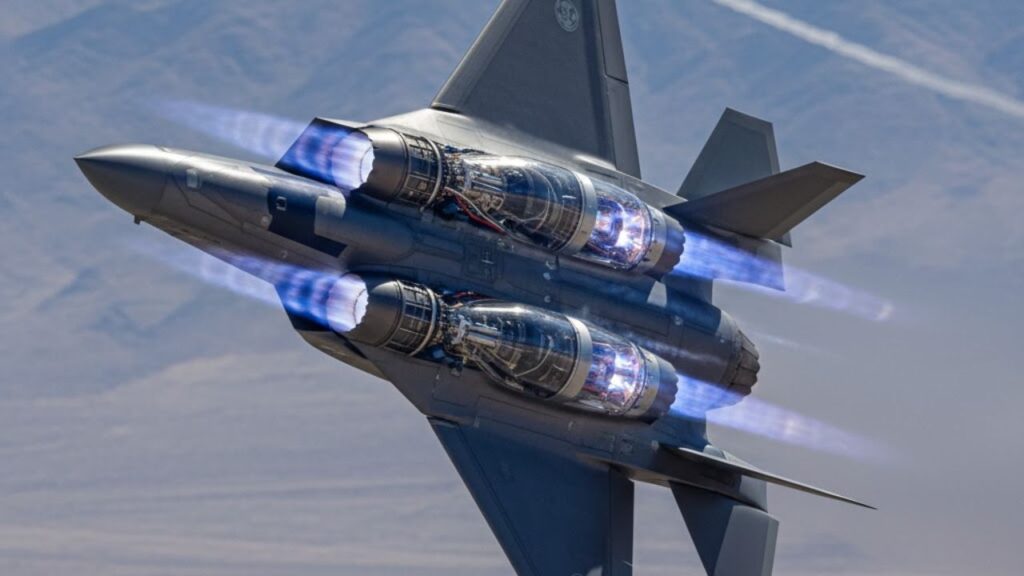
On the frozen tarmac of Edwards Air Force Base, the desert night feels so clear you can almost hear it breathe. Mechanics in bright orange vests move around a matte-gray F-35 with surgical focus, headlamps flashing across metal panels, rivets, and tools. When the pilot finally brings the engine to life, the sound is more than noise. It is physical. Chests vibrate. Air ripples. Somewhere nearby, someone silently forms one word: “Power.” For years, that sensation has been defined by a single engine, one that rivals quietly measured themselves against.
From undisputed champion to a looming challenge
For nearly two decades, the Pratt & Whitney F135 has been the core of the F-35 program. With roughly 43,000 pounds of thrust in afterburner, advanced digital controls, and stealth-friendly design, it earned its reputation as the most advanced fighter engine ever deployed. Allies trusted it. Competitors feared it. But as the F-35 evolved, adding heavier sensors, hotter electronics, and more demanding software, that once-generous power margin began to tighten. Heat levels rose, maintenance demands increased, and thermal management shifted from theory to urgent concern.
A quiet rival emerges behind closed hangar doors
Inside the same industrial ecosystem, General Electric pursued a parallel path. On test stands in Ohio, the XA100 roared to life, its exhaust glowing white in the dark. Engineers watched familiar metrics climb past expectations. By their claims, the XA100 delivers up to 25% better fuel efficiency, nearly 30% more range, and about 10% additional thrust in combat scenarios. Just as critical, it offers a dramatic leap in handling heat from advanced avionics and future directed-energy systems. These gains are not incremental. They redefine missions.
 Why storing rosemary and coarse salt in the same indoor jar divides cooks who is really right
The adaptive engine idea that reshapes flight
The breakthrough behind the XA100 is both simple and radical. Instead of forcing all air through a single engine core, it uses a three-stream adaptive cycle. The engine can redirect airflow in real time, shifting between a high-power mode for combat and a cooler, fuel-efficient mode for long transit. In peacetime, that flexibility sounds elegant. In conflict, it becomes survival. More range reduces reliance on vulnerable tankers. Cooler operation allows more sensors, stronger jamming, and room for future weapons. The F-35 begins to resemble a stealthy flying super-computer with its own adaptable power plant.

Why propulsion rewrites fifth-generation strategy
To understand the impact, look at a Pacific theater map. Distances stretch not hundreds, but thousands of kilometers. Each added mile of range becomes strategic leverage. With roughly 30% more reach, the F-35 shifts from a limited stealth striker into a roaming hunter. That extra endurance means fewer refueling stops, more targets within reach, and more exit options when things go wrong.
- Counting calories debate: why some experts say it backfires
- Yann LeCun: the French pioneer shaping modern AI
- Hair loss habits to adopt for healthier winter hair
- Greenland climate myths that don’t hold up
- Motivation and memory: how goals shape recall
- Morning routines that may undermine brain health
- Goal framing and long-term persistence
- Coordination studies linked to personality traits
Pilots often describe missions in terms of fuel math. Every choice, from radar use to flight path, drains reserves. With more thrust and lower burn, those calculations ease slightly. A faster climb to evade a missile, longer time over a target, or a safer exit without waiting for a tanker all become possible. The pressure does not vanish, but the margin improves, and in combat, margins matter.
Cooling, data, and the unseen constraint
The most coveted feature may not be speed or thrust, but cooling. Modern fighters are defined by sensors, data processing, and survivability in dense detection environments. All of that generates heat. The XA100’s adaptive airflow acts like a smarter accountant, balancing energy demands so future systems can function without pushing the aircraft beyond safe limits.

The budget battle behind the technology
On paper, the solution seems straightforward: replace aging F135s with XA100s and unlock new capability. In reality, the Pentagon faces a harder choice. A funded Engine Core Upgrade for the F135 promises lower upfront costs and smoother logistics. The XA100 represents a full generational shift, requiring new supply chains, training, and integration. It is the classic trade-off between short-term comfort and long-term advantage.
Lawmakers worry about cost growth. Program managers fear schedule delays. Pilots worry about flying jets that grow hotter and heavier without the engine once envisioned. Buried inside defense budgets are decisions about whether to settle for “good enough” or commit to technology that could outpace not only current rivals, but future ones as well.
A blunt assessment from inside the system
As one Air Force officer summarized in a private briefing later cited by analysts: “We’re asking fifth-generation jets to do sixth-generation jobs with fourth-generation fuel margins.” The tension must break somewhere.
- Greater range for the same fuel, expanding strike and patrol options
- Higher thrust, improving takeoff and combat performance
- Major thermal gains to support future sensors and energy weapons
- Potential reuse in sixth-generation aircraft programs
- Strategic hedge against advancing foreign engine designs
When engines outgrow the aircraft
The irony is that such an engine may already exceed what the current airframe can fully exploit. With XA100-level performance, new limits appear: stealth geometry, internal fuel volume, weapons bays, and even human endurance. At that point, propulsion stops being the constraint.
This is where future programs emerge. Next Generation Air Dominance, naval follow-ons, and crewed-uncrewed teaming concepts all align naturally with an engine that can change personality in flight. The real limits shift from thrust to imagination, budgets, and political will.

Key takeaways
- XA100 versus F135: Adaptive three-stream design with up to 10% more thrust and 25% better efficiency, reshaping airpower balance.
- Range and cooling gains: Around 30% more reach and major thermal improvements, changing mission profiles.
- Budget tension: The choice between upgrading existing engines or adopting a new family explains why cutting-edge tech moves slowly.
