
Hedges brushed the windows, birds took flight from the hawthorn, and at the end of the road, a stone cottage nestled in a bowl of rolling hills. He stepped outside, inhaling the damp, earthy air and assured himself: this was the peaceful life. No sirens, no late-night arguments from the flat upstairs, no vending machines humming in the hallway.
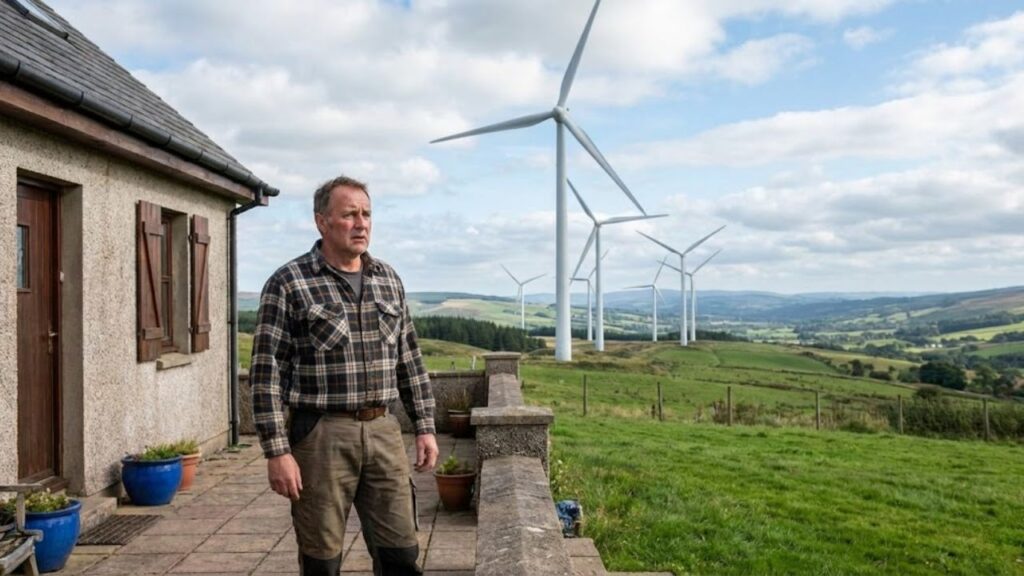
He unloaded boxes with a grin, pausing every few minutes to gaze at the horizon. Sheep dotted the fields, a stand of oaks here, the soft curve of distant fields there. Then he noticed them. Thin white columns on the ridge, their blades slicing through the sky with a slow, deliberate rhythm. At first, they seemed almost graceful. By the third day, they were the only thing he could see.
Now, he wants them gone. Torn down. And suddenly, the entire village has an opinion.

When the Dream View Includes Spinning Blades
Rural peace is a stubborn fantasy. You imagine silence, birdsong, and a view that never changes. But reality often tells a different story. Modern countryside life comes with early morning tractors, the smell of slurry on warm days, and increasingly, the sight of wind turbines on the horizon.

For someone who just invested their savings in a picturesque countryside escape, these turbines feel like an intrusion. Not just on the landscape, but on the story they told themselves about who they were going to be here. The person who escaped. The couple who finally made it out. When the view no longer matches the dream, frustration can quickly turn into something sharper.
This is how a personal disappointment can turn into a public fight. And that’s where the question emerges: does one person’s ruined view outweigh the community’s decision to embrace clean energy?
Across Europe and North America, this dilemma is unfolding in planning meetings and local Facebook groups. Villagers who once enjoyed clear horizons now face what some campaigners call “wind farms” and others criticize as “industrial landscapes.” In certain parts of the UK, onshore wind development slowed after years of objections based on visual impact.
In Germany, researchers found that people living near turbines often start out indifferent but later become polarized. A small group admires them as symbols of progress, while another group grows to resent them, particularly if they feel decisions were made without their input. In between, a larger, quieter group simply adjusts and gets on with their lives.
In the case of our countryside newcomer, he quickly falls into the resentful group. He discovers that the planning permission for the turbines was granted years ago. He learns protesting now is like arguing with the weather. Yet, the feeling of being cheated doesn’t disappear just because the paperwork is in order. The law and emotions run on different timelines.
The Clash of Personal Expectation and Collective Need
At the core of this is a clash between two forces that rarely align: personal expectation and collective need. On paper, the rules are relatively clear. In most legal systems, you don’t “own” the view beyond your property line. Courts acknowledge nuisances like noise, flicker, and safety concerns, but not hurt feelings about the skyline. The issue is, for many who move to the countryside, the view isn’t just a detail—it’s the product they believe they paid for. Real estate agents often advertise “unspoiled vistas” knowing full well that planning policies can change. When a turbine appears, it feels like the product has been switched after the purchase.
Energy planners argue that open landscapes are exactly where turbines should be placed. Fewer neighbors, more wind, more clean energy. Climate goals are not abstract; they manifest in those turbines on the ridge. So when one person demands that the turbines be removed for the sake of their view, they are not just challenging a neighbor—they are pushing against national energy policy, global emission targets, and the decisions of those who have lived there for generations.
What Can You Do If Turbines Spoil “Your” View?
The first step isn’t hiring a lawyer. It’s grabbing a notebook. Before embarking on a crusade, you need to separate what’s genuinely harmful from what’s merely disappointing. Spend a few weeks tracking when the turbines bother you the most. Is it the low-frequency hum at night? The shadow flicker at sunset? Or simply the sight of them in photos taken from your garden?
If there are specific issues like noise beyond acceptable levels, blade shadow on your windows, or flashing lights not listed in the planning documents, you have something concrete. Local councils and regulators deal with hard evidence: decibel readings, time-stamped videos, written logs. Vague complaints about “ruining the countryside” won’t carry much weight compared to a well-documented pattern of disturbances.
 Scientists identify the age when happiness drops sharply and the explanation is not what you think
Next, walk over to your neighbors. Ask them how they feel. Some might share your concerns; others may rely on the turbine income to keep their farm afloat. That conversation won’t magically change your view, but it shifts the battle from “me against them” to “let’s figure out how to live with this.”
Legal challenges to turbines that are already built are rare, expensive, and generally unsuccessful. Planning laws usually protect existing, properly permitted infrastructure. So the window of opportunity for objections is before construction starts. Here’s where things often go wrong: notices posted on parish boards, technical language that nobody reads, consultations held at inconvenient times for working people.
By the time the crane arrives, it feels too late. And most of the time, it is. That’s why the most effective defense of the view starts earlier and looks unexciting: reading planning notices, asking questions at local meetings, checking zoning maps, even searching for “scoping opinion” documents for your area. Let’s be honest: no one does this every day.
However, if you’re already staring at spinning blades, smaller wins are still possible. Sometimes, turbine operators will adjust lighting, change operating hours under specific conditions, or plant screening vegetation in agreement with neighbors. These aren’t grand victories, but small, practical solutions that make life a little easier while accepting that the turbines are here to stay.
Finding Peace with the Skyline
“I thought I was buying a painting that would hang in front of my window forever,” our countryside newcomer said. “Then someone walked into the frame and refused to leave.”
That feeling of intrusion carries real emotional weight. On a tired evening, after a long commute, those blades can feel like a taunt. You look at them and think: I worked so hard to escape the city, yet the city followed me. On windy nights, their whoosh cuts right through your thoughts.
Don’t bottle up your resentment. Talk early, before frustration turns into obsession. Visit a viewpoint where the turbines seem smaller to remind yourself that the landscape is still vast. Ask yourself what you actually need: silence, darkness, a sense of control?
Channel the anger into something constructive: better planning rules, more transparent estate listings, or local benefit schemes. Remember that everyone around you has sacrificed something, even if it’s not the same thing you feel you’ve lost.
One View, One World Warming in the Background
On a bright morning, those turbines can appear strangely calm. Birds still soar across the valley. Tractors still rumble down the lane. The cottage walls still trap warmth in winter and coolness in summer, as they have for generations. The man at the window may still flinch when he sees the blades, but over time, they start to fade into the rhythm of his days.
We’ve all had that moment when we realize the life we imagined doesn’t match the one we’re living. Out here, that realization just happens to be written in three massive white strokes across the sky. Some will argue fiercely that no one should be forced to accept such a change. Others will say, just as passionately, that rejecting it is a luxury the climate can no longer afford.
Somewhere between those two extremes lies an uneasy compromise: stricter planning, better consultation, sharing financial benefits locally, honest estate advertisements, and a more mature conversation about what “unspoiled” truly means in a warming world. Whether our countryside newcomer ever comes to terms with his new skyline is almost beside the point. The bigger question is what, collectively, we are willing to see when we look out of our windows.

| Point clé | Détail | Intérêt pour le lecteur |
|---|---|---|
| Legal rights vs. expectations | You rarely have a legal right to a fixed “view” beyond your property boundary. | Clarifies what you can realistically claim if a development changes your horizon. |
| Timing of objections | Most influence happens before turbines are built, during planning and consultation. | Shows when to get involved so your voice actually counts. |
| Living with change | Negotiation, mitigation and emotional adjustment are often more achievable than removal. | Offers practical paths forward if you already live near turbines. |
