
The supermarket aisle was peaceful, with only the soft hum of refrigerators and the faint rattle of a cart several rows away. You stood there, glancing between two almost identical packets: white sugar on the left, brown sugar on the right. One looked “pure,” clean, and familiar, while the other exuded a slightly virtuous vibe, like the healthier cousin who runs marathons on Sundays and eats oatmeal by choice.
For a moment, your hand hovered over the brown packet. It felt like the “better” choice—less processed, perhaps more natural, and guilt-free with your morning coffee.
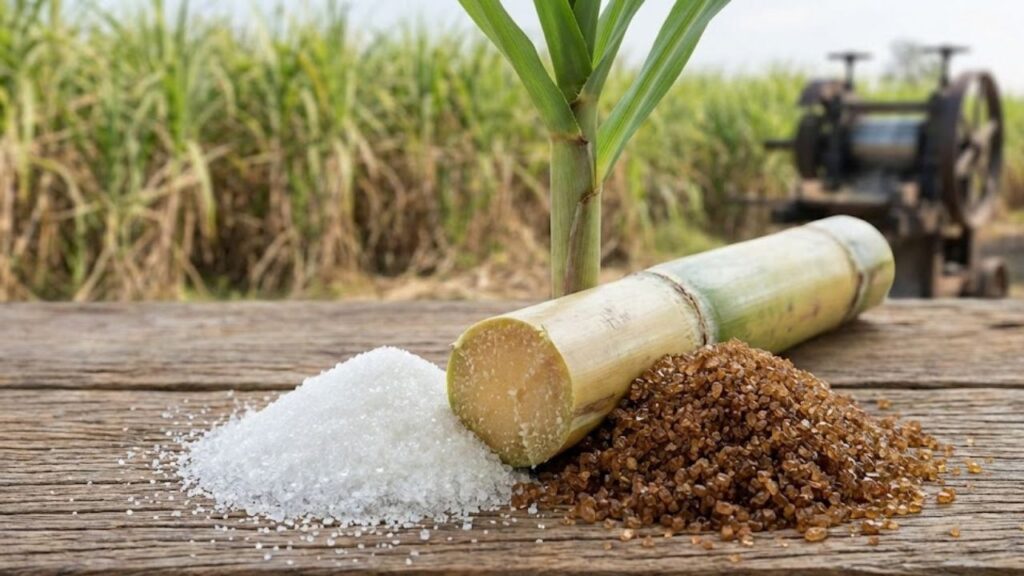
But the real story of these two sugars doesn’t begin in the packet. It starts in the same field.
 Psychology says what walking with your hands behind your back reveals about you according to experts
The Big Illusion: White Sugar vs. Brown Sugar
On the surface, the decision between white and brown sugar feels almost moral. One is often packaged in bright, shiny bags with neat labels and perfect crystals, while the other comes in warmer tones, adorned with rustic fonts, and proudly displaying words like “unrefined” or “raw.”

At home, that contrast continues. White sugar disappears into cake batter without a trace, while brown sugar clumps into soft, fragrant mounds that smell like cookies and childhood memories. The story we tell ourselves is simple: white sugar is “bad,” and brown sugar is “better.”
The truth, however, is less glamorous than the marketing suggests.
It All Starts in the Same Field
Imagine sugarcane growing in fields in Brazil, India, or Louisiana—tall, green stalks swaying in the heat, chopped down and rushed to a mill before they dry out. The cane is crushed to extract juice, which is then boiled, clarified, and spun in massive centrifuges.
What happens next is where the story gets interesting: two things are produced—sugar crystals and a thick, dark syrup called molasses. The twist is this: white and brown sugar don’t come from separate crops or magical processes. They both originate from that same sugarcane juice, that same sticky, sweet mess.
The “difference” between the two is largely about what happens afterward.
The Real Difference: Process, Not Plant
If you’ve ever seen raw cane sugar straight after the first crystallization, it’s not white. It’s beige, slightly sticky, and has a faint caramel smell. To create the sparkling white sugar you’re familiar with, the crystals undergo additional washing, filtering, and refining to remove the remaining molasses and impurities.
For brown sugar, producers either halt the refining process a bit earlier or, more commonly, mix molasses back into fully refined white sugar. This gives it flavor, color, and moisture. Light brown sugar contains less molasses, while dark brown sugar contains more.
Thus, the real difference is not the plant itself, but the production process someone chooses in a factory.
How the Sugars Behave in Recipes
Consider a cookie recipe: two friends bake the same dough, one using white sugar and the other using brown. The first batch comes out crisp, golden, with a clean sweetness, while the second batch is chewier, darker, with a deeper, almost toffee-like taste.
Both cookies share the same base ingredient, yet the molasses in brown sugar keeps more moisture and adds notes of caramel, rum, and spice. This is why brown sugar is often favored in gingerbread, barbecue sauces, and chocolate chip cookies that stay soft for days.
What we perceive as “healthier” is often simply “tastier and darker.”
Are They Really That Different Nutritionally?
Nutritionally, the difference between white and brown sugar is minimal. While molasses in brown sugar does contain small amounts of minerals like calcium, potassium, and iron, the quantities are so tiny that they have virtually no impact on your overall diet.

One teaspoon of brown sugar and one teaspoon of white sugar both have nearly the same calories and impact on your blood sugar. Your body doesn’t distinguish between the two—it simply sees energy in the form of fast sugar.
Let’s face it: nobody eats sugar for its mineral content.
How to Choose Sugar Without Falling for the “Healthy” Halo
So, what should you do when standing in front of that sugar shelf next time? Start by asking a practical question: “What do I want this sugar to do?” If it’s for your morning coffee, brown sugar will bring a stronger aroma and light caramel undertones. For a delicate vanilla cake, white sugar will keep the flavors clean and predictable.
Think in terms of cooking behavior: brown sugar tends to clump and adds moisture, while white sugar dissolves quickly and crystallizes, making it ideal for meringues or crisp cookies.
Once you see them as kitchen tools rather than moral choices, the decision becomes much simpler.
The Emotional Pull of Food Labels
There’s also an emotional layer to food labels. Brown sugar, being closer to its “raw” form, often looks more natural. Packaging often emphasizes earthy tones, kraft paper, and reassuring words. When you’re tired or stressed, it’s easy to reach for that story, even if you know better.
There’s no shame in that. We all get pulled by marketing. But the real danger is when we start sprinkling a little extra brown sugar on everything, half-convinced that it somehow “doesn’t count” as much. Sugar fatigue the next day doesn’t care about the color of the packet.
Your body responds to the habit, not just the hue.
Use Brown Sugar for Flavor, Not Health
Choose brown sugar for its caramel notes, moisture, and chewiness in cookies, sauces, or cakes. Don’t expect it to offer any nutritional advantage over white sugar.
Use White Sugar for Precision Recipes
Refined white sugar is ideal for recipes where precision is key, like meringues, syrups, caramels, or light sponges, where the predictable behavior of white sugar is needed for consistent results.
Experiment with Quantity, Not Just Color
Try reducing the total sugar in recipes—whether white or brown—by a small amount. Often, the easiest change is not switching colors, but adjusting how sweet you want your dish to be.
Looking at Sugar with Clearer Eyes
Once you understand that both white and brown sugar start from the same plant and diverge only in the factory, the supermarket shelf looks a little different. The moral weight starts to drop. You no longer see two opposing forces but two variations of the same ingredient, each with its role, its charm, and its limitations.
The real question shifts from “Which sugar makes me a better person?” to “How often do I reach for that spoon, and why?” That’s where things get interesting. Sometimes sugar is pure comfort after a long day. Sometimes it’s thoughtless habit. Other times, it’s part of a beautiful cake shared with friends on a Sunday afternoon.
When you understand what’s truly changing—and what isn’t—the guilt softens, and your choices become clearer. You can still love your dark, sticky brown sugar in oatmeal, your bright white sugar in lemon tart, and accept that both came from the same plant, the same juice, the same field.
 Modern parenting study 9 controversial parenting beliefs that divide psychologists and parents alike
Key Takeaways
- Same plant origin: Both white and brown sugar come from sugarcane or sugar beet juice. This clears up the myth that they are fundamentally different natural products.
- Difference is processing: White sugar has molasses removed, while brown sugar retains or regains some molasses. This helps readers understand that the color and flavor result from factory choices, not separate crops.
- Similar nutritional impact: The calories and blood sugar effects of both sugars are almost identical, guiding healthier expectations and reducing reliance on “healthy” marketing halos.
