
There’s something uniquely familiar about that faint mix of floor wax, photocopier toner, and the cheap perfume your math teacher wore every Tuesday. You’re not in that classroom anymore, but for a split second, you’re back there, watching the dust float in the sunlight by the blackboard. The chalk’s color, the sound of the metal pencil sharpener, and the knot in your stomach before a surprise test all flood back.
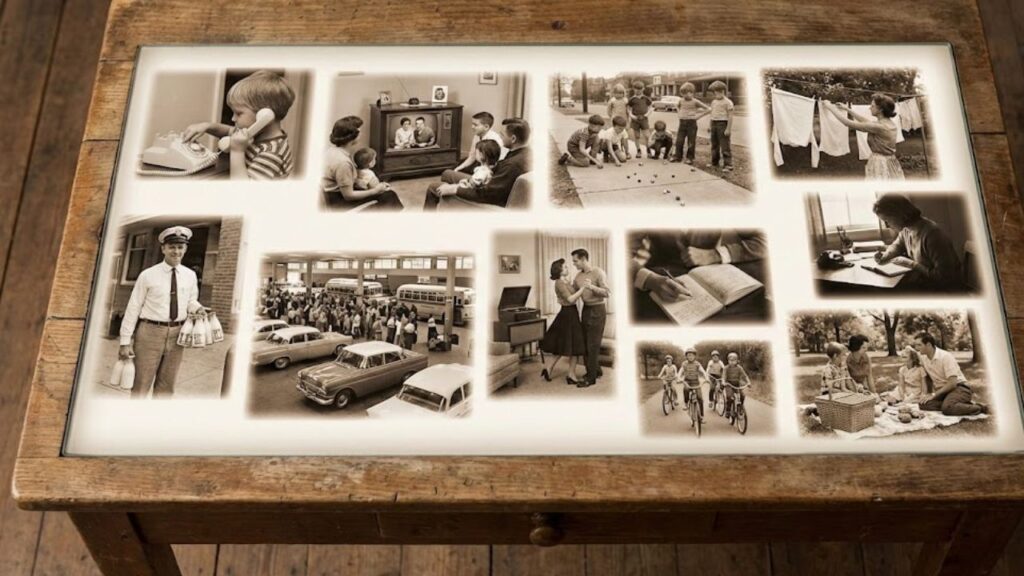
Some might shrug at your stories, dismissing them as distant memories. But you remember—and that detail is no accident. It could say something profound about your brain.
Why Small Memories Stick Around
Memory specialists often talk about “flashbulb memories”—those major events etched into our minds. But what’s even more telling are the smaller moments. For instance, the way your grandfather folded his newspaper at breakfast, the click of the TV dial before remotes existed, or the sound of coins dropping into a payphone.

These unimportant fragments shouldn’t matter, yet they do. Your brain doesn’t just store milestones like birthdays or weddings; it also preserves these repetitive, everyday moments that most people forget.

Ask someone in their 60s or 70s about using a rotary phone, and they won’t just say, “We had one.” They’ll describe hearing the click as the dial spun back, the weight of the receiver, and even the pattern on the wallpaper behind it. That’s not just nostalgia; it’s a brain that stored a vivid scene in high definition.
Why Your Memory Might Be Sharper Than Most
Researchers have found that long-term memory tends to remain surprisingly sharp, even as short-term memory starts to blur with age. You might forget where you left your glasses, but you can recall the exact route you walked to school decades ago. This contrast can be unsettling, but it shows something remarkable: your brain is holding onto the past in vivid detail, like a well-maintained photo album.
This ability to recall detailed, sensory-rich memories isn’t just about nostalgia. It’s a sign of a healthy, well-functioning episodic memory. Your brain didn’t just remember dates; it captured the full atmosphere.
10 Everyday Moments That Reveal a Sharp Memory
Think back to your daily routines—not the big events, but the little things. If you can still vividly replay ordinary moments from years ago, your memory is functioning at a higher level than most people’s. Here are some scenes that might ring a bell:
- The distinct clatter of glass milk bottles on your doorstep in the early morning.
- The route your newspaper delivery boy took, passing the same barking dog every day.
- The sound of your school locker slamming shut after the last bell.
If you can still remember these moments with surprising clarity, your brain is doing more than just recalling memories—it’s keeping them alive with intricate sensory layers.

How the Brain Stores Everyday Memories
The brain doesn’t simply store memories like a list. Instead, it builds webs of sensations, emotions, and repeated actions. When a memory is connected to routine, mild emotion, or sensory cues, it becomes a long-term anchor in your mind.
Take, for instance, the sound of rewinding a VHS tape, the design inside your favorite cereal box, or how your first watch ticked a little louder at night. These tiny details suggest that your brain was doing a lot of the work back then—before we outsourced so much to our phones.
How to Keep Your Memory Sharp Today
You don’t need fancy brain games or apps to improve your memory. Instead, start by paying attention to the details around you. When you visit a café, notice three specific things—the background music, the color of the cups, and the way the barista holds the milk jug.
Later, try to replay that scene. Describe it to a friend or simply recall it in your mind. This simple habit encourages your brain to encode the present moment with the same depth it once did for those long-ago scenes.
How to Develop a Memory Habit
Avoid turning memory into a performance test. Don’t panic when you forget something. Instead, focus on what does come easily to mind. Maybe you can’t recall what you had for lunch, but you can vividly describe a family meal from decades ago. That’s a different part of your memory flexing its muscles.
Memory isn’t a trick; it’s a quiet superpower.
Simple Ways to Train Your Memory
- Notice everyday scenes: Once a day, pause for 10 seconds and take a mental snapshot of where you are—sounds, smells, and details.
- Tell micro-stories: When telling a story, add a sensory detail, like the song that was playing when you went to the shop.
- Reconnect with old routines: Listen to a song from your teens, flip through an old cookbook, or revisit your childhood street on Google Maps to wake up dormant memories.
- Write down a fragment: Jot down a random scene from your past—a bus stop, a kitchen, or a classroom. No structure, no pressure.
- Drop the perfectionism: Don’t stress about doing this every day. Even occasional practice will benefit your memory.
What Your “Little Memories” Reveal About You
If you can still recall details like the exact ringtone of your first mobile phone, the squeal of chalk on a blackboard, or the smell of your first office’s coffee machine at 8:45 a.m., you’re carrying more than just nostalgia. These memories show that your brain didn’t just survive the years—it thrived, adapting, storing, and layering experiences over time. That’s a testament to your brain’s ability to preserve rich, sensory memories.

Key Takeaways
- Everyday memories matter: Small sensory moments reveal strong episodic memory, not just trivial recollections.
- Detail is a quiet skill: Remembering sounds, smells, and textures indicates rich encoding in your brain.
- Simple habits help: Taking mental snapshots and revisiting old cues can help keep memory active without pressure.
