
On a busy Saturday afternoon in a packed supermarket, a small boy suddenly slips free from his mother’s hand. He runs straight toward an older woman standing by the fruit display and launches himself into her arms, as if this reunion has been building all week. She laughs, wipes her palms on her jeans, and bends down as he urgently whispers about dinosaurs and a broken Lego piece.
Around them, shoppers rush by, scroll on phones, and look worn out. She doesn’t. In that moment, time quietly divides into two worlds: their shared bubble, and everything else.
Psychologists have explored these bonds for decades, trying to understand why some grandparents become a deep emotional home for grandchildren, while others remain more distant. The difference is rarely about money, gifts, or perfect health. More often, it comes down to a few deeply human habits.

They Offer Rare, Undivided Attention
Ask adults to describe their favorite grandparent, and their expression often softens. They don’t say, “She had the nicest house” or “He bought me the most toys.” Instead, they say things like, “She really listened to me” or “He made me feel important.” That kind of presence is powerful in a distracted world.

Psychologists call this attuned attention — the feeling of being fully seen. For children, it’s emotional gold. It sends a clear message: you matter, you exist, your thoughts count. When grandparents offer this consistently, kids store those moments like emotional life preservers.
A French study on intergenerational relationships found that children who described a “very close” bond with a grandparent repeatedly used one word: listening. Not rules. Not discipline. Listening.
One eleven-year-old explained that with her parents she often had to hurry and avoid interrupting, but with her grandfather, “time stops.” He put his phone face-down, turned off the television, and leaned in when she spoke. No multitasking. No half-answers.
Another teenager said her grandmother remembered her friends’ names and favorite music. These details may seem small, but to a child they signal something big: my world matters enough to be remembered.
Attachment research shows that this kind of focused warmth strengthens self-esteem and emotional regulation. Grandparents who are deeply loved don’t necessarily talk more — they simply listen better. They ask gentle follow-up questions and resist the urge to fix everything.
Perfection isn’t required. What children remember is the pattern: with Grandma or Grandpa, the world slows down. That steady feeling shapes the bond more than any grand gesture.
They Protect Small Rituals That Build Trust
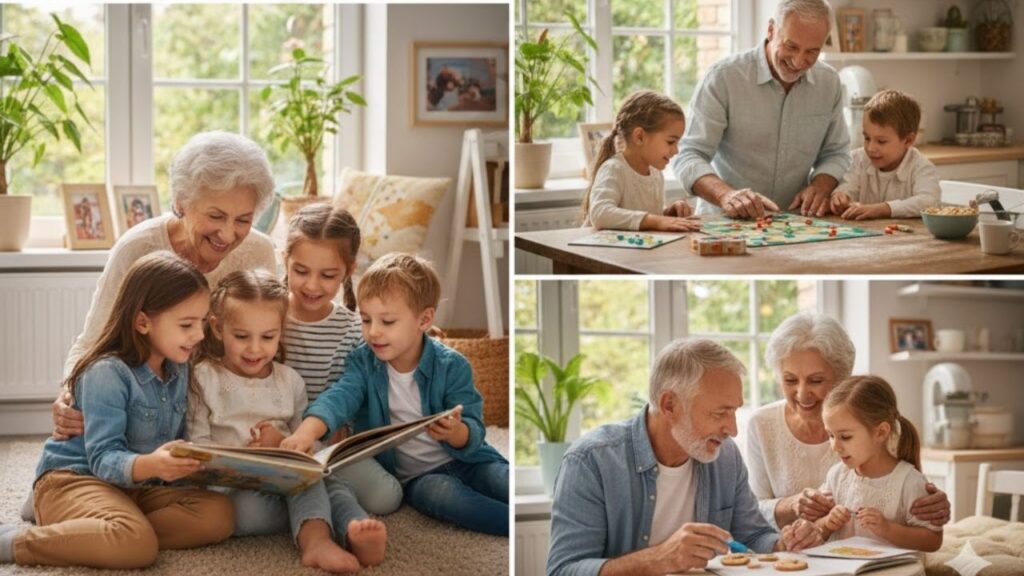
Another powerful habit of cherished grandparents is their devotion to small, repeatable rituals. The same bedtime story. The same card game. The familiar way apples are sliced or the secret handshake at the door. These routines may look ordinary, but in a child’s mind they form emotional scaffolding.
Family psychologists describe rituals as anchors. They create stability in a world that often feels unpredictable. When grandparents hold these rituals with calm consistency, children don’t just enjoy the activity — they learn to trust the relationship itself.
Imagine a grandson who spends every Wednesday afternoon at his grandmother’s apartment. First, they open the window “to let the city in.” Then they drink hot chocolate, even in summer, and play exactly three rounds of the same board game. Not two. Not four.
Years later, he’s a moody teenager with headphones and sarcasm. He complains about the game, but he still shows up every Wednesday and plays those three rounds. Research shows that these rituals lower stress and strengthen a sense of belonging.
Predictability creates emotional safety. Grandparents who are deeply loved understand the value of “the usual thing.” The usual walk. The usual snack. The usual story.
The magic isn’t in how impressive the ritual looks, but in how reliably it returns. When life becomes overwhelming, these routines are often what grandchildren remember long after the toys are forgotten.
They Balance Warm Welcome With Respect for Boundaries
The most loved grandparents manage a delicate balance: they open their arms wide without overwhelming. Children can say, “I’m tired” or “I don’t want a hug,” and the grandparent responds with grace, not guilt.
Research on autonomy shows that children whose boundaries are respected grow into adults who can say yes or no without shame. Grandparents, removed from daily parenting stress, are uniquely positioned to support this.
Picture a young girl who confides to her grandmother, “I don’t like it when Uncle Mark tickles me.” The room goes quiet. Her grandmother responds calmly: “You can always tell me what you don’t like. Your body is yours.” No drama. No shaming. Just validation.
Moments like this build trust. The child learns, with Grandma, I don’t have to pretend.
Unconditional welcome doesn’t mean unlimited access. Children feel safest when adults combine warmth with respect. This shows up in simple habits:
- Asking before posting their photos online
- Knocking before entering bedrooms or bathrooms
- Respecting whether a child wants a hug, a wave, or space
- Accepting when a child is too tired to talk
- Allowing harmless secrets without interrogation
Each gesture sends the same message: you are your own person, and I’m beside you.
They Share Real Stories, Not Perfect Ones
Beloved grandparents often share honest stories from their own lives. Not polished success tales, but real ones — failed exams, broken hearts, missed chances. For children surrounded by curated images, hearing “I struggled too” is grounding.

Developmental psychologists note that family storytelling helps children build a coherent life narrative. They learn that people change, mistakes happen, and pain passes.
Imagine a teenager devastated after failing a math test. His parents lecture him. He shuts down. Later, his grandfather quietly shares how he failed his driving test three times and felt deeply ashamed.
That story doesn’t fix the grade, but it breaks isolation. The teenager learns that failure is human, not a personal flaw.
Research on resilience shows that children who know their family’s ups and downs cope better with stress. Grandparents who share doubts and regrets don’t lose authority — they gain humanity.
Seeing a flawed adult remain lovable teaches children what real love looks like.
They Choose Playfulness Over Pressure
Ask children what they enjoy most with their grandparents, and the answers are simple: cooking, joking, watching birds, drawing, dancing. There’s a lightness that often contrasts with everyday pressures.
Deeply loved grandparents don’t turn every moment into a lesson. They understand that joy has value on its own. They laugh easily, act silly, and lower the emotional temperature.
One grandmother created a “Mistake of the Day” award while cooking with her grandson. Burned pancakes were celebrated. Over time, the boy became more willing to experiment — in the kitchen and beyond.
Psychologically, play reframes failure as curiosity instead of shame. Children relax when they’re not constantly evaluated.
These grandparents avoid constant comparisons and pressure. They encourage without shrinking the child. Grandchildren remember who made them feel lighter, not smaller.
They Stay Emotionally Present as Time Changes Them
As years pass, bodies slow and memories blur. The most loved grandparents aren’t those who stay youthful — they’re the ones who stay emotionally available. They ask questions, even if they forget the answers. They say, “Tell me again.”
Children notice when grandparents grow frailer. What stays with them is the unchanged affection — the familiar smile, the squeeze of a hand.
Psychologists describe this as continuity of connection. The form changes, but the emotional signal remains.
One teenager recalled visiting his grandfather in a care home. His grandfather forgot the day, but not his name. “Every time he saw me,” he said, “his face lit up.” That moment left a permanent imprint.
Witnessing vulnerability alongside warmth teaches children that love endures even as strength fades.
The Quiet Legacy of Loved Grandparents
When adults speak about grandparents they adored, their voices soften. They remember scents, routines, a specific chair by a window. They don’t recall speeches. They remember simple phrases: “I’m proud of you.” “I’m listening.” “You’re always welcome here.”
Psychology gives language to what children feel instinctively: being loved by a grandparent creates a second emotional backbone.
These habits aren’t a checklist. They’re directions — small ways of leaning toward connection, again and again.
The next time a child walks into your kitchen or appears on your screen, the real question isn’t what you’ll do together.
It’s how you’ll show them that sharing this moment is a gift.

| Core Focus | What It Looks Like | Why It Matters |
|---|---|---|
| Deep, present attention | Giving full focus without distractions, noticing and remembering small details from the child’s daily life | Strengthens emotional connection and shows children they truly matter in everyday moments |
| Mutual respect and boundaries | Encouraging closeness and open talk while always seeking consent and respecting a child’s “no” | Builds long-term trust and creates a sense of safety that continues into the teenage years |
| Truthful sharing with playfulness | Talking honestly about real-life challenges while keeping interactions light, warm, and pressure-free | Nurtures resilience, confidence, and joy rather than simple rule-following |
