
The first sound you hear is the fan—soft and steady. Your air fryer hums away in the corner of the kitchen, its small frame looking like a mini robot that only knows how to blast hot air at frozen fries. You bought it with high hopes: “healthy crisp without oil,” visions of roasted veggies and crispy chicken wings on weeknights. For a while, it worked. Then, the same recipes started repeating. Nuggets. Potatoes. Reheated pizza. Over and over.
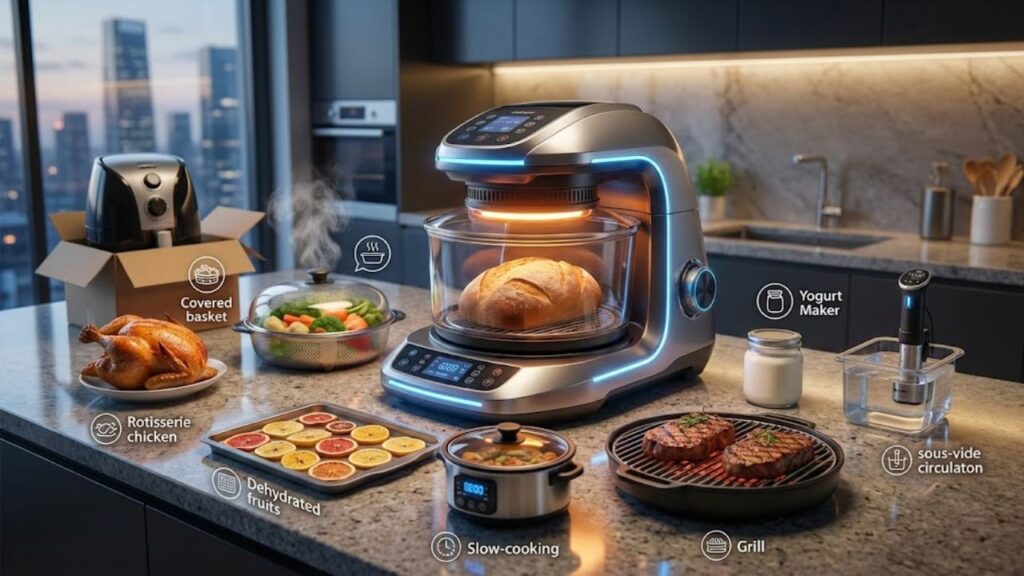
One evening, as the fryer hummed along, you found yourself scrolling through your feed. Another sleek, multi-tasking machine caught your eye—one that roasted, steamed, grilled, slow-cooked, baked, and even dehydrated. Nine different functions in one device. Suddenly, your trusty air fryer felt limiting.
You glance at your crowded countertop and think: maybe the era of single-function gadgets is behind us.

From Single-Use Gadgets to True Kitchen Multitools
Walk into any small kitchen, and you’ll notice the same thing: appliances crammed together like commuters on a crowded train. Air fryer on one side, rice cooker on the other, blender hidden behind the toaster. All promising to “revolutionize your cooking” but only really used for a few recipes before they become forgotten in the clutter. Enter the new wave of multifunctional cookers, quietly making their mark on kitchen counters.

Instead of focusing solely on making fries, these new gadgets offer up to nine different cooking modes: air fry, slow cook, steam, grill, roast, bake, sauté, reheat, and dehydrate. It dawns on you that your air fryer isn’t obsolete because it failed; it’s simply obsolete because it’s alone.
Take Clara, for example. A 34-year-old living in a tiny 35 m² apartment with a galley kitchen. For years, her air fryer was the center of her kitchen, sitting next to a weary microwave and a rice cooker gathering dust. “I had three machines for three tasks,” she says, laughing. “And I mostly cooked pasta anyway.”
Last winter, she replaced everything with a multifunction cooker that combined air frying with eight other cooking modes. By the second week, she was slow-cooking chili while working from home. By month three, she was steaming salmon, baking banana bread, and dehydrating apple chips on Sundays. The biggest surprise? It wasn’t the new recipes—it was the space she gained in her kitchen and in her head.
These 9-in-1 cookers are like mini kitchens inside a single pot. Inside, you’ll find a heating element, a convection fan, pressure or slow-cooking capabilities, and precise temperature controls for steaming and baking.
This combination opens up a whole new world of cooking possibilities. Instead of simply asking, “What can I throw in the fryer?” you’re now asking, “What do I want to eat today?” Whether you need to simmer all afternoon, sear quickly, or create crispy textures, your cooking now adapts to your schedule instead of the other way around.
Maximizing the Potential of Your 9-in-1 Cooker
The real shift comes on weeknights. Instead of tossing frozen food into the basket, you start with a simple base: a handful of vegetables, some protein, and seasonings. Use the sauté mode to brown onions and garlic directly in the bowl. Add lentils or rice, pour in stock, and switch to slow cook or pressure cook.
By the time you’re back from a shower or call, your meal isn’t just reheated—it’s fully cooked. If you’re feeling fancy, finish with a quick air-fry or grill blast to add a crispy layer on top. One bowl, one lid, and three cooking modes in just 30 minutes.
 Winter storm warning issued as up to 55 inches of snow could fall and overwhelm roads and networks
The biggest pitfall with these machines is relying solely on the familiar “comfort” function you already know. Air fryer enthusiasts tend to stick to frying, while slow-cooker fans only make stews. We’ve all been there—picking up a Swiss Army knife and only using the small blade.
A gentler approach is to try one new function per week. This Sunday, try steaming vegetables instead of boiling them. Next Wednesday, experiment with a one-pot pasta using sauté, then simmer. The following week, play with dehydration overnight for snacks. Let’s be honest: nobody does this every day. The goal isn’t perfection; it’s building new habits so you don’t rely on the same three “safe” recipes.
Eventually, you realize the real luxury isn’t the number of modes, but the time and mental energy they free up. A chef I spoke to who uses a 9-in-1 cooker for his kids summed it up well: “People think gadgets stifle creativity. I think they eliminate excuses. When you can roast, steam, and crisp in one place, the gap between ‘I should cook’ and ‘I actually cooked’ shrinks dramatically.”
Key Cooking Modes and Their Practical Benefits
While each 9-in-1 cooker has a variety of features, most users rely on four or five core functions. These are the ones that tend to get the most use:
- Air fry/convection: For crispy textures without deep frying.
- Slow cook: For hands-off stews, soups, and curries.
- Steam: For fish, dumplings, and fresh vegetables that still taste vibrant.
- Bake/roast: For small cakes, gratins, and Sunday roasts.
- Dehydrate: For making low-waste snacks from fruit, herbs, or leftover bread.
A Shift in How We Approach Cooking at Home
There’s a subtle psychological shift when your kitchen has one device that does nine things instead of five separate gadgets. You start planning meals based on ideas instead of appliances. No longer do you ask yourself, “Should I use the stove or the oven?” Instead, you ask, “Do I want it slow-cooked and melting, or fast and crispy?”
This change doesn’t instantly turn anyone into a food influencer, but it does quietly reshape your approach to cooking. It helps bridge the gap between what you want to eat and what you throw together when you’re short on time or energy. You may still make frozen fries on a Thursday night, but on Sunday, you’ll slow-cook a vegetable curry without needing to worry about timing or using multiple pans.
For smaller homes, shared apartments, or busy families juggling work and kids, these multifunction cookers are a silent decluttering tool. They replace an air fryer, rice cooker, steamer, and sometimes even the oven on hot summer days. Fewer gadgets to plug in, clean, and store.
The emotional impact is harder to measure but just as significant. A single, reliable appliance becomes the “yes” to cooking when everything else says “order in.” It provides a way to eat better without feeling like you have to completely overhaul your life. It’s a way to experiment without the risk of failure every time. **Goodbye, air fryer as the star of the show; hello, quiet, versatile workhorse in the corner.** And before you know it, you might find yourself cooking more like a grown-up and scrolling through food videos a little less.

Key Takeaways for Streamlining Your Kitchen
- 9-in-1 versatility: Combines air frying, slow cooking, steaming, baking, and more in one device, freeing up countertop space and replacing multiple single-use gadgets.
- Layered cooking: Use several modes in sequence (like sauté, slow cook, then crisp) in one pot to achieve restaurant-quality textures with less effort and fewer dishes.
- Gentle learning curve: Explore one new function per week to slowly build new cooking habits without overwhelming yourself.
