
At first, the snowflakes appeared harmless. The soft, slow-motion spirals you watch from the window while sipping your coffee. Then the wind shifted. The flakes thickened, turned sideways, and began slamming against the glass, as if someone had cranked winter up to maximum.
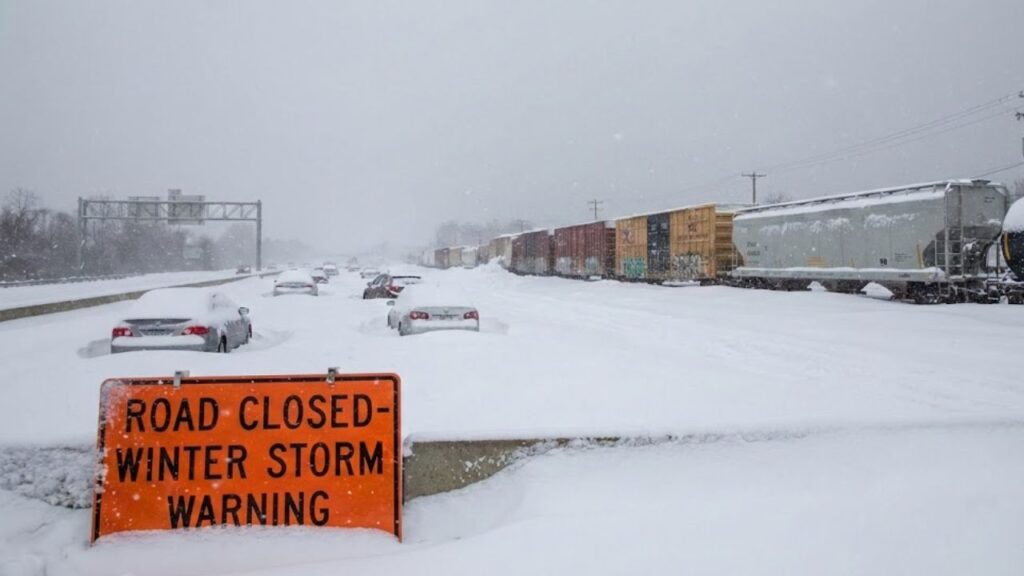
By mid-afternoon, the sound outside had changed. Cars were no longer driving; they were grinding, whining, stuck in drifts that grew by the minute. A delivery van spun out on a side street and simply stayed there, hazard lights blinking in a whiteout that no one could see through.
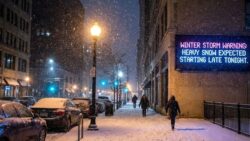
People’s phones pinged at once: Winter storm warning. Up to 55 inches of snow possible. Travel could become impossible. That last line didn’t feel theoretical.

Whiteout Conditions Overwhelm Roads
When forecasters use words like “crippling” and “life-threatening,” you feel it in your stomach long before the storm hits your street. This system is dumping snow so quickly that it could bury parked cars in a single night, with some higher elevations potentially seeing up to 55 inches.

Plows that typically stay ahead of storms are already struggling to keep up. Highway cameras show lanes shrinking hour by hour, guardrails disappearing, and those reflective markers, which usually guide drivers, swallowed up in a blank sheet of white.
You can no longer see asphalt. What remains is a narrow, uneven trench carved through the snow.
Rail Lines Face Similar Struggles
On the rail lines, the situation is just as tense. Crews have been working since dawn to heat switches, clear drifts from platforms, and position locomotives like chess pieces before a long game. One regional operator quietly admitted they are “planning for partial shutdown, then hoping for better.”
A maintenance worker shared a photo of a siding already drifted shoulder-high, and the worst of the storm hadn’t even arrived. Trains that do operate will be crawling, and service alerts are stacking up with the ominous words: “Indefinite delays.”
The cities seem to hold their breath between these updates.
The Raw Numbers Behind the Storm
The raw data helps explain the unease. Once snowfall rates hit 2 to 4 inches per hour, even the most well-equipped cities start to lose the battle. Plows can’t clear what’s being dumped onto the road in minutes. Salt becomes less effective when temperatures drop, and this system is pulling Arctic air down behind its heavy snowbands.
On the railways, blowing snow clogs crossings, buries signals, and freezes switches solid. Trains need clear visibility, dependable braking, and crews who aren’t battling whiteout conditions just to reach the yard. The deeper the snow, the more each mile of track becomes a small engineering project.
There’s a tipping point where “slow travel” turns into “no safe travel at all.”
When You Must Travel: A Survival Guide
The safest advice during this kind of warning is simple: don’t go. Stay home, reschedule, or log in instead of showing up. But reality doesn’t always cooperate. Some people work in hospitals, power plants, grocery stores. Others need to check on an elderly relative or transport children before conditions worsen.
If you have no choice but to travel, plan as if you’re going off-grid for a while. This means a full tank of gas, a charged phone, a real ice scraper, and a paper map in case apps fail or routes close.
Drive as if the brakes barely exist.

On the Rails: Check Before You Go
On the railways, “checking before you go” stops being a polite suggestion and becomes survival. Train apps and websites can lag behind reality when a storm hits this hard, so refreshing for updates every few minutes isn’t overkill. Call centers get overwhelmed, and platform announcements become rushed and unclear.
Despite this, people will show up, standing on platforms with snow caked onto their boots, watching the board flip from “Delayed” to “Cancelled” like a slow-motion domino effect. If that ends up being you, give yourself permission to leave early. One of the worst traps is insisting you “have to” get somewhere when it’s clear that conditions are deteriorating.
Accepting the Storm’s Reality
Let’s face it: nobody plans as early as meteorologists would like us to. There’s also a quieter layer to getting through a major winter storm: accepting that it’s not a failure to step back from normal life for a day or two. The pressure to maintain routines can be overwhelming, especially for parents, hourly workers, or anyone who prides themselves on being reliable.
Sometimes, the bravest thing you can do in a blizzard is say, “Not today. I’m not risking that drive. I’m not standing on that platform in a whiteout.” It doesn’t make you weak; it shows that you understand the value of your safety and well-being.
Prepare for the Worst: A “Stuck Kit”
- Blanket
- Water
- Snacks
- Basic medications
- Flashlight
- Power bank
Wear layers that allow for movement, not just stylish coats for Instagram.
Always tell someone your route and timing before you leave.
Plan to turn back if conditions worsen. That’s a valid outcome, not a failure.
Stay tuned to local radio or alerts, not just generic national forecasts.
What This Storm Reveals About Our Infrastructure
Every major winter storm acts as a stress test for more than just roads and rails. It reveals the thin threads on which our routines depend. When buses stop, trains stall, and highways close, we see how many lives are balanced on these schedules.
A 55-inch snow forecast isn’t just a weather headline. It’s a question: which parts of your life truly can’t pause, and which ones only seemed that way because we never stopped long enough to ask.
The person stranded at the office because they left too late will tell that story differently than the one who stayed home and watched the storm swallow the streetlights in slow motion.
We’ve all been there, that moment when you stand at your window and wonder if what you were about to do is really worth stepping into that kind of night.
Key Takeaways
- Extreme snowfall totals: Localized amounts up to 55 inches, with rapid accumulation rates. Helps you judge when travel crosses from risky to genuinely unsafe.
- Transport disruptions: Roads, highways, and rail networks facing closures and major delays. Encourages early planning, remote options, and backup routes.
- Personal storm strategy: Emergency car kit, real-time updates, and permission to cancel plans. Gives you a practical, human-scale way to ride out a major winter event.
