
The first time I noticed the BeamHub sitting on a kitchen counter, it looked more like a modern game console than a device meant to reheat soup. There was no door, no bulky buttons, just a thin black surface with a glowing ring at its center and a soft hum that sounded closer to a laptop than an appliance. My friend placed a glass container of leftover pasta on top, tapped her phone, and a gentle pulse of light spread beneath the dish. Two minutes later, the food was steaming hot while the plate itself stayed cool. There were no dry edges, no rubbery cheese, and none of that familiar plastic smell.
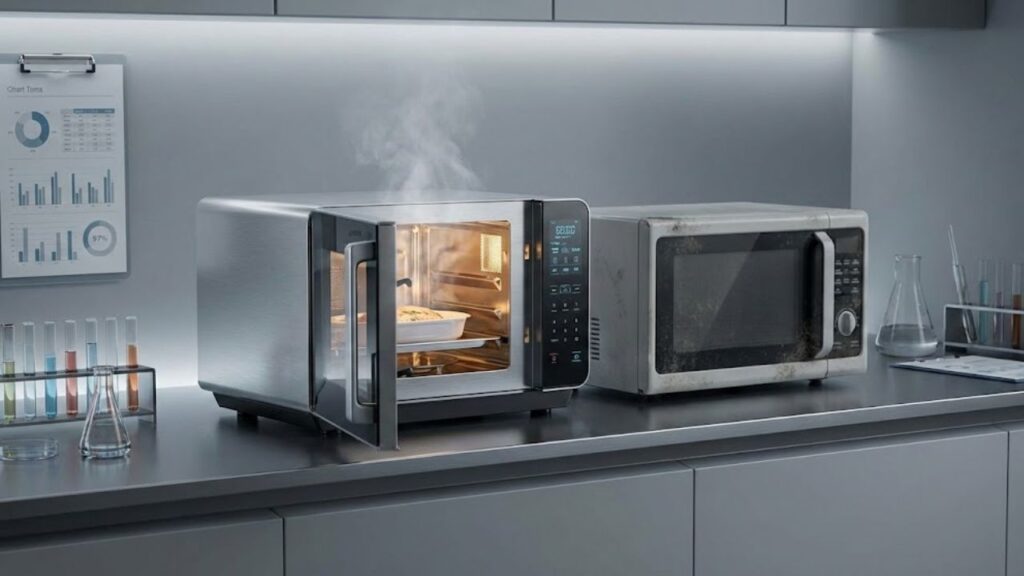
I grew up with the familiar microwave “bing.” Watching this unfold, I couldn’t help wondering if I’d just seen the beginning of its quiet goodbye.
The Quiet Rise of a Cooker That Heats With Light
The device quietly buzzing through appliance circles promises something simple yet radical: heating food with precise light-based energy instead of scattering microwaves. Known in technical terms as a solid-state RF cooker or light-wave cooker, brands now market it under friendlier names like BeamHub or LightOven. Its exterior is minimal, but inside it’s packed with chips that direct energy with centimeter-level accuracy.

What stands out first isn’t the science. It’s the result. Food heats evenly from center to edge, without that frustrating cold spot that ruins the first bite.

When the Microwave Becomes Countertop Storage
A Boston family tested an early unit for a month. Their routine was typical: frozen vegetables, last-minute defrosting, reheated coffee. Two weeks in, their microwave was unplugged and repurposed as extra counter space.
The father, an engineer, tracked everything. A bowl of chilled chili took 1 minute 40 seconds instead of 2 minutes 30, with no boiling ring around the edges. Frozen salmon cooked straight from the freezer in 7 minutes, flaky throughout, no half-raw center. Even the kids stopped complaining about pizza crusts turning chewy. They started calling it “the hot plate that never misses.”
How Precision Radio Waves Replace Guesswork
Unlike traditional microwaves that rely on a single magnetron bouncing energy randomly inside a metal box, these new systems split energy into multiple controlled beams. The cooker steers them like Wi-Fi signals, scanning the food as it heats. Sensors detect moisture, fat, and density, adjusting power and direction in real time.
The result is less wasted energy, cooler containers, and far fewer hot-and-cold pockets. European energy tests already show 20 to 30 percent savings compared to mid-range microwaves, simply because the device stops exactly when the core reaches temperature.
Trending Stories Readers Are Also Noticing
- Drain-cleaning tricks that claim to work without chemicals, sparking safety debates
- Veterinary-approved methods to reduce dog barking without punishment
- Rural living disputes over wind turbines and property views
- Frugal living advice for staying comfortable on a tighter budget
- Winter fruits that keep garden birds coming back
- Non-stick egg hacks using pantry staples
- Household drain fixes that divide plumbers and skeptics
- Revived nuclear technologies that could reshape reactor fuel
From Quick Reheats to Real Cooking
The real surprise isn’t reheated coffee. It’s realizing you’re actually cooking with it. You place a pan or plate on the surface, choose the dish in the app, and the cooker scans, weighs, and applies a heating pattern that ramps up, holds, then eases off at the end.
There’s no plastic wrap, no mid-cycle stirring. You press start, walk away, and get a notification when the center is ready, not the edges.
Why Professionals Are Paying Attention
A London-based food photographer described how this changed her workdays. She used to rely on a battered microwave that left her with dry rice and overcooked vegetables. Now she reheats full plates straight from the fridge. The cooker recognizes multiple foods on one plate and heats each in short, targeted bursts. The beans stay bright, the chicken stays tender, and the potatoes don’t harden.
“It made leftovers feel like food again,” she said.
Control, Safety, and Smarter Energy Use
Experts point to control as the biggest leap forward. Traditional microwaves can’t finely manage where energy lands, leading to splatter and overheating. Solid-state systems use transistors and software to distribute energy across frequencies, focusing on colder, denser areas first.

Because sensors provide constant feedback, power cuts off the instant the target temperature is reached. That means less mess, less overcooking, and fewer melted plastic lids. For once, “smart” actually means smarter.
Learning to Live Without the Microwave
Switching feels strange at first. Experts recommend treating the new cooker as your default heat source. Start with leftovers. Notice there’s no need to stir or cover. Then try defrosting meat you forgot to take out. The texture stays closer to fresh instead of gray and half-cooked.
Most testers say that within a week, reaching for the microwave handle feels unnatural.
Common Missteps New Users Make
The biggest mistake is treating it like a faster microwave. Manually setting times and power defeats the point. These devices perform best when you trust the presets and let the sensors work. They’re designed for hands-off cooking, not constant tweaking.
Container anxiety fades quickly too. Any flat, stable dish usually works, including certain metals designed for the technology. After a few days, the fear disappears.
Why Manufacturers Are Confident
“We didn’t want to build a fancier microwave,” explains Dr. Lena Ortiz, a thermal systems engineer involved in early prototypes. “We wanted a device that understands food the way a good cook does. Gentle at first, stronger when needed, then backing off at exactly the right moment.”
Brands now emphasize three shifts: precision heating, adaptive energy use, and safer containers with less plastic contact.
The Microwave’s Long, Quiet Goodbye
In electronics stores, microwaves still line the shelves, but next to them sit slim, silent slabs promising smart heat. Sales staff already frame them as the future of reheating.
Not everyone will switch immediately. Some will wait for prices to drop. Yet the pattern feels familiar, like flat screens replacing bulky TVs. This time, though, the attachment runs deeper. Microwaves are tied to childhood meals and rushed mornings.
What’s really changing isn’t just an appliance. It’s the habit of settling for food that’s merely acceptable. The light-wave cooker turns reheating into something closer to mini cooking. Over time, that can change how we batch-cook, waste less, and feel about eating at home.

Key Takeaways at a Glance
- Targeted light-wave heating: Even results, better texture, fewer cold spots
- Higher energy efficiency: Lower power use and reduced wasted heat
- Improved daily usability: Presets, safer containers, and less guesswork
