The bus doors hiss open and a rush of icy winter air spills inside. It is 4 p.m. in Helsinki, already pitch-dark, and passengers are bundled in heavy coats, wool hats, and damp scarves. At the next stop, a woman steps off carrying a reusable shopping bag and walks toward a low, pale-yellow apartment block. Behind its fogged windows, something unexpected is happening.
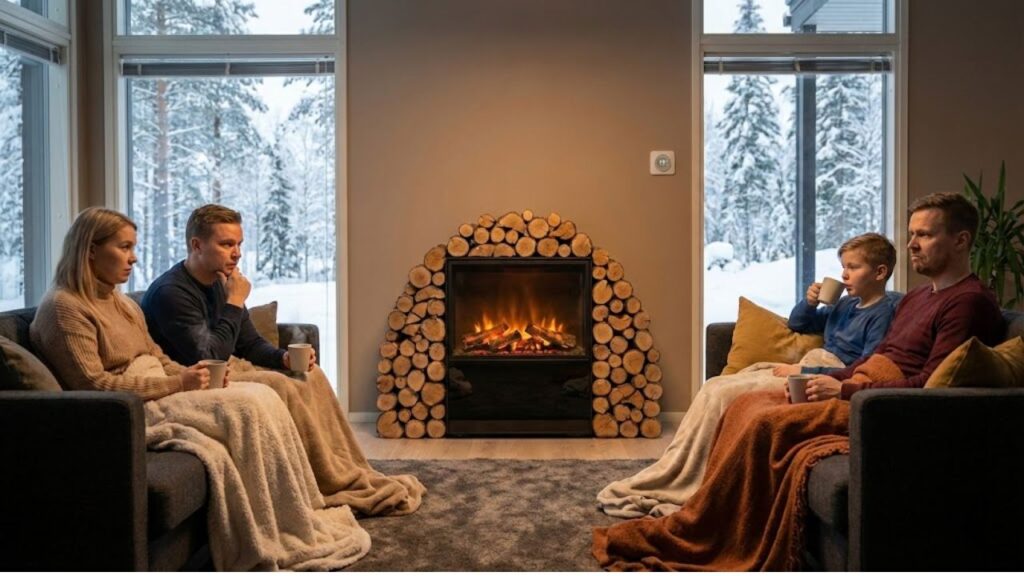
She enters the stairwell, climbs to the second floor, slips off her boots, and walks into a living room with no radiators at all. Yet the space is warm, almost uncomfortably so. On the floor, a single humming appliance gives off a gentle glow. It is not a heat pump or a modern panel heater, but something most people already have at home.
Her neighbor thinks she is reckless. The internet suspects she may be ahead of the curve.

A Quiet Heating Shift in Finnish Homes
Across Finland, a low-key habit is spreading quietly through apartment blocks. Residents are turning their radiators down, sometimes switching them off entirely, and depending instead on a simple kitchen appliance to add warmth. It is not advanced technology, but an ordinary electric oven or stove, used in ways that make energy experts uneasy.

From Turku to Tampere, the pattern repeats. Families bake bread and leave the oven door slightly open afterward, letting heat drift into the kitchen. Students slide frozen pizzas inside partly for dinner, partly for warmth. The boundary between cooking and heating has started to blur.
Saving Money, One Tray at a Time
In Espoo, 29-year-old software engineer Lauri checks his energy app while his coffee brews. His radiators are set low, almost off. Each evening, he roasts a large tray of root vegetables, then leaves the oven door ajar for about an hour. Electricity costs less at night, he explains. His one-bedroom apartment stays around 21°C, even when outdoor temperatures plunge to -15°C.
Among friends, screenshots of monthly energy bills circulate like jokes. Some celebrate cutting heating costs by 20%. Others complain about stuffy kitchens and dry air. A running joke sums it up: “Are you cooking dinner, or just warming the economy?”
Why This Idea Took Hold
Energy specialists often shake their heads, yet they understand the background. Finnish homes usually rely on district heating or electric radiators, and energy prices have been under intense scrutiny since the 2022 shock. When bills rise, people experiment. An oven is familiar, easy to control, and already plugged in.
The logic spreads quickly. If you are cooking anyway, why not use that heat for the room too? From there, some people push the idea further, treating the oven almost like a fireplace. That is where the discussion becomes heated.
How Ovens Are Used as Temporary Heaters
The method itself is simple. People cook food they would make regardless, such as bread, casseroles, or cinnamon rolls. Once finished, instead of shutting the door immediately, they leave it slightly open. Warm air flows out, gently heating the kitchen and nearby rooms in smaller apartments.
Others coordinate cooking with the coldest hours of the evening. Some use the stovetop instead, simmering large pots of water for tea or soup and allowing the steam to warm and humidify the air. Everything looks like everyday life, just adjusted with a deliberate purpose.
Comfort, Memories, and Conflict
In Tampere, 63-year-old retired teacher Marketta opens her oven after roasting salmon and potatoes. Her grandson builds Lego on the floor as a wave of heat fills the kitchen. She prefers this to radiator heat, describing it as softer and more natural. Having grown up with a wood-fired baking oven, the habit feels familiar.
Her downstairs neighbor feels differently. He complains about lingering smells and worries about fire safety. Their building’s Facebook group has already hosted several tense discussions about so-called oven heating.
Safety Warnings and Emotional Appeal
Technically, ovens are not designed to heat living spaces. Their efficiency and safety standards are different. Energy providers warn that running an empty oven for hours wastes electricity and can strain wiring in older buildings. Fire services quietly remind residents to keep curtains, towels, and wooden tools away from hot surfaces.
Still, the emotional pull is strong. The soft glow, the steady warmth, the smell of food cooking create a feeling of care and comfort. It feels less like battling bills and more like tending a home. Few people rely on this every day, but on bitter nights below minus twenty, the temptation is real.

Using Kitchen Heat the Finnish Way
For those who continue this practice, long-time users share unwritten rules. The most important is clear: never run the oven empty just for heat. If the oven is on, food is inside. Once cooking ends, the oven is turned off, allowed to cool briefly, and only then opened slightly.
In compact apartments, many choose dishes that retain heat well, such as heavy casseroles, rye bread, or meals cooked in cast-iron pots. Both the food and the oven release warmth slowly. Even a one or two degree increase can feel significant during deep winter.
Where People Go Wrong
Problems arise when this becomes a permanent heating strategy. Energy use increases quietly, and safety risks multiply. Ovens are not meant to maintain room temperatures for hours. They dry the air, stress old tiles, and burden aging electrical systems.
A more balanced approach treats oven heat as an occasional boost. Ventilating briefly each day helps prevent stale air. In homes with children or pets, keeping distance from an open oven door is essential.
Control Matters as Much as Cost
There is also a cultural layer discussed quietly over coffee. One Helsinki-based energy advisor summarized it simply: people do not only want lower bills, they want a sense of control. Turning down a radiator means trusting a distant system. Opening an oven door feels like taking direct action.
- French group Safran strengthens its global aircraft technology lead with a new Saudi Arabia agreement
- Beyond Burj Khalifa and Shanghai Tower, Saudi Arabia prepares a skyscraper nearing one kilometer
- Eight newly released spacecraft images reveal interstellar comet 3I ATLAS with striking clarity
- Why airing your home between 8 a.m. and 10 a.m. in winter can backfire
- A simple garden trick with tennis balls that helps protect birds and hedgehogs
- An unusually early polar vortex shift is forming, with experts noting rare intensity
- Two drops in your mop water can keep your home smelling fresh for days without vinegar or lemon
- Neither Nivea nor Neutrogena: experts name a new top-ranked moisturizer
Small Adjustments, Shared Solutions
Many households now combine modest changes rather than relying on a single fix. These choices often include:
- Lowering radiator settings by one or two degrees and using oven heat only occasionally
- Cooking larger meals once or twice a week to spread warmth across several days
- Adding thick curtains and rugs to help retain heat in older buildings
- Using a basic thermometer instead of guessing room temperature
- Discussing smells, noise, and safety openly with neighbors
From the outside, it all looks ordinary, just someone preparing dinner on a very cold evening.
When a Warm Kitchen Raises Bigger Questions
This Finnish debate goes beyond energy costs. It reflects how people adapt when infrastructure and daily reality no longer align. Official advice says one thing, personal budgets say another, and between them sits the simple act of opening an oven door to capture extra warmth.
Each warm kitchen carries a mix of caution, creativity, and independence. Some see the practice as risky, others as a practical northern workaround. The same appliance can feel like a helpful ally or a sign of fragile comfort.
You do not need to live in Helsinki to recognize the feeling. Many people respond to high bills with small adjustments, an extra blanket, a kettle constantly simmering, a hairdryer warming cold feet. These are not perfect solutions, but acts of adaptation.
In Finland, the oven has become a visible symbol of this negotiation between comfort, cost, and common sense. Some will continue using it, others will not. The lingering question is not only whether it is efficient, but what habits will define winters five years from now.
Somewhere tonight, in a dim Finnish stairwell, someone is turning down a radiator and opening an oven door, unsure if they are being careless or simply early.

Key Takeaways
- Everyday appliances as backup heat: Finns increasingly rely on leftover oven heat during cold nights
- Best used occasionally: Using heat from cooking avoids waste compared to running an empty oven
- Communication matters: Open conversations with neighbors help balance comfort, safety, and fairness