
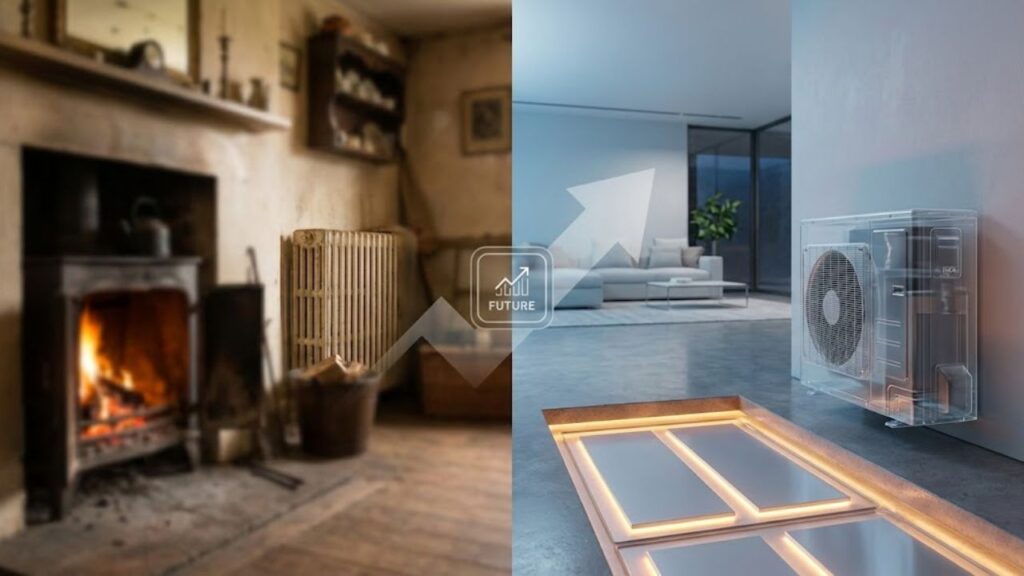
Far from the energy hubs of London or New York, researchers in China are pioneering a surprisingly low-tech yet ambitious system: a solar-powered floor made of sand that acts like a massive rechargeable heat battery beneath your feet.
An Innovative Alternative to Traditional Heating
As climate change intensifies and energy costs fluctuate, conventional heating solutions face growing challenges. Gas boilers are being phased out, oil reliance is politically sensitive, and electric heaters can skyrocket monthly bills.
Scientists at Zhongyuan University of Technology and Dalian University of Technology propose a new approach: transforming a home’s entire floor into a smart thermal sponge. The concept is simple yet effective — using abundant sand as a heat reservoir powered by sunlight and assisted by a heat pump.

Rather than rapidly heating air and losing warmth just as quickly, this system slowly charges a sand layer under the floor, providing steady heat for hours, even after sunset. This contrasts with most conventional systems that rely on fuel combustion or short, costly electric bursts. In this setup, the house itself becomes part of the energy solution.

How the Sand-Based Solar Floor Functions
The Three Core Components
The prototype relies on a three-part system working in continuous harmony:
- Solar panels on the roof collect electricity during daylight.
- A solar heat pump concentrates this energy and transfers heat into the building.
- A 20‑centimetre sand layer beneath the floor stores heat and gradually releases it over time.
During sunny periods, the panels feed the heat pump, which directs energy not just into the air or water, but into the sand beneath the living space. The sand serves as a thermal battery, holding warmth for later use. Think of it as charging your floor during the day to keep your home cozy at night without frequent boiler cycles.
When clouds appear or night falls, the stored heat rises through the floor, creating an even, gentle temperature for occupants. In prolonged cold or low-sun conditions, the heat pump can draw electricity from the grid as a backup, but at lower power compared to conventional heating systems.
 The return of the aircraft carrier Truman, a signal badly received by the US Navy facing future wars
A New Level of Comfort
Unlike traditional radiators or fan heaters, which create hot spots and cold patches, underfloor sand storage heats slowly and predictably. Warmth radiates from below, often allowing thermostats to be set slightly lower without compromising comfort. Reduced air movement also benefits allergy sufferers, limiting dust circulation and maintaining a calmer indoor environment.
Why Sand Works as a Thermal Battery
While sand may seem basic, it offers several engineering advantages:
- Abundant and affordable: readily available worldwide without rare materials.
- Stable and non-toxic: no chemical risks and minimal disposal concerns.
- High thermal capacity: stores significant heat in a relatively thin layer.
- Low maintenance: static installation requires minimal upkeep.
The research uses a 20‑centimetre layer as a balance between storage efficiency and construction practicality. Thicker layers store more energy but increase structural complexity and cost, while thinner layers respond faster but hold less heat.
Potential Savings for Homeowners
Although commercial costs are not yet available and the system remains experimental, several trends suggest promising long-term savings:

| Factor | Impact on Costs |
|---|---|
| Rooftop solar production | Reduces reliance on grid electricity and gas |
| Sand heat storage | Shifts energy use to cheaper or free hours |
| Continuous low-level heating | Prevents sharp peaks in power demand |
| Minimal moving parts | Potentially lower maintenance than complex boilers |
