As winter deepens across Europe and North America, many families are turning up their thermostats and watching energy costs rise in parallel. Traditional heating methods still dominate, often bringing bulky radiators, humming boilers, and an unpleasant surprise when utility bills arrive. Now, a new generation of solar-powered heating systems is changing expectations, offering comfortable indoor warmth without visible heaters and with far lower ongoing costs.
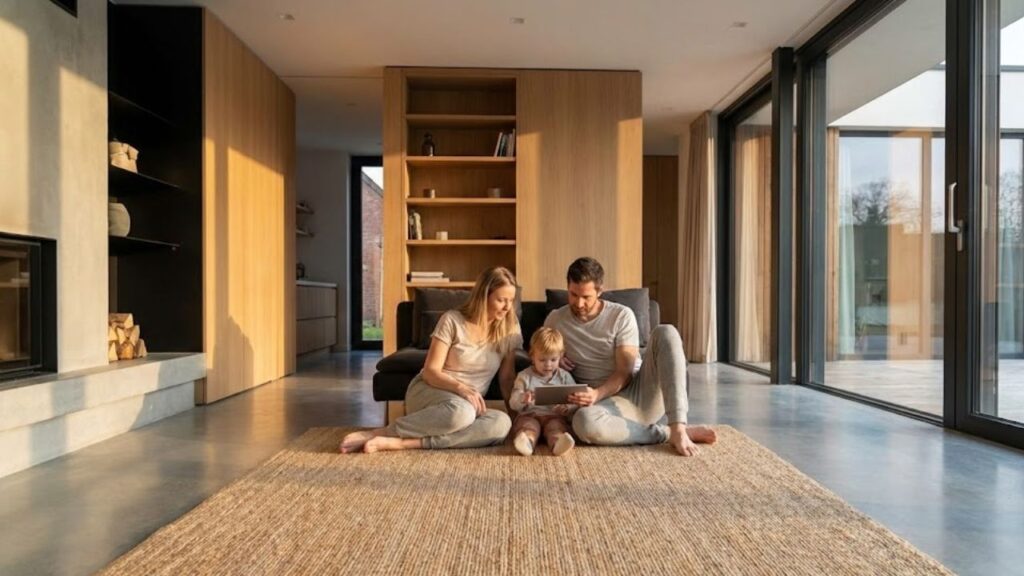
Heating a Home Without Visible Radiators
The concept can sound almost unreal: a house kept warm in winter without radiators mounted on the walls. In reality, the technology is straightforward. It blends rooftop solar panels, highly efficient digital controls, and often underfloor heating to transform sunlight into steady, even heat throughout the home.
Instead of burning gas or relying on electric radiators, photovoltaic panels convert sunlight into electricity. That power then drives low-temperature heating systems, heat pumps, or smart underfloor networks that gently store and release warmth across wide surfaces.

In simple terms, sunlight becomes electricity on the roof and warmth beneath your feet, all without traditional radiators and with much lower running expenses.

The real advantage lies in scale. By heating floors, structural slabs, or concealed wall and ceiling panels, these systems operate at much lower temperatures than standard radiators while maintaining comfort. This shift alone can lead to a significant reduction in energy consumption.
From Concept to Practical Solar-Based Central Heating
Solar panels have long powered lights and household appliances. The innovation now is using them as the core of a home’s heating system rather than a supporting add-on.
How the System Works Day to Day
In a typical installation, several components operate together:
- Photovoltaic panels on the roof or building exterior generate electricity whenever daylight is available.
- An inverter converts this electricity for use by household systems, including heating.
- A smart controller manages when energy is sent to heating, other appliances, or storage.
- Thermal storage, such as a water tank, concrete slab, or phase-change materials, retains heat for later use.
- Underfloor or concealed panel heating distributes that stored warmth evenly through the building.
This approach is often described as solar central heating, even though it lacks a traditional boiler. The building itself acts as a slow-release radiator.
Once installed and paid for, the cost of adding extra warmth can drop close to zero.
Why This Heating Approach Is Gaining Momentum
Clean Energy Without Smoke or Fumes
Conventional heating systems usually depend on burning fuels such as gas, oil, or pellets. Every unit of heat produced brings emissions and, in many cases, local air pollution. Solar-powered heating avoids this entirely.
Photovoltaic panels generate electricity with no direct emissions. When paired with electric heating or a heat pump, there is no need for a flue, gas connection, or fuel deliveries. For cities under pressure to meet air-quality targets, this is a meaningful shift.
No gas line, no fuel tank, no chimney, and almost no on-site emissions during operation.
While grid electricity is still required during dark winter periods unless storage is extensive, even partial reliance on self-generated power can noticeably reduce a household’s carbon footprint.
Cost Figures That Appeal to the Budget-Conscious
The financial case is equally compelling. Traditional radiators and boilers require purchased energy every hour they operate. With solar-based systems, the primary fuel, sunlight, is free.
Research from European pilot projects shows that once installation costs are spread over time, heating expenses can fall dramatically. In well-designed homes, heating-related energy bills may drop by 60% to 90%, depending on climate and electricity prices.
The main obstacle remains the upfront investment. Solar panels, inverters, controls, and underfloor heating cost more initially than simply replacing an old boiler. However, incentives and declining panel prices are steadily narrowing that gap.
Why Underfloor Heating Plays a Key Role
Warmth Where It Matters Most
Radiators typically heat the air nearby, creating hot spots close to the unit and cooler areas elsewhere. Underfloor heating works differently by warming the entire floor surface at a relatively low temperature, often between 25°C and 30°C.
Because heat rises evenly from the floor, people feel comfortable even when the overall air temperature is slightly lower. This allows the system to use less energy while delivering the same sense of warmth.
Instead of pushing a few metal panels to high temperatures, the system gently heats a large surface to a mild, consistent level.
The result is a more uniform indoor climate, fewer draughts, and a type of warmth many find more pleasant, especially in bathrooms and living spaces with hard flooring.

Greater Freedom in Interior Design
Removing radiators also frees up wall space. For designers and renovators, this changes how rooms are arranged. Furniture no longer needs to avoid heaters, windows can extend lower, and narrow spaces feel less cluttered.
In new constructions, heating elements can be built directly into the slab or screed. Renovations are more challenging, as floors may need adjustment, but modern thin-profile systems are increasingly designed for retrofitting existing homes.
Homes That Benefit Most From Radiator-Free Heating
Solar-powered heating systems are currently best suited to certain situations:
- New low-energy homes with strong insulation and airtight construction.
- Detached or semi-detached houses with sufficient roof area for panels.
- Regions with cold yet sunny winters, where clear days still provide good solar output.
- Long-term homeowners willing to wait several years for the investment to pay off.
In dense urban areas with limited roof space or heavy shading, solar contribution may be lower. Hybrid systems that combine solar with a backup boiler or high-efficiency heat pump are already common in these settings.
Handling Cloudy Days and Cold Nights
No heating solution performs perfectly at all times, and solar-based systems are no exception. Extended cloudy periods reduce electricity generation, and panels produce nothing after dark.
This is where smart controls and thermal storage become essential. During sunny hours, the system charges a heat store, such as a water tank or concrete slab. That stored energy then releases warmth slowly after sunset.
The home effectively acts as a rechargeable thermal battery, absorbing heat when the sun shines and releasing it when temperatures drop.
In colder regions, most installations retain a secondary heat source, such as a grid-connected heat pump, a small boiler, or a modern stove. The aim is not to remove backup entirely, but to drastically reduce how often it is needed.
Understanding the Key Technologies
Photovoltaic Panels Versus Solar Thermal
Two solar technologies are often confused. Photovoltaic panels convert sunlight into electricity using semiconductors. Solar thermal collectors directly heat a fluid, usually water.
Radiator-free heating systems mainly rely on photovoltaics because electricity is versatile. It can power heat pumps, run appliances, or be fed back into the grid. Some projects combine PV with solar thermal, particularly for hot water, to maximise energy capture.
The Role of Heat Pumps
A heat pump moves heat rather than creating it, similar to a refrigerator working in reverse. Using electricity, it transfers warmth from outdoor air or the ground into the home, often delivering three to five units of heat for every unit of electricity consumed under favourable conditions.
When powered partly by solar panels and paired with low-temperature underfloor heating, efficiency gains add up. Less purchased energy is required, solar output is better utilised, and indoor comfort remains stable.
How This Could Shape Everyday Living
Picture a winter morning in a near-future neighbourhood. Overnight, the underfloor slab has slowly released heat stored from the previous afternoon’s sunlight. Indoor temperatures remain steady, without the familiar cycle of radiators switching on and off.
As daylight returns, rooftop panels begin generating electricity. A smart controller senses slight cooling in the living room floor and applies a gentle boost. At the same time, it delays running appliances like the washing machine until solar output peaks.
For residents, the change feels subtle. There is no roaring flame, no hot metal radiator, and no boiler pilot to check. Just quiet, consistent warmth and an annual energy bill that feels far less painful.
For renters and apartment dwellers, progress is likely to come through building-wide systems. Developers are testing shared solar roofs with centralised heat pumps and underfloor heating serving entire blocks. Tenants benefit from predictable heating costs, while owners recover installation expenses over time.
Challenges remain, including policy gaps, upfront costs, and a shortage of trained installers. Even so, as energy prices fluctuate and climate goals tighten, heating homes without traditional radiators is rapidly moving from a futuristic concept to a realistic planning choice in many countries.