The bus doors swing open and the cold hits hard. Not the playful kind of chill you photograph, but the sharp Finnish cold that bites at your eyelashes and turns every breath into a white cloud. I trail a young woman through the snow, watching her unlock her door without removing her gloves. She steps inside, and her shoulders immediately drop. There’s no loud boiler, no glowing metal radiators. Instead, a soft, even warmth fills the hallway, wrapping the space like a thick wool blanket.
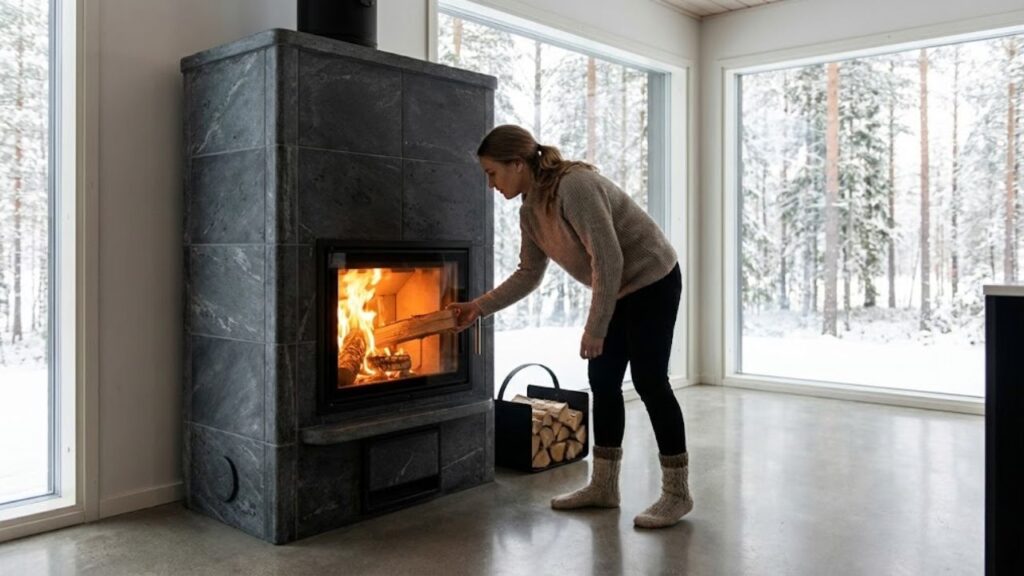
Her toddler crawls across the floor in a thin T-shirt, palms pressed against the tiles, laughing freely. The warmth comes from somewhere invisible. From something most homes already have.
Finland’s Quiet Secret: Heat That Rises From Below
Spend winter in Finland and one detail keeps standing out. People walk barefoot in January. They sit on the floor. Dogs nap in hallways without hesitation. The reason isn’t futuristic technology hidden in the walls. It’s a familiar surface that has been quietly reimagined: the floor itself.
 Moist and tender the yogurt cake recipe reinvented by a famous French chef that divides the internet
Instead of bulky radiators, many Finnish homes use the entire floor as a single, invisible heater. There’s no hissing, no uneven blasts of warmth. Heat spreads gently from the ground up, warming feet first, then the rest of the body. Once you experience it, traditional systems suddenly feel strangely outdated.

Why Radiators Disappear in Finnish Apartments
Step into a modern apartment in Helsinki or Tampere and the difference is immediate. Bathroom tiles feel warm underfoot. Living rooms have no radiators under the windows, yet the temperature stays steady at around 21°C, even when it’s –15°C outside.
Many buildings are connected to district heating, where hot water circulates through thin pipes beneath the floors. In rural homes, electric cables often replace water pipes, hidden under concrete or laminate. The result is identical: no cold spots, calmer air, and walls free of heating hardware.
The Simple Physics Behind the Comfort
The logic is straightforward. Heat rises. Instead of forcing hot air from one corner and hoping it spreads evenly, Finnish homes warm the entire surface under your feet. The floor acts as a low-temperature radiator across dozens of square meters.
Because the system runs at lower temperatures than traditional radiators, it pairs perfectly with heat pumps and district heating. Energy loss drops, comfort improves, and the heating system almost disappears from view, while remaining constantly noticeable on your skin.
How Heated Floors Became Part of Daily Life
Beneath the visible floor lies a hidden layer of technology. Electric heating cables or plastic pipes carrying warm water are embedded in a thin concrete layer, then covered with tiles, parquet, or vinyl. A wall thermostat controls everything, often supported by a floor sensor to prevent overheating.
Most Finns don’t adjust it daily. The temperature is set once and left alone. The heat is slow and steady, holding rooms between 20–22°C. Stepping out of the shower in February feels unexpectedly comfortable, without sudden temperature swings.
Luxury Elsewhere, Practicality in Finland
Outside Finland, underfloor heating is often seen as a design luxury. Inside the country, it’s simply practical. Wet boots dry on hallway tiles. Gloves melt free of snow. Babies crawl on play mats without extra layers.
Many people already own smaller versions of this idea, from bathroom heating mats to under-desk warmers. One family in Espoo admitted their only regret was limiting it to a few rooms. They spent the entire winter sitting there.

Why Steady Heat Uses Energy More Wisely
Underfloor heating works best with consistency. Instead of frequent on-and-off adjustments, it prefers stable settings. This contrasts with the habit of cranking radiators when cold and lowering them later.
The Finnish mindset is simple: good insulation, minimal temperature shocks, and systems that quietly do their job. Once floors stay warm, people stop thinking about heating and start focusing on living comfortably.
Bringing the Finnish Idea Into Your Own Home
For renovations or new builds, warm-water underfloor heating offers the closest match to the Finnish experience. It requires more work initially, but transforms the entire space into a silent heat source.
In apartments or rentals, thinner electric mats can be installed under tiles or floating floors. Under-rug heaters offer another option. The principle stays the same: heat the surfaces people touch, not just the air above them.
Common Mistakes to Avoid
More heat doesn’t mean more comfort. Floors that are too hot can feel unpleasant and waste energy. Finnish homes keep surface temperatures moderate, usually between 20–26°C, depending on the room.
Another mistake is covering heated floors with thick rugs or heavy storage. Trapped heat confuses sensors and reduces efficiency. There’s a learning curve, and that’s normal when switching from older systems.
Where Heated Floors Make the Biggest Difference
- Bathrooms, hallways, and children’s play areas benefit most
- Moderate, steady settings outperform constant adjustments
- Leaving space for heat to circulate improves performance
- Underfloor heating combined with good insulation delivers better results than raw power
- Even a single warm zone can change how winter feels
When a Simple Floor Changes Winter Living
Walking across a Finnish hallway in January explains why people grow attached to their floors. The impact isn’t just technical. It changes daily habits. Children play on the ground. Adults stretch and work from the floor. Wet coats dry quietly by evening.
The beauty lies in its simplicity. No one boasts about it. The floor just works, like a kettle or a coat rack. A familiar surface becomes a constant source of comfort. You don’t need to move north to borrow the idea. Sometimes, it starts with one warm corner where winter mornings feel easier.
From there, the floor stops being just something you walk on. It becomes a tool that quietly reshapes comfort, energy use, and how your home feels when the outside world turns cold and dark.