
The first snowflakes appeared just after the evening commute, falling slowly, as if the city had endless patience. Streetlights caught each flake, briefly lighting them up before they disappeared on the still-warm roads. Children in oversized coats spun in circles, trying to taste the snow, while parents stared at their phones, brows furrowed, fingers hovering over weather alerts.
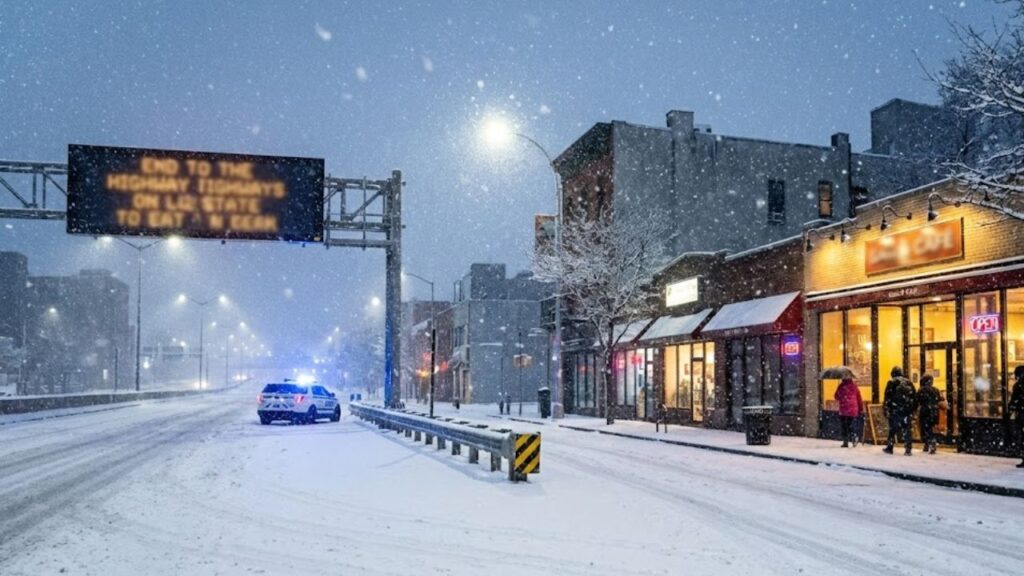
Across the city, office windows stayed lit and restaurant signs kept glowing, even as forecasts grew more urgent by the hour. Heavy snowfall overnight. Dangerous travel. Stay home if possible. On one side were emergency alerts and flashing lights. On the other were deadlines, digital check-ins, and delivery targets. Something, inevitably, had to give.
By late evening, the divide felt sharper. On the radio, the transportation director repeated his message with calm exhaustion: avoid the roads unless absolutely necessary. Snowplows waited at depots, salt spilling from open loaders, drivers clutching large coffee mugs before a long night ahead.

Downtown, however, the brightness of office towers barely faded. Inside, managers on video calls insisted tomorrow would continue as “business as usual”, treating the storm outside like a background screen effect rather than a real threat.

Roads Turn White While Work Lights Stay On
Near the ring road, Samir, a delivery driver, watched a thin white layer form along the curb as he carried another stack of parcels into an apartment building. His navigation app still listed several stops before midnight, the snow symbol pulsing like a warning. When asked if he planned to stay home the next day, he laughed. “The app doesn’t have a blizzard option,” he said. Behind him, a car briefly skidded while turning, correcting itself just in time — the kind of moment people forget, until they can’t.
There is a quiet conflict built into nights like this. Public officials talk about “non-essential travel”, yet for many people, rent, food, and job security remain essential. Businesses that cannot afford to slow down push forward, leaning on forecasts that might change or storms that might weaken.
The reality is simple: decisions during snowstorms are rarely about weather alone. They involve power, income, and deciding who absorbs the risk. When the first snow falls, that tension becomes visible on highways, side streets, and office parking lots.
How to Navigate Conflicting Storm Messages
If you are caught between a boss expecting you at work and alerts urging you to stay home, start with one basic step: build your own local forecast. Check radar maps, hourly snowfall estimates, and, most importantly, what conditions look like outside your own door.

Next, compare that information with your actual situation. How long is your commute? Does it include bridges, hills, or untreated side streets? Who depends on you staying safe? A short city drive is not the same as a long highway commute in poor visibility, regardless of what a generic alert or email suggests.
Few people plan for these moments, but preparing a “storm script” before snowfall begins can make a difference. That means knowing what you will say, what alternatives you can offer, and which limits you will not cross. Most people scramble for the right words while snow is already piling up.
Simple, calm phrases — “I can work remotely,” “I can start later,” “I don’t feel safe driving until roads are cleared” — can ease pressure and reduce stress when decisions feel urgent.
At a late-night press briefing, the police chief stated the issue plainly: employers often speak about safety, yet winter crash reports tell a different story. Allowing flexibility during storms is not generosity; it is responsibility.
- Contact your manager early — Send a brief message before conditions worsen, not when you are already stuck.
- Propose a clear alternative — Remote work, delayed starts, or shift swaps offer practical solutions.
- Know local guidelines — Use official plowing schedules or travel advisories to support your case.
- Consider wider responsibilities — Carpool arrangements, children, or elderly family members matter.
- Set a firm safety limit — Decide in advance what conditions you will not drive in and stick to it.
When “Business as Usual” No Longer Fits
There is a particular isolation in driving past snow-covered cars and frozen wipers while emails cheerfully reference meetings and targets. The storm does not care about schedules, but the stress it creates is real.
Some people will stay home, others will push through hazardous roads, and some will arrive shaken but silent. Quietly, some managers may rethink what they expect from their teams, especially if past winters included accident reports and difficult messages.
 This animal lived on the seabed since 1499 and died in a lab freezer – did science go too far?
- Look beyond headline alerts — Compare official warnings with your specific route and vehicle.
- Guide the workplace discussion — Present concrete options rather than a simple refusal.
- Define your personal weather limit — Clear boundaries protect safety and reduce last-minute pressure.
