
On a grey February afternoon, you pull your watering can across the garden, boots pressing into damp soil. The rain barrel is full, the lettuce looks tired, and using water that fell freely from the sky feels like plain common sense. A neighbor waves over the hedge and casually drops a line that tightens your chest: “They’re going to start fining people for that… 135 euros.”
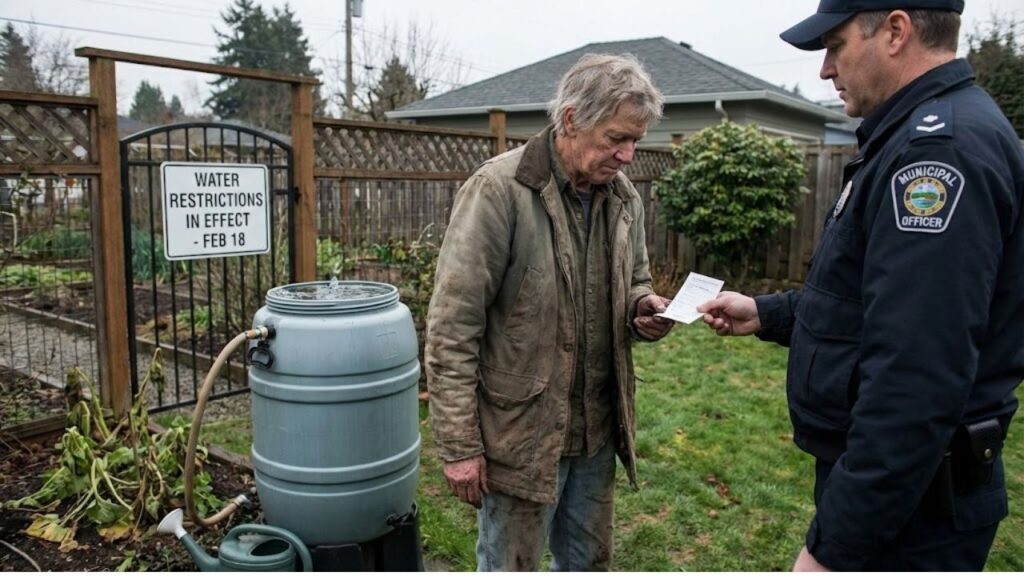
You shrug it off at first, assuming it’s another rumor born on social media. But later, scrolling at the kitchen table, you see it spelled out clearly: rainwater, authorization, fine, February 18. In that moment, the innocent act of filling a watering can suddenly feels very different.
Something subtle is changing in our gardens.

Rainwater under scrutiny: when a simple habit risks a 135 euro penalty
Across the country, gardeners are starting to eye their rain barrels with unease. That familiar blue drum, once a symbol of eco-friendly pride, now feels like a potential trap. Authorities have hardened their stance on rainwater use, especially when collection systems are fixed to homes or gardens. From February 18, the message is clear: using rainwater without authorization in certain cases can lead to a 135 euro fine.

On paper, it’s just another rule. In real life, it changes how people water their tomatoes. Picture a quiet suburban street with matching hedges and tiled roofs. At number 17, Jeanne has used a 300-liter rain tank for a decade. She installed it during a drought after the town encouraged water savings. Roses, tools, terrace—everything was watered with care. Then, at a recent municipal meeting, an official calmly explained that rainwater linked to downpipes or buried tanks could now be subject to checks.
Jeanne went home with a leaflet and a knot in her stomach. She doesn’t see herself as breaking rules. She simply wanted to avoid turning on the tap during heatwaves.
Behind this shift lies a mix of concerns: public health, protection of the drinking water network, and tighter oversight of how water is used. Rainwater running off rooftops can collect pollutants, droppings, and gutter residue. Once it becomes part of a system connected to a home, authorities want proof it won’t contaminate the main supply or be used in unsafe ways.
As a result, the rulebook thickens. Some uses remain tolerated, others must be declared, and certain practices are prohibited without approval. The boundary between “harmless garden water” and a regulated resource has become far thinner than most expected.
How to keep watering your garden without crossing the line
Before panic sets in, it helps to separate two realities. On one side, the simple rain barrel tucked into a garden corner. On the other, complex systems connected to the house. A standalone tank with no link to indoor plumbing usually raises fewer red flags. Problems tend to begin when pumps, pipes, and valves enter the picture.
A smart first step is identifying which category your setup belongs to. If rainwater is only used for surface watering, with a watering can or detachable hose, and there’s no backflow to the household network, you’re generally on safer ground. The moment it’s used for toilets, washing machines, or pressure cleaners, it enters regulated territory. That’s when the 135 euro fine becomes more than a rumor.
Many gardeners only learn the rules after proudly installing DIY systems. Then comes the email from the town hall or a neighbor’s warning that spoils the satisfaction. The emotional impact is real: people feel accused when they believed they were helping the environment.

This is where calm information matters. Each municipality applies national rules through its own bylaws. Before dismantling anything, it’s worth checking the town website, calling the water service, or visiting the town hall. Officials are used to these questions and often provide clear diagrams of what’s allowed. Let’s be honest: few people read these guides until there’s a problem.
Some residents are adapting in practical ways. They separate systems, limit use to watering cans, or officially declare their installations. As one retired teacher put it during a street-side chat:
“First we were told to save water. Now we’re told how we’re allowed to save it. I’ll follow the rules, but I want clarity, not fear.”
To stay on the safe side, a few steps can help:
- List all uses of your rainwater: garden, cleaning, toilets, washing machine.
- Check for any physical connection between rainwater systems and the main supply.
- Ask your town hall which uses require declaration or authorization.
- Keep documents, invoices, or plans related to your setup.
- Simplify the system if it sits in a grey regulatory area.
The more your setup resembles a small water plant, the more attention it can draw.
Between everyday logic and regulation: the future of garden water
This modest 135 euro fine reflects a larger issue. Authorities worry about shortages, pollution, and protecting drinking water. Gardeners, meanwhile, just want to keep plants alive without feeling like offenders. Between the two lies a gap in trust and communication.
Some people will dismantle their systems out of caution. Others will continue quietly, hoping inspections never come. A third group will comply fully, filling out forms and saving receipts. Across all reactions, the same feeling surfaces: frustration that a simple, long-standing habit now carries legal weight.
Most of us recognize that moment when a daily gesture suddenly becomes a file number and a regulation. The deeper question isn’t just about fines, but about how we balance environmental responsibility with administrative control. These conversations are already happening over garden fences. The next one might be waiting at your gate.

| Key point | Detail | Value for the reader |
|---|---|---|
| New fine | 135 euro penalty for unauthorized use of rainwater in certain setups from February 18 | Understand the financial risk before the next inspection or rule change |
| Risky situations | Fixed systems connected to gutters and possibly to the indoor network or buried tanks | Spot if your installation falls into the “grey zone” and act before a problem arises |
| Protective steps | Clarify uses, separate circuits, contact town hall, keep documents | Stay compliant while continuing to use rainwater in a safer, more serene way |
