
The broccoli was overcooked again. On the plate, the florets had turned a dull, khaki green, releasing that faintly sulfurous smell that makes you push them around more than actually eat them. Across the table, my friend sighed and said she buys broccoli for the vitamins, yet suspects she’s boiling most of them straight into the sink. Looking at the pot still steaming on the stove, it was hard to disagree. Many of us never really think about what happens to those famous antioxidants between the cutting board and the plate. We simply hope for the best while the water bubbles.
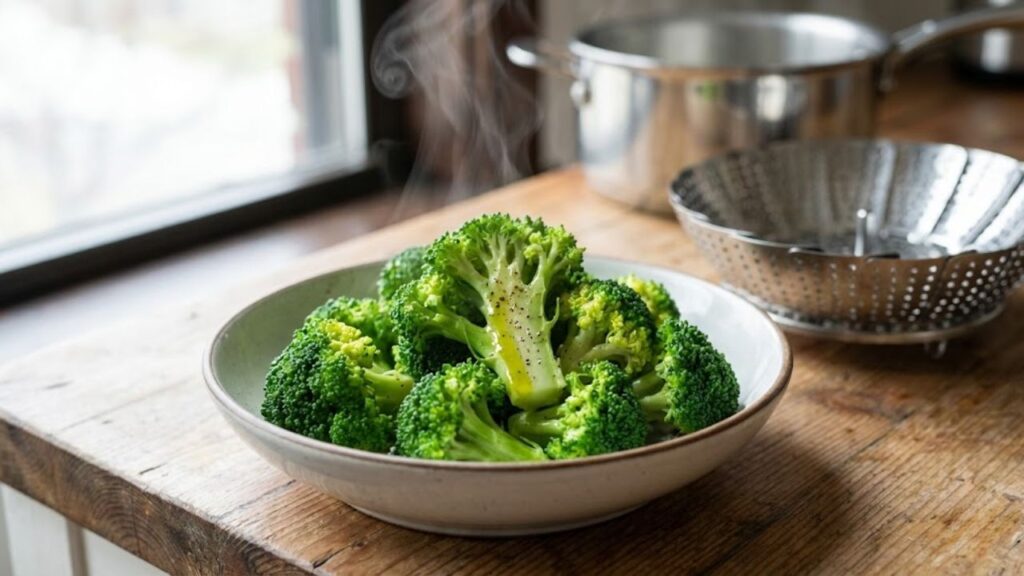
What often goes unnoticed is that the way broccoli is heated quietly determines whether it stays a nutrient-dense vegetable or turns into a tired, soggy side. Surprisingly, the ideal method isn’t fully raw or heavily boiled. The truth sits somewhere carefully in between.
Why “Healthy” Broccoli Often Falls Short
The routine is familiar. Someone decides to eat healthier, fills the shopping cart with broccoli, and later drops it into a large pot of boiling water. Ten or fifteen minutes later, the kitchen smells like a cafeteria, and most of the vitamin C and antioxidants are floating in the cooking water. That water usually goes straight down the drain.

On the opposite end, some people eat broccoli completely raw, straight from the fridge. The crunch is satisfying, and it feels virtuous. Nutritionally, though, it’s not always as impressive as it seems. Certain key compounds simply don’t activate as well without heat. Between overboiled and raw lies a middle ground few people are ever taught.

A Spanish study comparing broccoli that was boiled, steamed, microwaved, stir-fried, or eaten raw revealed a clear pattern. Boiling performed worst, washing away large amounts of vitamin C and antioxidant compounds into the water. Raw broccoli preserved many nutrients, but compounds like sulforaphane are better activated with a brief exposure to heat. Not intense cooking, just enough warmth to trigger the right enzymes without destroying them.
The Science Behind the Sweet Spot
Broccoli naturally contains vitamin C, vitamin K, carotenoids, and glucosinolates. These nutrients are delicate. Prolonged heat breaks them down or leaches them into water. No heat at all, however, means some never fully activate. This is why neither mushy boiled broccoli nor extremely raw florets come out on top.
The ideal approach is a short, gentle cooking that softens the fibers, preserves the bright green color, and keeps most nutrients intact. Once you realize this, broccoli stops being a throwaway side dish and starts feeling like a fragile ingredient worth a little attention.
The Best Cooking Method for Antioxidant Retention
Nutrition researchers repeatedly point to one method: light steaming. Not a long steam bath, and certainly not a rolling boil. Just three to five minutes over gently simmering water. Cut broccoli into evenly sized florets, place them in a steamer basket, and cover with a lid. Watch closely for the moment the green turns vivid and the stems become just tender when pierced.
That bright color is your signal. The broccoli should still have a slight bite, never collapsing or dull. Many people grow to dislike broccoli simply because they walk away from the stove. A quick distraction can turn a perfect steam into overcooking, leaving behind a stronger smell, a grainy texture, and fewer nutrients.

Even setting a simple four-minute timer can dramatically improve both flavor and nutritional value. It’s a small habit that makes a real difference.
How to Maximize Absorption
Researchers also highlight a helpful pairing. Lightly steamed broccoli becomes even more effective when finished with a small amount of healthy fat and a cruciferous “ally” like mustard. Olive oil helps the body absorb fat-soluble antioxidants, while mustard can help reactivate certain enzymes if cooking went a bit too long.
A nutrition scientist from the University of Illinois notes that gentle steaming preserves vitamin C and antioxidants, while oil and mustard improve how well the body uses them. It’s a minor kitchen tweak with noticeable impact.
A Simple, Repeatable Routine
- Steam broccoli for 3–5 minutes until bright green and just tender.
- Toss immediately with olive oil, lemon juice, and a teaspoon of mustard.
- Season lightly with salt, pepper, and optional toasted nuts or seeds.
- Serve right away and avoid repeated reheating.
This routine quietly turns an ordinary side dish into a genuine antioxidant boost without adding complexity.
Between Research and the Everyday Plate
Once you notice the difference, it’s hard to ignore. Lightly steamed broccoli tastes sweeter, keeps a pleasant bite, and avoids that heavy, overcooked smell. It feels fresh and alive rather than obligatory. Still, everyday life isn’t perfect. Some nights the timer is forgotten, and leftovers get reheated. That’s normal.
The goal isn’t perfection. It’s making small adjustments so that everyday meals quietly work in your favor. Watching broccoli shift from dull to vivid green in seconds can feel like a reminder that tiny changes often create outsized benefits.

Key Takeaways for Everyday Cooking
- Light steaming works best: Three to five minutes over simmering water preserves most vitamin C and antioxidants.
- Avoid long boiling: Extended boiling drains nutrients, dulls color, and weakens flavor.
- Finish smart: Olive oil improves absorption, and mustard can support beneficial compounds.
