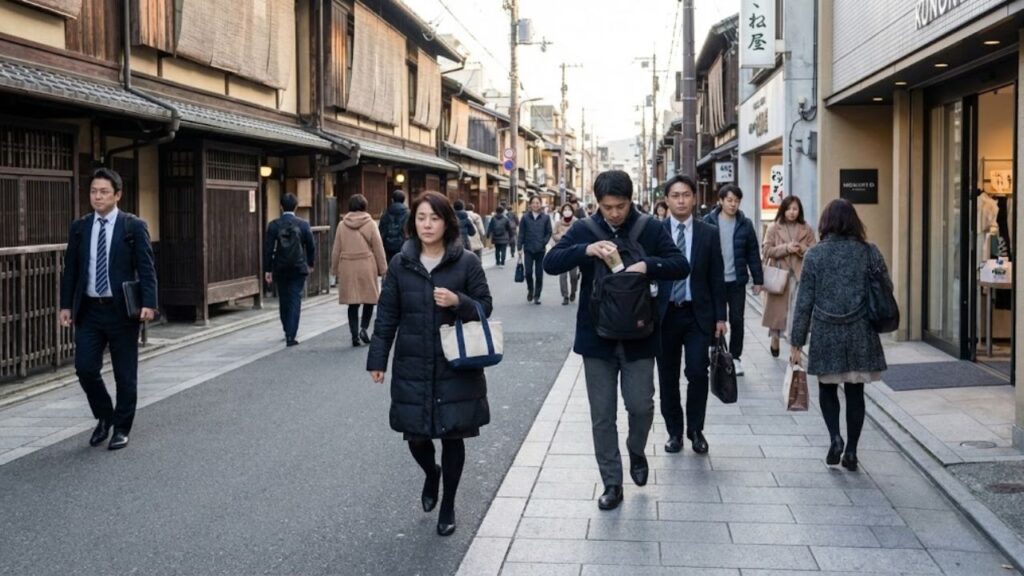
Walk for miles through Shibuya’s iconic crossing or a quiet Alpine village and one detail stands out: immaculately clean streets with almost no litter. What surprises many visitors is what they do not see. Public rubbish bins are scarce. Even so, pavements remain pristine, leaving travellers holding empty bottles and snack wrappers wondering how this system works.
Where Did All the Rubbish Bins Go?
Most international visitors notice the contradiction quickly. Tokyo is enormous, yet public bins are uncommon, particularly away from stations and convenience stores. Even in busy districts like Shibuya, where crowds surge day and night, finding a place to discard a small wrapper can feel unexpectedly difficult.
Convenience stores, known as konbini and open around the clock, are among the few dependable options. They usually provide bins for items purchased there. However, staff discourage dumping outside rubbish, and many shops now move bins indoors or label them clearly to prevent misuse.

For tourists, the result is often simple: carry everything with you. Surveys by Japan’s tourism agency in 2025 found that the lack of public bins ranked as the top discomfort for foreign visitors. Many describe spending entire days with pockets full of receipts, empty bottles, or carefully wrapped chewing gum, waiting to dispose of it back at their hotel.

Japan’s clean streets are neither accidental nor the result of constant cleaning. They reflect deliberate social and policy choices.
A Policy Shaped by Security and Values
When Safety Concerns Changed Urban Design
Public bins were not always so rare. The shift began after major security incidents altered how everyday infrastructure was viewed.
In 1995, a cult released sarin gas on the Tokyo subway, killing and injuring commuters. The shock prompted a nationwide rethink of public safety. One quiet outcome was the removal or reduction of bins, especially around transport hubs, where they were seen as potential hiding places for dangerous items.
After the 2004 Madrid train bombings, these concerns intensified. Today, some large stations have a few transparent bins placed in monitored areas. In crowded public spaces, bins may be absent altogether.
Security alone does not explain Japan’s cleanliness. Many countries invest in surveillance and checks yet still struggle with litter. In Japan, another system quietly supports the policy.
A Shared Culture of Cleanliness
Cleanliness in Japan extends beyond appearance. It sits at the crossroads of education, social norms, and religious tradition.
From an early age, students clean their own classrooms, corridors, and toilets. There is no separate cleaning crew arriving after lessons. Children sweep floors and wipe boards themselves, learning a simple rule: if you use a space, you care for it.
This lesson carries into adulthood. Dropping rubbish is frowned upon not because of heavy fines, but because it signals disregard for the group. Social awareness, combined with pride in shared standards, keeps behaviour in check.
Religious practices reinforce this mindset. At Shinto shrines, visitors perform purification rituals, such as washing hands and rinsing mouths. Buddhist and Shinto traditions emphasise respect for place and community, subtly shaping how people treat public spaces.
As a result, cleanliness is viewed less as a government service and more as a collective responsibility.

How People Handle Rubbish Day to Day
Daily life still produces waste, from coffee cups to plastic bottles. In a country with few bins, residents follow a set of unwritten rules.
Everyday Habits Locals Rely On
- Carry a small rubbish pouch or bag for temporary storage.
- Use bins correctly, such as bottle and can slots near vending machines.
- Avoid eating while walking, choosing to finish food near the point of purchase.
- Sort waste carefully at home into multiple categories on set collection days.
Vending machines, found almost everywhere, usually include containers for cans and bottles. Train platforms often provide clearly labelled sorting bins. Beyond these areas, people simply keep their rubbish with them.
Municipal cleaning still exists. Street sweepers work early mornings, and volunteer groups organise neighbourhood clean-ups. However, they support an already careful culture rather than compensating for widespread littering.
Practical Tips for Visitors
For travellers used to bins on every corner, Japan’s approach can feel challenging. A little planning helps.
Simple Strategies That Make a Difference
- Konbini snacks: Eat nearby and use the store’s bins only for those items.
- Vending machine drinks: Finish close by and use the matching container.
- All-day sightseeing: Carry a small pouch and empty it at your hotel.
- Train travel: Look near platform toilets or kiosks for sorted bins.
Hotels usually provide properly separated bins in rooms and sometimes explain local waste rules. For many visitors, carrying rubbish shifts from frustration to a daily lesson in shared responsibility.
Why This System Matters in a Tourism-Heavy World
Japan’s model raises a broader question: do people stay tidy because bins and fines exist, or because social norms are internalised?
When infrastructure does all the work, litter can feel like someone else’s problem. In Japan, the absence of bins creates a moment of reflection. If you buy something, you manage its waste until you reach home or your hotel.
This idea echoes environmental debates about responsibility. It discourages unnecessary packaging and gently promotes reusable bottles and bags, without formal enforcement.
What “Clean” Really Means Beneath the Surface
The system is not without challenges. Elderly residents and parents with children may find carrying rubbish inconvenient. During festivals and major events, temporary bins appear and fill quickly, revealing how much waste is usually handled privately.
Japan’s waste story also extends beyond spotless streets. Incineration remains common, and while facilities are advanced, debates continue over emissions, recycling, and sustainability. Visual cleanliness can mask deeper environmental trade-offs.
Still, everyday habits such as school cleaning, rubbish pouches, and mindful consumption demonstrate how small actions reshape public space. For visitors, the key shift is to see yourself not just as a user of city services, but as a temporary member of a community.
Imagine buying bottled tea at a station, finishing it on the train, and stepping into a neighbourhood with no bins in sight. Elsewhere, that bottle might be abandoned. In Japan, it goes into your bag until later. The act is minor, sometimes annoying, yet repeated by millions each day, it explains why the streets stay clean even when the bins seem to have disappeared.