
The first cabbage butterfly settles in before the watering can is back in place. Ants form tidy lines straight toward aphids clustered on your beans. The air feels gentle, the soil smells alive, yet the vegetable patch already looks like an open buffet for pests who arrived early and uninvited.
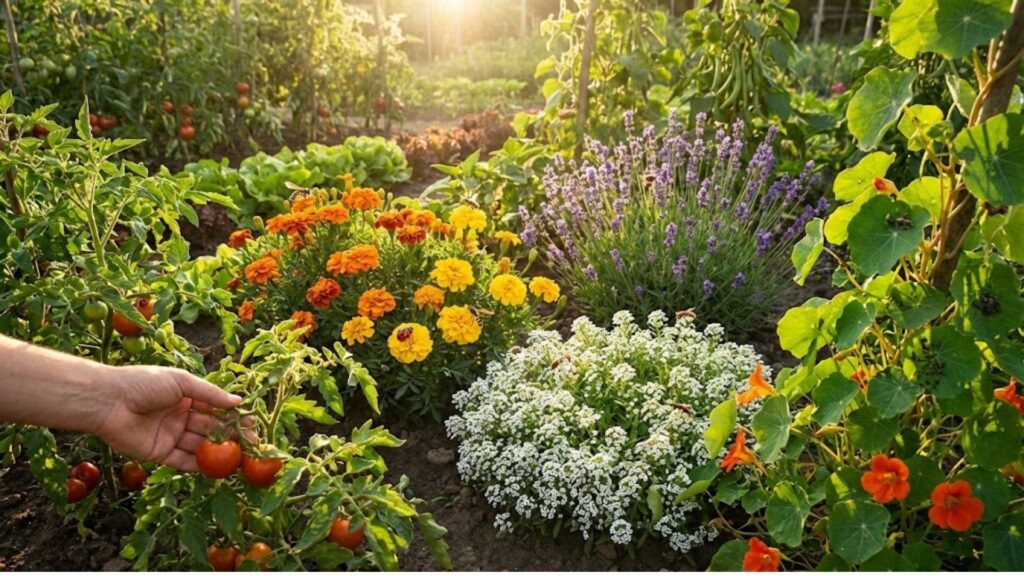
One evening, a neighbor rests on the fence and chuckles. “You’re gardening on your own,” she says. “Let the plants help.” Her hand sweeps across her beds: flowers alive with buzzing, basil nestled under tomatoes, flashes of marigold glowing near lettuce. Her cabbages stand whole. Her beans are untouched. The contrast is impossible to miss.
Seeing the Hidden Life Between the Rows
Once you start paying attention, small scenes appear everywhere. Hoverflies drifting over tiny blossoms, ladybirds tucked into soft herb tops, bees moving steadily between zucchini flowers and borage stars. The garden stops being neat rows of vegetables and turns into a living balance between helpers and threats.

Some plants do more than feed you. They defend space, call for reinforcements, and distract troublemakers. When that realization lands, even a simple marigold looks different. The real question becomes clear: which allies do you invite in?

The Quiet Bodyguards Every Garden Needs
Walk through a thriving vegetable garden and bare soil is rare. You’ll notice marigolds glowing like tiny suns, nasturtiums spilling orange and red, basil pressed close to tomato stems, and borage leaning its blue stars over squash leaves. None of it is accidental decoration.
Each plant plays a specific role. Marigolds release scents into the soil that disturb certain nematodes and confuse insects above ground. Nasturtiums work as decoys, drawing aphids and flea beetles away from tender crops.
Basil’s strong aroma disrupts tomato hornworms and can even mask the scent of tomatoes themselves. Borage brings in bees and small predatory wasps that quietly reduce caterpillars while you’re busy elsewhere. The result is simple: fewer bites on vegetables and more allies in the air.
This mix isn’t just attractive. It’s a practical pest approach powered by scent, nectar, and plant chemistry. Once you’ve watched ladybirds clear a leaf in hours, companion planting stops feeling theoretical.
Placing Each Plant Where It Matters
Start with marigolds along bed edges or tightly spaced near tomatoes, peppers, and beans. Plant them every 20–30 cm so their scent forms a continuous barrier. French marigolds (Tagetes patula) are especially effective for soil issues.
Plant basil directly at the base of tomatoes. One or two plants per tomato create enough aroma to confuse insects and reward you every time you brush past. Mixing varieties like Genovese, purple, and lemon basil extends the season.
Letting Decoys and Magnets Do Their Work
Allow nasturtiums to trail near cabbages, kale, radishes, and beans. Sow them at bed corners and let them spill outward. They often take the first hit from aphids and flea beetles, giving your crops breathing room.
Sow borage beside zucchinis, cucumbers, and strawberries. Give it space, as it grows freely. If some plants go to seed, they’ll return year after year, bringing pollinators without extra effort.

The Common Mistake That Weakens the Effect
Many gardeners plant helpful flowers too far from the crops they’re meant to protect. A neat cabbage row with a few marigolds off to the side doesn’t work. Scents and insects need closeness to be effective.
Throwing in companion plants at the end feels productive, but the real trick is planning them from the start. Think of these plants as part of the layout, not decoration.
Assign each a role: marigolds as border guards, basil as tomato bodyguards, nasturtiums as decoys, borage as pollinator magnets. With clear jobs, they naturally end up where they help most.
Simple Patterns That Are Easy to Repeat
Some gardeners report cutting pest problems in half by abandoning strict rows. One shared this last summer:
“Since mixing flowers and herbs into my beds, I spray almost nothing. I lose a few leaves, but the insects balance themselves.”
Keep it practical with small rhythms:
- 1 basil plant at the base of each tomato
- 1 line of marigolds along sunny bed fronts
- 1 clump of nasturtiums per cabbage or bean section
- 2–3 borage plants near squash, cucumbers, or strawberries
No complex plans are needed. Just repeat these gestures each time you plant.
A Garden That Works With You
With these plants in place, the garden changes. There’s more motion, more sound, more quiet drama in the leaves. At first, the lack of rigid order can feel strange.
Then the signs become clear. An aphid-covered nasturtium isn’t a failure; it’s protection. A humming marigold border is quietly preventing caterpillars before they appear.
You may still lose a tomato or a handful of radishes. The difference is you’re no longer alone. You’re supported by allies, and the cost is simply a garden that’s a little wilder and far stronger.

Quick Reference Guide
- Marigolds as borders: planted densely along edges to disturb pests and protect soil
- Nasturtiums as decoys: placed near brassicas and beans to draw aphids away
- Basil and borage as allies: basil with tomatoes, borage near squash and berries to repel pests and attract helpers
