Xiaomi’s upcoming 17 Ultra appears ready to abandon flashy extras and concentrate on a more serious goal: transforming a glass-and-metal smartphone into a true pocket camera competitor. Instead of a rear display like its Pro counterparts, the device prioritizes imaging hardware, signaling a clear shift toward photography-first design.
A design that clearly puts the camera first
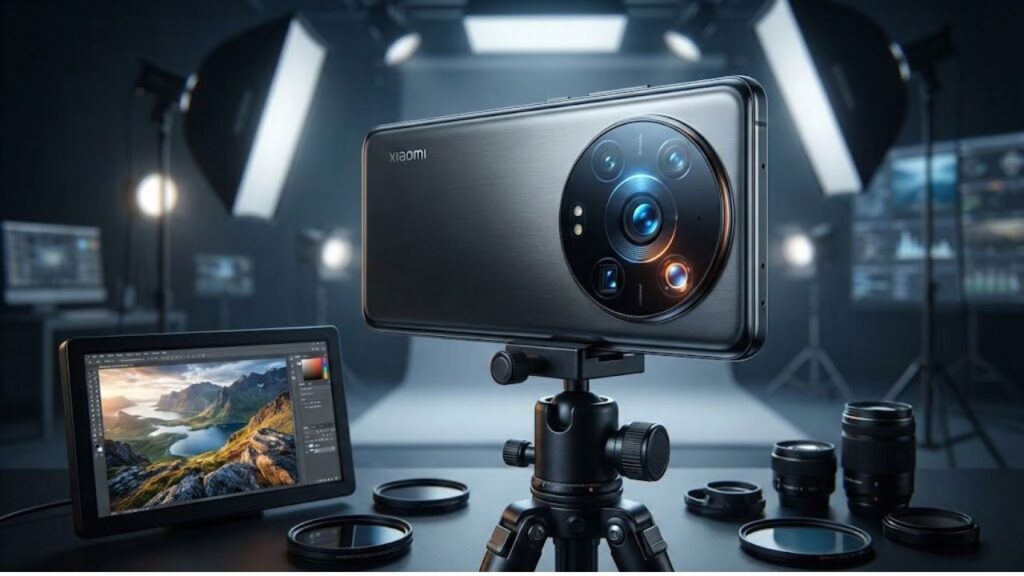
Leaked prototype images immediately highlight the phone’s identity as a dedicated camera-focused smartphone. The back is dominated by a large circular camera module, leaving no room for the secondary rear screen found on the Xiaomi 17 Pro models. This approach closely mirrors earlier Ultra devices, such as the 12S Ultra and 15 Ultra, which borrowed visual cues from traditional cameras. With the 17 Ultra, Xiaomi appears to push that philosophy further, prioritizing image quality over visual gimmicks.
The phone swaps the rear display for a Leica-branded circular camera island designed to capture as much light as possible. Leica branding once again takes a prominent spot, typically indicating collaboration on color science, lens tuning, and image profiles inspired by classic camera aesthetics.

A quad-camera system centered on 50-megapixel sensors
Inside the large circular module, the Xiaomi 17 Ultra is expected to feature four rear cameras, with three reportedly using 50-megapixel sensors. The main camera is said to rely on the OmniVision OV50X, a sensor larger than the one used in the Xiaomi 15 Ultra.

Sensor size plays a bigger role than pure megapixel numbers. A larger sensor provides more surface area per pixel, resulting in better low-light performance, cleaner images, and improved subject separation. It also allows more flexibility for software processing without damaging fine details.
The main 50 MP camera is expected to be paired with a 50 MP ultra-wide and a 50 MP telephoto. This consistent sensor approach should reduce noticeable shifts in color and contrast when switching between focal lengths, a common issue in many multi-camera smartphones.
The periscope zoom that elevates the setup
The most attention-grabbing component is the periscope telephoto camera. Xiaomi is rumored to use Samsung’s 200-megapixel Isocell HP5 sensor to power the zoom system.
A 200 MP periscope lens can deliver sharp images across multiple zoom levels without relying heavily on digital zoom. Periscope lenses sit horizontally inside the phone and use mirrors or prisms to bend incoming light, enabling much longer focal lengths than standard vertical lenses.
With such high resolution, Xiaomi can crop into the image while retaining detail, making it suitable for portraits, distant subjects, and even macro-style shots. While very small pixels typically struggle in low light, the HP5 sensor uses advanced pixel-binning technology, combining up to 16 pixels into one larger “super pixel” to improve brightness and reduce noise.
A high-resolution front camera joins the mix
The front camera also receives a notable upgrade. The Xiaomi 17 Ultra is expected to include a 50-megapixel selfie camera, which is unusually high for a front-facing sensor.
- 4K selfie video for sharper vlogs and social content
- High-detail portraits with improved skin tones and hair definition
- Flexible cropping without severe quality loss
This makes the device a more complete all-in-one camera tool for social media creators, with both front and rear cameras positioned above typical flagship standards.
Performance hardware and a smooth 120 Hz display
The camera emphasis does not come at the cost of performance. The Xiaomi 17 Ultra is expected to launch with Qualcomm’s Snapdragon 8 Elite Gen 5, described as the company’s most powerful and AI-capable chipset to date.
On-device AI should enhance autofocus, noise reduction, HDR processing, and scene recognition. By handling heavier AI tasks directly on the phone, the chip enables faster multi-frame processing and better subject separation without constant cloud reliance.

Early information also points to a 6.8-inch OLED display with a 120 Hz refresh rate. This combination should provide smooth scrolling, fluid camera previews, and sufficient brightness for outdoor shooting.
Expected pricing, launch timing, and competition
While official pricing remains unconfirmed, previous Xiaomi Ultra models launched between €1,000 and €1,500, depending on storage. This places the 17 Ultra in direct competition with Apple’s iPhone Pro lineup and Samsung’s Galaxy S Ultra series.
Leaks suggest a staggered release strategy, starting in China before Christmas, followed by a broader global launch in early 2026. This timeline positions the device ahead of Samsung’s expected Galaxy S refresh in late winter and before Apple’s next major camera-focused iPhone update later in 2026.
Why sensor size and pixel binning matter in daily use
Megapixel numbers often dominate marketing, but the Xiaomi 17 Ultra highlights why sensor size and pixel binning are more important for real-world photography.
The everyday impact of a larger main sensor
A larger sensor with bigger pixels leads to practical benefits, including less aggressive noise reduction at night, faster shutter speeds indoors, and more natural background blur. Combined with AI processing, these advantages improve simple point-and-shoot photos, not just manual camera modes.
How a 200 MP zoom can replace multiple lenses
A high-resolution periscope sensor allows the phone to simulate multiple focal lengths by cropping different portions of the image. This reduces the need for several separate zoom cameras while maintaining strong detail across zoom ranges.
By extracting multiple effective zoom levels from a single sensor, Xiaomi can save internal space and allow greater flexibility in software tuning. The same module can support long-range zoom and close-focus shots through adjustments in focusing and cropping.
What this means for everyday smartphone photography
For users who rely entirely on their phone for photos, the Xiaomi 17 Ultra could significantly expand what is possible. Travel, family moments, and daily scenes can be captured with print-worthy detail and depth using just one device.
There are trade-offs. The large circular camera bump may make the phone less stable on flat surfaces and more prone to collecting dust. Pricing close to top-tier rivals also means Xiaomi must justify its position through real-world image quality, not just specifications.
Once the Xiaomi 17 Ultra reaches global markets, its true test will come from side-by-side comparisons with the latest iPhone and Galaxy models. Performance in challenging lighting and fast-moving scenes will ultimately determine whether Xiaomi’s focus on large sensors, Leica tuning, and a 200-megapixel zoom delivers on its promise.