Her sleek gray bob hit right at the jaw, polished and glossy beneath the salon lights. But when the chair spun toward the mirror, something felt off. The roots looked crisp, the ends icy, yet a faint yellow haze lingered around the edges, like a white blouse dulled by too many wrong washes.
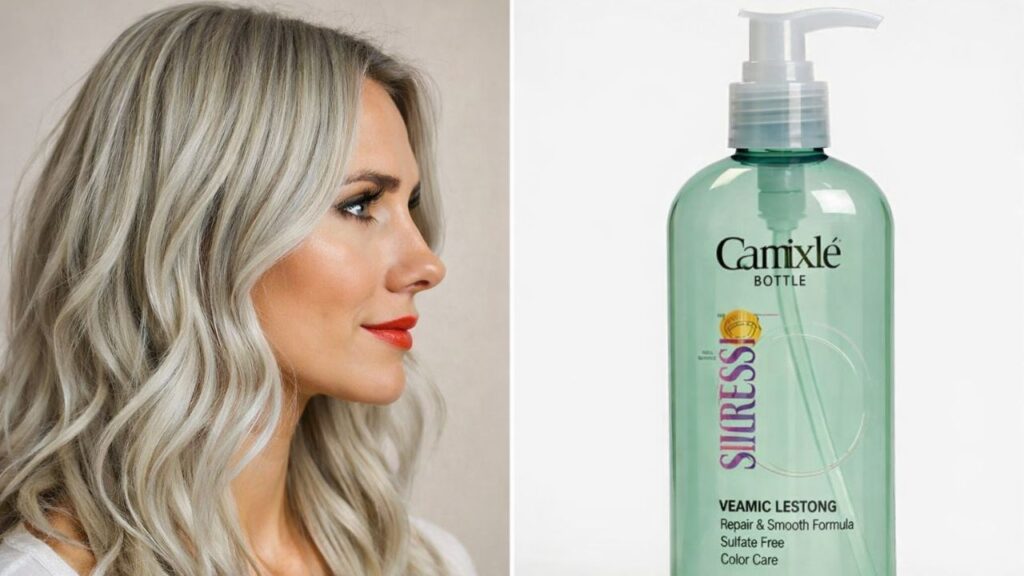
“I don’t understand,” she said, fingers sliding through her hair. “I use premium purple shampoo. I don’t smoke. Why does it keep warming up?” The stylist’s eyes drifted to the lineup of products she’d brought along: a smoothing cream, a heat protectant, a shine spray. Every single one lightly tinted. Every single one quietly leaving a trace behind.
The frustrating part wasn’t just the brassiness. It was that she had no idea which bottle was doing the damage.
 Bold Architectural Haircuts Signal High Confidence at Work, Experts Say - Here’s Why People Notice
Why gray hair picks up color so easily
When gray hair starts to look yellow, most people blame the water, the shampoo, or the sun. Yet the real issue is often hiding in plain sight on the bathroom shelf. Styling products with subtle pigments are a common culprit. Beige heat sprays, golden serums, and “nude” creams seem harmless, but on silver hair they slowly leave a cast.
 Goodbye Hair Dyes Grey Coverage Trend Keeps Growing - The Natural Finish Is Pulling People In
Darker hair masks this effect. The warmth blends into brown or black strands and goes unnoticed. On gray or white hair, it stands out. The yellowing usually appears around the hairline, fringe, and ends, exactly where products are layered the most. It doesn’t happen all at once. It builds quietly, day after day.
A London colorist once described a client who returned every eight weeks convinced her toner was failing. She asked for cooler and ashier glosses to counter the yellow she kept seeing. The formulas were correct, yet the warmth always reappeared in the same places. When they reviewed her routine, the answer was obvious: a beige leave-in, a caramel oil, and a “honey shine” spray used daily.
They switched everything to clear formulas for one month. No change in cut, water, or styling habits. When she came back, her gray looked brighter and cleaner, almost translucent. The only difference was what she stopped putting on her hair.
Gray and white hair are often more porous. The cuticle is slightly more open, which means it absorbs everything more easily: minerals, pollution, smoke, and the warm dyes hidden in everyday stylers. Even products labeled “natural” or “neutral” often lean peach or yellow. On silver hair, those tones show up fast.
How to choose products that keep gray hair clear
The simplest fix is also the most effective: use styling products that are truly clear. Check your heat protectant, mousse, gel, serum, and finishing spray. Put a small amount on your hand. If it looks milky, beige, champagne, or opaque, it can leave a tint over time.
 Silk Pillowcase Sleep Habit Can Reduce Hair Breakage Overnight and Prevent Morning “Bed Head”
Clear or translucent formulas are safer for gray hair. Water-based mists, light gels, and transparent serums provide hold and shine without altering tone. Lightweight textures work better than rich creams. The goal is not to coat your silver, but to let light reflect off it naturally.
Emotionally, this change can feel annoying at first. Many of these products worked perfectly before your hair turned gray. On busy mornings, no one wants to analyze ingredient lists. The realistic approach is gradual. When a tinted product runs out, replace it with a clear one. Your routine stays familiar. Your hair simply stops absorbing unnecessary color.
Colorists often describe this as removing a filter. Purple shampoo still has its place, especially with hard water or sun exposure, but styling products are used daily. That’s where the slow discoloration happens. Clear formulas act like neutral supports, doing their job without leaving a mark.
As one gray-hair specialist put it, “Most people don’t need more toner. They need less beige in their bathroom.”
A simple checklist before buying a new styler
- Check the color in your palm: clear is safer than tinted.
- Watch the language: words like honey, caramel, champagne, or sun-kissed suggest warmth.
- Look for cues such as anti-yellowing, clear shine, or suitable for gray hair.
- Favor sprays and serums over thick creams and lotions.
- Test on a white tissue: if it stains, it can stain hair over time.
Living with bright gray hair, not fighting it
There’s a quiet shift that happens when gray hair stops feeling like something to correct and starts feeling like something to protect. Some days it cooperates, some days it doesn’t. A hint of yellow near the face can feel like a personal failure. On better days, clean gray can make your skin look clearer and your features sharper.
The clear-product mindset changes the question from “What’s wrong with my gray?” to “What doesn’t need to be on it?” That single thought influences what stays on your shelf and what quietly disappears. It’s not strict or obsessive. It’s simply mindful.
Over time, people may not even notice what changed. They’ll just say you look refreshed. Your hair won’t look artificial or over-toned. It will look like your gray, without a dull veil. The hair becomes a frame, not the focus, and somehow that makes it feel even more striking.

| Point clé | Détail | Intérêt pour le lecteur |
|---|---|---|
| Styling products can cause yellowing | Tinted creams, oils, and sprays deposit warm pigments on porous gray hair | Helps identify the real source of brassiness beyond shampoo and water |
| Clear products protect brightness | Transparent gels, serums, and mists give hold and shine without adding color | Offers a simple, practical way to keep gray hair cooler and cleaner-looking |
| Tiny routine tweaks matter | Replacing products one by one as they run out is enough to see change | Makes the strategy realistic to apply without overhauling your life |