For years, hiding grey hair meant choosing between harsh chemical dyes or unreliable natural fixes. Today, a surprisingly simple approach is gaining attention. By adding a familiar kitchen staple—often stored near your coffee—to your everyday conditioner, many are discovering a softer, more natural way to tone down greys.
Why Traditional Hair Dyes Are Losing Appeal
Grey hair develops when pigment-producing cells slow or stop making melanin. While aging is the main cause, stress, genetics, smoking, nutritional gaps, and certain health conditions also contribute. Over time, silver strands appear and gradually become more noticeable.
Most people turn to permanent or semi-permanent dyes for fast coverage. However, repeated use brings drawbacks: strong chemical formulas, long processing times, and ingredients that may irritate sensitive scalps or weaken aging hair.

Hair without pigment is naturally drier, more fragile, and less flexible. Frequent coloring strips moisture, roughens the cuticle, and increases breakage. Even products marketed as gentle or ammonia-free rely on oxidative processes that alter hair structure. While manageable for thick hair in youth, these formulas can be too aggressive for finer strands later in life. Plant-based options like henna or indigo offer alternatives, but results can be unpredictable, often producing tones that are overly warm, dull, or difficult to correct.

The Cocoa-Infused Conditioner Trend Explained
This is where unsweetened cocoa powder comes in—not the sugary version, but plain baking cocoa. Naturally rich in pigments and plant compounds, cocoa gently stains the hair surface without damaging its protective layer.
Cocoa contains flavonoids and tannin-like compounds that cling to the hair shaft. On grey or light hair, this creates a subtle brown tint that builds gradually with repeated use. On darker shades, it enhances depth and warmth rather than changing color dramatically. Additional benefits include antioxidant protection, natural softening properties, and mild oil-balancing effects on the scalp.
How to Blend Cocoa Into Your Conditioner Correctly
The technique shared across beauty forums is simple and affordable. It works best on freshly washed, towel-dried hair and can be used once or twice weekly.
- Place a generous amount of your regular conditioner into a clean bowl. Choose a silicone-light or silicone-free formula if possible.
- Add 2 to 4 tablespoons of unsweetened cocoa powder, adjusting based on hair length and thickness.
- Mix until a smooth, chocolate-brown paste forms with no lumps.
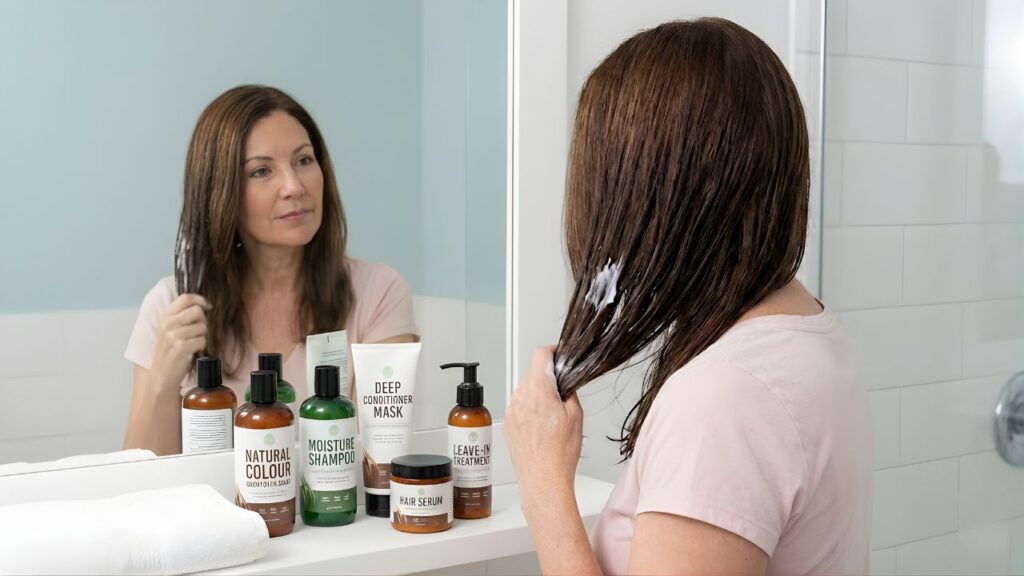
- Section hair and apply evenly, focusing on grey-prone areas such as the temples, crown, and parting.
- Use a wide-tooth comb to distribute the mixture from roots to ends.
- Leave on for 20 minutes, extending to 30 minutes for more resistant white hair.
- Rinse thoroughly with lukewarm water, gently massaging the scalp to remove residue.
Many notice a shift from bright white to a cooler, smoky brown tone after the first use. With continued application, the effect deepens, softening contrast and creating a blended, natural finish rather than a solid color.
Who Cocoa Conditioner Works Best For—and Who Should Be Careful
This method is most effective for people with scattered grey strands rather than fully white hair. It suits blondes and light brunettes whose greys stand out and those with sensitive scalps seeking a gentler option.

Anyone preferring a gradual change instead of a dramatic transformation will benefit most. On very dark hair, cocoa will not fully hide grey roots but can soften the contrast between new growth and previously colored sections, acting like a tinted gloss.
Typical Results by Hair Type
- Mostly grey or white, fine hair: A soft beige-brown tint with improved shine and smoothness.
- Salt-and-pepper brown hair: Grey strands blend more evenly for a balanced overall shade.
- Dark brown or black hair with few greys: A subtle warm undertone enhancement.
What Cocoa Does on the Hair Surface
Grey hair often feels rough because its outer layer lifts more easily, leading to frizz and tangling. Conditioner smooths this layer, helping strands glide past one another. Cocoa particles then settle on the surface, building color gradually over multiple uses.
Unlike permanent dyes, cocoa does not penetrate deeply or alter the hair’s internal structure. This results in gentle toning, added protection, and better manageability—especially beneficial for aging hair.
Cocoa Versus Other Grey Hair Alternatives
Cocoa sits alongside options such as herbal rinses, tinted conditioners, and professional grey-blending treatments. Its main advantages are affordability, accessibility, and its ability to condition while subtly toning hair.
However, results vary depending on natural hair color, and thorough rinsing is essential to avoid dullness. The effect is gradual and requires consistency.
Everyday Habits That Support Healthier Grey Hair
Maintaining healthy grey hair goes beyond cocoa treatments alone. Stress, smoking, sun exposure, and diets low in antioxidants can accelerate silvering. Many who use cocoa also adopt gentler routines, including UV-protective products, reduced heat styling, longer intervals between washes, and nourishing masks rich in proteins and lipids.
Some colorists suggest homemade treatments after salon visits to refresh tone without additional chemical stress. Used this way, cocoa offers a gradual, reversible solution that bridges the gap between professional coloring and a natural transition to grey.