
You step out of the shower, your hair feeling soft and promising, and for a brief minute you believe today is the day it behaves. Then it starts. As it dries, it grows. And grows. By the time you reach for your keys, your reflection looks less “effortless volume” and more “cloud of static”.
You try smoothing it with your hands, re-tying your ponytail tighter, grabbing a random serum from the back of the cabinet. Nothing changes the overall effect: puffy halo, swollen lengths, rebellious baby hairs pointing north.
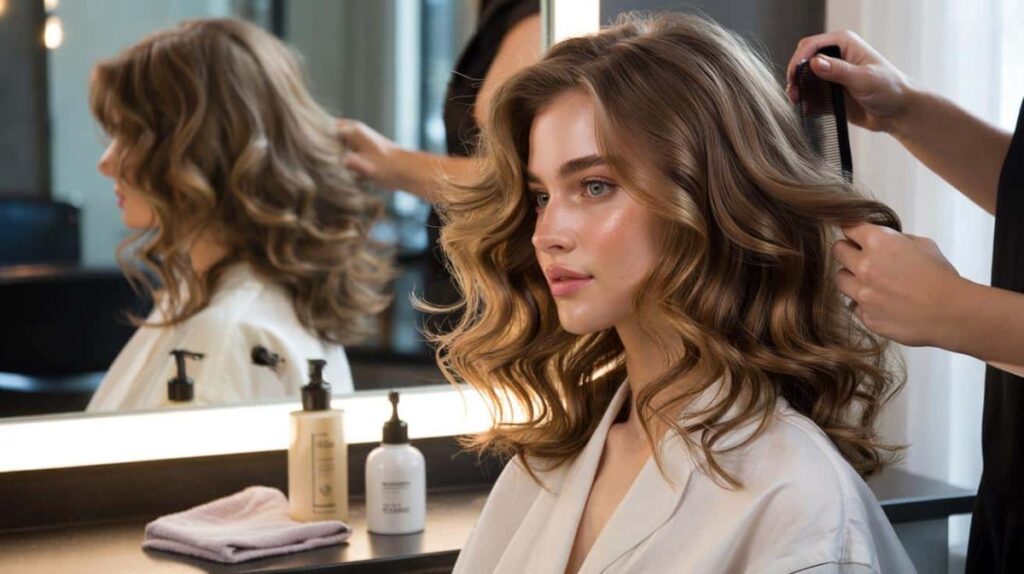
On the street, you spot that one person whose blowout stays sleek from morning to night. No fuzz, no random lift at the roots, just glossy, controlled movement. You wonder what secret they know that you don’t.
There is one.
 Grey Hair Is the “New Facelift” and the Anti-Ageing Industry Hates It - The Truth Is Spreading Fast
Why some hair turns into a frizzy cloud the minute you step outside
The first thing a good hairstylist will tell you is that “fluffy” hair isn’t a personality flaw, it’s a structure problem. Hair that seems to swell and frizz is usually dry, porous, or cut in a way that exaggerates its volume in all the wrong directions.

Humidity slips through the tiny cracks in the cuticle, the hair shaft drinks it up, and suddenly your strands are expanding like tiny sponges. Shine disappears, definition goes missing, and you’re left with a mass that looks bigger but somehow feels thinner.
From the outside, it just looks like “poof”. Inside the hair fiber, it’s pure chaos.
Ask any hairdresser working in a busy city salon and they’ll tell you: the puffy-hair complaints come in waves each season. First rainy days? Appointments fill up with people saying “I just need something, anything, to stop this frizz”.
One stylist I spoke to in Paris laughed remembering a client who arrived in tears after a long walk in light drizzle. She’d left home with a sleek blowout. By the time she arrived, her hair had tripled in size, turning into what she called her “sheep moment”.
The stylist didn’t judge. She mixed a smoothing treatment, trimmed the most damaged ends, and walked her through a routine adjustment that would change her mornings.
There’s a simple logic behind why some people never seem to get that halo of fuzz. Their hair cuticle is flatter, smoother, and better protected. They also typically use less heat and fewer harsh cleansers, and their haircuts are designed to complement their natural texture rather than fight it.
When the cuticle is lifted and rough, light doesn’t reflect well and moisture gets in too quickly. That’s the perfect recipe for dull, swollen hair that loses shape within an hour.
*Once you understand that frizz is often just your hair begging for balance and protection, the whole problem feels less mysterious and more manageable.*
From swollen and fluffy to smooth and defined: what hairstylists really do differently
The first pro trick doesn’t start with a serum, it starts at the sink. Hairstylists who tame puffy hair swear by gentle cleansing and heavy, targeted hydration on the lengths. Think sulfate-free shampoo applied mostly to the roots, and conditioner patiently worked through mid-lengths and ends.
They also gently squeeze out water with a towel instead of rubbing. That rough towel friction? It’s like taking sandpaper to your cuticle. Microfiber towels or even a soft cotton T‑shirt can cut the frizz before it even begins.
Then comes a crucial fork in the road: do you air-dry, diffuse, or blow-dry? For fluffy hair that tends to swell, controlled drying with a nozzle or diffuser and a clear strategy beats random air-drying almost every time.
A stylist in London told me about a client with naturally wavy, very puffy hair who thought her texture was “unfixable”. She’d wash at night, sleep with wet hair on a cotton pillowcase, and wake up with a tangled cloud.
They changed three tiny habits. She switched to a microfiber towel, used a leave-in cream focused on the mid-lengths, and dried her hair 80% with a diffuser, finishing with a blast of cool air. She also stopped going to bed with soaking hair.
Two weeks later she came back to the salon, a little stunned. “I thought I needed some crazy keratin or chemical thing,” she admitted. “Turns out I just needed to stop attacking my own hair before I even left the bathroom.”

The science is nearly boring in its simplicity. Water swells the hair fiber; heat and friction rough it up; unprotected cuticles let humidity march in and out all day. That combination is what turns soft waves into a frizz cloud every time the weather changes.
Styling products can’t really fix damage or bad habits, they can only camouflage them for a few hours. The pros know this, which is why they obsess over foundational steps: cut, hydration level, drying technique, and fabric contact.
Let’s be honest: nobody really does this every single day. Yet even half-implementing these habits, most days, already shifts hair from “unpredictable fluff” to **controlled, touchable volume**.
Practical stylist tips to keep volume, lose the puff
One simple routine a hairstylist showed me goes like this. In the shower, use lukewarm water and a gentle shampoo just on the scalp, letting the foam glide down the lengths. Then apply conditioner from the ears down, combing through with your fingers or a wide-tooth comb, and let it sit for two or three minutes.
Out of the shower, don’t wrap your hair in a tight towel turban. Lightly press out the water, then scrunch in a leave-in cream or milk while the hair is still quite wet. If you’re blow-drying, point the nozzle downward, following the hair shaft, and finish with a cool shot to lock the cuticle down.
That last cool blast is a tiny step most people skip, yet **it can make the difference between a polished look and mid-day puff**.
Common mistake number one? Using “volumizing” shampoos and mousses on hair that already balloons. Those formulas often lift the root and roughen the cuticle a bit, which is great for fine, limp hair but a nightmare for fluffy types.
Mistake number two: layering products randomly. A little cream, a bit of oil, a spray of hairspray…until the hair feels coated and still somehow frizzy. Hairdressers prefer one or two well-chosen products applied with intention: a smoothing cream for control, a light oil only on the very ends for shine.
And that endless brushing throughout the day, trying to “tame” things? It often breaks up natural wave patterns and creates more static, not less. Brushing is best when hair is product-damp or just before washing, not every 30 minutes at your desk.
“Frizz is usually just dehydrated hair overreacting to the weather,” says French hairstylist Léa M. “When clients tell me their hair ‘hates rain’ or ‘hates summer’, I tell them their hair doesn’t hate anything. It’s just unprotected and thirsty. You don’t need to fight it. You need to negotiate with it.”
- Choose a cut that works with your texture, not against it
Layering that’s too short on puffy hair can create a triangle effect and exaggerate width. - Swap rough towels and cotton pillowcases for microfiber or silk
Smoother fabric means less friction, fewer lifted cuticles, and less morning fuzz. - Rely on hydration before control
A nourishing mask once a week gives better long-term results than stacking sprays every day. - Apply styling products on damp, not half-dry hair
This helps seal in water in a balanced way and defines your natural pattern. - Finish with cool air and hands-off time
Once your hair is set and dry, avoid touching it constantly, which raises the cuticle again.
Learning to work with your hair instead of against it
Somewhere between the glossy hair ads and the endless “perfect blowout” tutorials, a quiet truth got lost. Not every head of hair is meant to be flat and glassy, and chasing that look at all costs usually ends in breakage, resentment, and a permanent ponytail.
Stylists who specialize in frizz and volume often talk less about “discipline” and more about relationship. The day you stop punishing your hair for being big, wavy, or reactive is usually the day things start to improve. You move from panic styling to gentle experimentation.
Maybe that means embracing a wavier, more defined version of your texture with good products and a diffuser. Maybe it means a blunt cut that adds weight so your hair naturally falls closer to the head. Maybe it’s as simple as washing less often and swapping your scratchy towel for something softer.
What changes everything is noticing what your hair does on a good day and reverse-engineering it. What did you wash with, how did you dry it, what was the weather like, how much did you touch it? Those small observations can guide you far better than any viral “one-size-fits-all” hack.
The goal isn’t to win a daily battle against your reflection. It’s to arrive at that quiet, underrated feeling of looking in the mirror and thinking: “Oh. This is just how my hair behaves now.” Controlled, yes. Smooth and defined, probably.
But still alive, still moving, still distinctly yours. When hairdressers talk about dream hair, that’s often what they really mean: not perfection, just a texture that finally feels like it belongs on your head, not floating above it.

| Key point | Detail | Value for the reader |
|---|---|---|
| Hydration over harsh cleansing | Gentle shampoos, richer conditioners, and weekly masks calm swelling and frizz | Less puff, more shine, hair that behaves better in humidity |
| Fabric and friction matter | Microfiber towels, silk or satin pillowcases, no rough rubbing | Fewer lifted cuticles, smoother surface, easier styling in the morning |
| Smart drying and simple products | Downward airflow, cool finish, 1–2 targeted products on damp hair | Defined texture, longer-lasting styles, reduced need for constant touch-ups |
FAQ:
- Why does my hair get huge as soon as there’s humidity?Your hair likely has a porous cuticle, so moisture from the air rushes in and swells the shaft. Smoother cuticles from conditioning, masks, and heat protection reduce that swelling and limit puff.
- Can I stop frizz without using a straightener every day?Yes. A good cut, hydrating care, product on damp hair, and a controlled blow-dry or diffuser often beat daily straightening, which can actually worsen frizz over time.
- Are anti-frizz serums enough on their own?They help, but they’re more like a topcoat than a cure. If your hair is very dry or damaged, start with better washing, conditioning, and gentle drying, then use a serum just to finish and add polish.
- Is fluffy hair always damaged hair?Not always. Some textures are naturally big and airy. Fluff plus rough, brittle ends usually signals damage, while fluff with soft, springy strands can just mean you need different styling and products.
- How often should I use a hair mask for frizz?Once a week is a good baseline for most people with puffy, dry, or porous hair. If your hair is fine, focus the mask only on mid-lengths and ends so it doesn’t feel weighed down.
