For decades it sat folded in gloveboxes and wallets, fading and fraying but still waved at roadside checks without question. Those days are ending, and French drivers now face a firm deadline to swap nostalgia for a plastic card that looks more like a bank card than a state document.
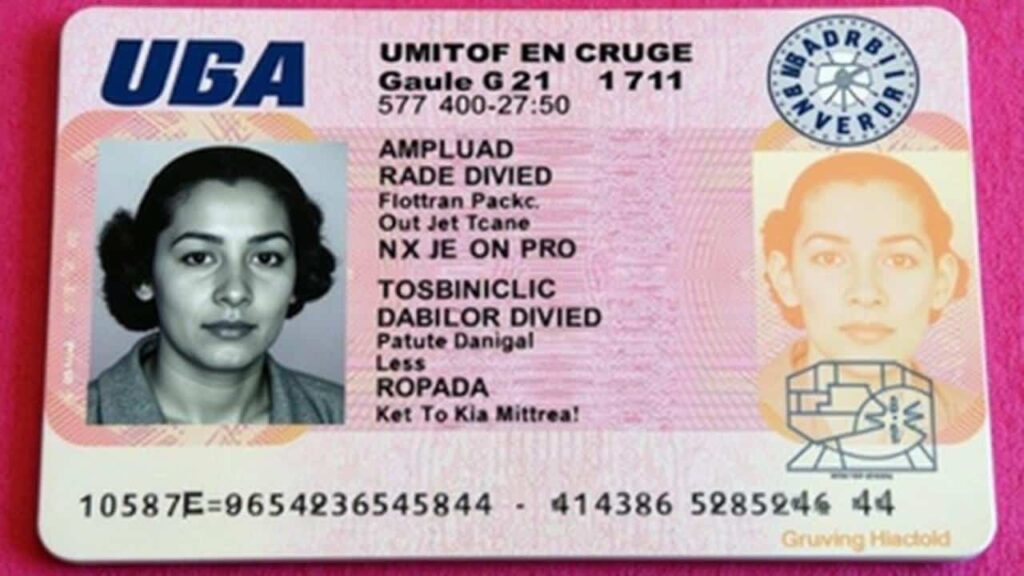
The end of the pink licence after a century on French roads
The “permis rose” dates back to 1922, when motoring was still a novelty and paperwork was simple. The three‑panel pink card, with a stapled photo and a few official stamps, became a rite of passage for generations of French drivers.
That minimalism, once a strength, is now its biggest flaw. The paper tears, ink fades, and many licences are almost illegible after years in a back pocket or a sun‑baked dashboard. European security standards have moved on. The old format no longer matches what police and border agents expect from an official ID document.

From 19 January 2033, France’s old pink driving licence will no longer be legally valid on the road.

Past that date, anyone still driving with the paper version risks a fine. The basic fixed penalty starts at €11 and can go up to €38 if it is not paid on time. The amounts are modest, but the message is clear: the paper licence is being pushed off the road.
French authorities have given drivers almost a decade’s notice, yet the real crunch will likely come in the couple of years before the deadline, when millions log on at once. Those who act early are likely to enjoy a smoother ride.
A new card‑style licence aligned with the rest of Europe
France introduced the replacement format in 2013. At first glance, it looks like a standard credit card: rigid, wallet‑friendly, and designed to survive years of use without disintegrating.
More secure, harder to fake
The new card does much more than resist coffee spills. It packs a series of security features aimed at fighting fraud and identity theft.
- Embedded electronic chip storing key licence data
- Holograms that change appearance with the light
- Special inks and micro‑printing visible only under certain conditions
- Standardised layout recognised across the European Union
These elements help police quickly verify that a licence is genuine. Fake pink paper licences were relatively easy to produce; copying the new card is far more complex and costly. That matters when licences are increasingly used not just to show you can drive, but also as proof of identity in daily life.
The new card licence is designed to be both a driving permit and a high‑security identity document.
A common format for a mobile Europe
The shift is not just a French whim. EU countries agreed years ago to move to a harmonised format so that licences are easier to read and recognise across borders. A French driver stopped in Spain, Germany or Italy should now present a card that looks broadly similar to local versions.
This helps police and customs officers interpret categories, restrictions and expiry dates more accurately. For drivers, it reduces awkward roadside confusion over unfamiliar paperwork. It also makes life easier when renting a car abroad or dealing with cross‑border fines.
The new French licence is usually valid for 15 years for most standard car and motorbike categories. That period is not a new driving test cycle. It is mainly there so photos and personal details stay up to date, rather than locking in a 40‑year‑old portrait until retirement.
How to swap your pink licence before 2033
The days of queueing for hours at the prefecture are gone. France now handles licence renewals and exchanges almost entirely online, through the national secure documents portal (ANTS).
Step‑by‑step: from paper to plastic
The process is relatively straightforward for those used to online services.
- Log in via FranceConnect or create an account on the ANTS website.
- Select the option to request the manufacture of a driving licence.
- Choose the category relating to loss, theft, damage or change of civil status, even for a voluntary exchange.
- Upload the required documents and confirm your request.
Once approved, the new card is produced and sent by secure post, typically within two to three weeks. The state does not charge a fee for the replacement itself, although you may need to pay for a compliant ID photo.
For most drivers, the only real cost of switching to the new licence is the price of a passport‑style photo.

Documents you need to prepare
To keep the process moving, it helps to gather your paperwork beforehand. The online system will ask for:
- A recent digital photo with an electronic signature (from a recognised photo booth or photographer)
- Proof of address (utility bill, tax notice, or similar document)
- A valid ID document (national identity card or passport)
- A scan or photo of your existing pink driving licence
Drivers who do not use an approved digital photo service can still choose a traditional printed photo and send it by post if requested. That option keeps the door open for those less comfortable with fully digital procedures.
Going further: the digital licence on your phone
The physical card is only part of the story. France is also moving towards a digital licence integrated in state‑backed identity apps. Within the France Identité app, eligible users can already add their driving entitlements and show them on a smartphone during some checks.
The digital version does not replace the plastic card yet, but it acts as a convenient backup. Data is encrypted and can be presented without handing over the phone itself, which helps address privacy worries during roadside stops.
A growing number of French drivers carry their licence both in their wallet and on their phone.
Who should hurry, who can wait?
The 19 January 2033 deadline might feel distant, yet the timing matters. Several groups of drivers would do well to bring their plans forward.
| Driver profile | Recommended timing |
|---|---|
| Regular cross‑border commuters | Swap early to avoid confusion abroad |
| Those with damaged or barely legible pink licences | Exchange as soon as possible |
| Elderly drivers with upcoming medical checks | Coordinate renewal with medical updates |
| Occasional drivers who rarely use a car | Plan a change a few years before 2033 |
Anyone whose pink licence is already torn, water‑damaged or half‑erased may face questions in the event of an accident or police stop. For them, serving out the remaining years with the old paper document brings more hassle than advantage.
What changes for points, categories and penalties?
One recurring fear among drivers is that renewing the licence might reset points or alter their driving categories. In France, points are linked to the driving entitlement itself, not the piece of plastic in your hand. Switching from pink to card format does not give you back lost points, but it does not cost you any either.
Similarly, existing categories (such as car, motorbike or heavy vehicle entitlements) are transferred across to the new licence as long as they are still valid and properly recorded. Those who passed older tests with different category codes may find the layout has changed, yet their rights should remain equivalent.
Where things can get tricky is for very old papers with outdated or incomplete entries. In rare cases, the authorities may ask for extra proof or even a medical exam. Drivers who rely on professional licences, such as lorry or bus drivers, should check early that their records are clear to avoid surprises close to the deadline.
Practical scenarios French drivers should consider
Imagine a French resident planning to retire to Portugal in 2030. Exchanging the pink licence for a European‑style card well before the move will make administrative life easier once settled abroad, especially when switching to a local licence later on.
Or consider a young driver who inherited an old family car and drives rarely, perhaps only on holidays. Waiting until 2032 to think about renewing the licence could lead to a rush just as millions of others log on. A quiet year with fewer demands on the system will likely feel less stressful.
There is also a risk angle. In the event of a serious crash, insurers and lawyers scrutinise paperwork. A fragile, barely legible pink licence may not technically invalidate cover, yet it can complicate discussions over identity, categories and restrictions. A clear, modern card removes that question mark at a moment when drivers least need extra drama.
For anyone with elderly relatives still attached to their familiar pink document, the conversation might be sensitive. Helping them through the online process, or arranging a visit to a local service point that assists with ANTS applications, can turn a frustrating chore into a manageable errand.