The deal, unveiled during the Dubai Airshow, pairs Saudi start-up carrier Riyadh Air with French industrial heavyweight Safran, through its CFM International joint venture, in a transaction valued at well over €1.4 billion.
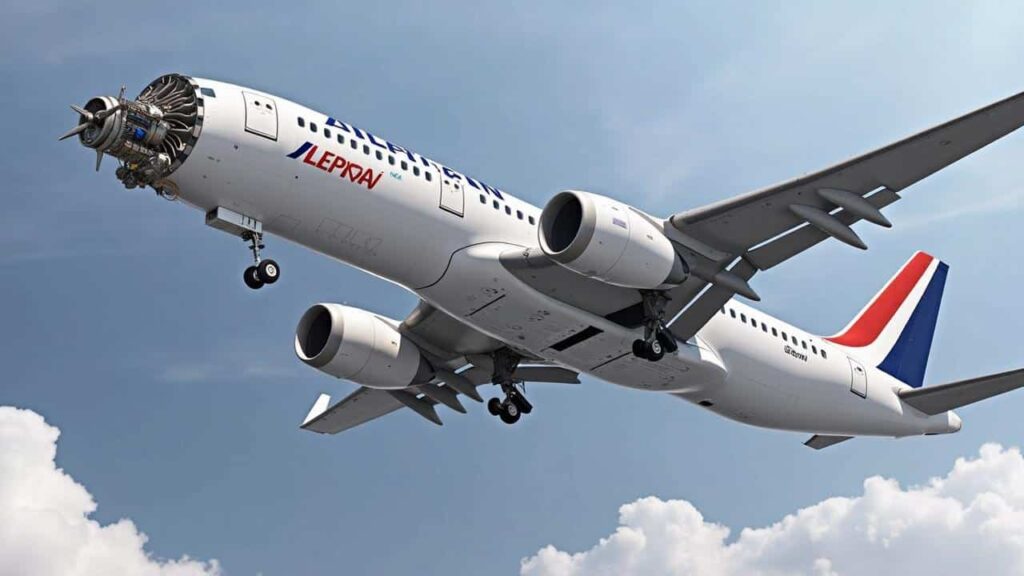
Riyadh’s new flag carrier makes a statement
Riyadh Air, launched in 2023 as part of Saudi Arabia’s “Vision 2030” strategy, wants to turn the capital into a global aviation hub to rival Doha and Dubai. The airline is building a fresh fleet from scratch, and its latest purchase is highly symbolic.
During the 2025 Dubai Airshow, the carrier confirmed an order for 120 LEAP-1A engines from CFM International, co-owned by France’s Safran Aircraft Engines and US-based GE Aerospace. These engines will power 60 Airbus A321neo aircraft that Riyadh Air plans to deploy on regional and long thin routes.

Riyadh Air’s LEAP-1A order is estimated at about €1.4 billion for the engines alone, with the total value likely much higher once support services are included.

The choice sends a strong signal. In a market where Gulf airlines typically buy big twin-aisle jets, Riyadh Air is betting heavily on efficient single-aisle aircraft to feed its future network and attract both regional and international passengers.
Why Riyadh Air chose the LEAP-1A
The LEAP family (for “Leading Edge Aviation Propulsion”) entered service in 2016 and has quickly become the benchmark for new-generation single-aisle jets. The LEAP-1A variant specifically powers the Airbus A320neo and A321neo families.
Performance, fuel and noise: what airlines look for
Riyadh Air’s decision is rooted in hard numbers. Compared with the previous-generation CFM56 engines, the LEAP-1A offers:
- Around 15% lower fuel burn, a key factor when jet fuel can represent a third of airline operating costs.
- Approximately 15% less CO₂ emissions, which helps carriers hit climate targets and avoid future penalties.
- Reduced noise levels, easing pressure from airport communities and regulators.
Behind those gains lies a suite of advanced technologies. The LEAP-1A uses 3D-woven composite fan blades, lighter and stronger than traditional metal ones, along with ceramic matrix composites (CMC) in hot sections of the engine. These CMC parts tolerate very high temperatures, which boosts efficiency, especially in extreme climates.
For Riyadh Air, operating from Saudi Arabia’s desert environment, that thermal robustness is more than a nice-to-have. The deal includes the latest high-pressure turbine “durability kit”, designed to prevent erosion from sand, dust and extreme heat. These conditions can rapidly degrade engine performance if not properly addressed.
Dubai Airshow backdrop and high-profile signatures
The signing ceremony featured senior figures from both sides. Riyadh Air’s chief executive Tony Douglas and CFO Adam Boukadida shared the stage with Safran Aircraft Engines chairman Stéphane Cueille and Safran Group CEO Olivier Andriès. CFM International’s chief executive Gaël Méheust also attended.
The presence of this many top executives underlines what is at stake: Riyadh Air gains credibility as a serious long-term player; Safran and CFM reinforce their footprint in one of aviation’s fastest-growing regions.
Safran strengthens its grip on the single-aisle market
The LEAP engine has become a cornerstone of Safran’s civil aviation business. Airlines and leasing companies worldwide have placed orders for thousands of units, turning it into one of the most commercially successful jet engines in history.
A production machine running at high speed
Since its entry into service, more than 4,000 LEAP engines have been delivered, and the order book still counts close to 10,000 units. On the Airbus side alone, over 1,700 aircraft in the A320neo and A321neo family already operate with LEAP-1A engines.
To meet this demand, Safran and GE operate an industrial network spanning plants in France and the United States. Final assembly lines are located in Villaroche and Saint-Quentin in France, and in Durham in North Carolina.
| Key specification | LEAP-1A figure |
|---|---|
| Fuel consumption vs CFM56 | Approx. −15% |
| CO₂ emissions vs CFM56 | Approx. −15% |
| Fan diameter | 1.98 m |
| Engine weight | About 2,900 kg |
| Maximum thrust range | 15,000–35,000 lb |
| Core technologies | 3D-woven composites, CMC, optimised nacelle |
| Maintenance approach | Real-time health monitoring |
| Main assembly sites | France / United States |
Digital monitoring plays a central role. Sensors installed throughout the engine feed data back to maintenance teams, allowing them to detect anomalies early and schedule shop visits before issues escalate. For an airline like Riyadh Air planning intensive utilisation of each aircraft, avoiding unexpected groundings is crucial.
 Giant anaconda headlines: how wildlife size estimates get inflated and what scientists trust instead
How the contract passes the €1.4 billion mark
Safran has not disclosed official financial details, but industry benchmarks provide clues. A new LEAP-1A engine is widely estimated to cost around €12 million. On that basis, 120 firm engines translate into roughly €1.4 billion.
Once spare engines, parts, training and long-term support are factored in, the lifetime value of the Riyadh Air–CFM deal likely climbs well beyond the initial €1.4 billion estimate.
Large engine contracts rarely stop at simple hardware sales. They often bundle:
- Spare engines for backup operations.
- Pools of replacement parts and on-site stock.
- Training for pilots and maintenance staff.
- Technical assistance and long-term maintenance agreements.
These service packages can run for a decade or more and generate steady revenue for the manufacturer, turning each aircraft delivery into a long-term relationship.
What this means for Saudi aviation strategy
The deal fits neatly within Saudi Arabia’s push to diversify its economy and build out a domestic aerospace ecosystem. Vision 2030 calls for tourism growth, new jobs and increased non-oil exports. A strong home-based airline network is a key pillar.
Riyadh Air intends to connect the kingdom to dozens of cities in Europe, Asia and Africa. Efficient narrow-body aircraft like the A321neo, equipped with LEAP-1A engines, allow the airline to open routes that would be too thin for larger widebodies but still profitable thanks to lower fuel burn.
The contract also opens doors for local partnerships. In the medium term, Saudi industrial players could target component work, MRO (maintenance, repair and overhaul) activities, or training centres tied to LEAP engines, under technology transfer agreements.
How a LEAP-1A contract plays out over an aircraft’s life
To understand the scale, consider a typical A321neo flying with Riyadh Air. The aircraft might operate 10–12 hours per day, doing multiple short and medium-haul legs. Each flight cycle adds stress and heat to the engines.
With digital monitoring, the airline’s engineering team tracks vibration levels, exhaust temperature, fuel flow and other indicators. If the system spots a trend, such as rising turbine temperature, maintenance can adjust inspection intervals or swap parts at a planned stop instead of reacting to an in-service failure.
Over 15 to 20 years, that approach saves money on unscheduled repairs and keeps load factors high by reducing cancellations. For Safran and CFM, it also builds a dataset to refine future engine designs and maintenance schedules.
Key terms and risks for readers to know
A few technical phrases often appear in these deals:
- Thrust (in pounds): The pushing force generated by the engine; more thrust means heavier aircraft or longer routes.
- CMC (ceramic matrix composites): Lightweight materials that resist very high temperatures, allowing hotter and more efficient engines.
- Health monitoring: Continuous data tracking that helps predict faults and plan interventions.
There are risks. High-tech materials can be complex to manufacture; global supply chains are sensitive to geopolitical tensions; and airlines remain exposed to economic shocks that may delay fleet plans. If traffic slows, some engine deliveries might be deferred, pushing revenue further into the future.
Yet the benefits are also clear. For Riyadh Air, the LEAP-1A brings competitive fuel costs, quieter operations and a technical platform ready for higher blends of sustainable aviation fuel. For Safran, this latest mega-contract confirms its position at the top of the single-aisle engine market and deepens its presence in a region set to remain a central crossroads for global air travel.