
The barber was frowning at the mirror before I even sat down. “You cut the hair shorter again, didn’t you?” he asked, brushing a thumb along my jaw. I nodded. Buzzed sides, neat top, no product. Simple. Clean.
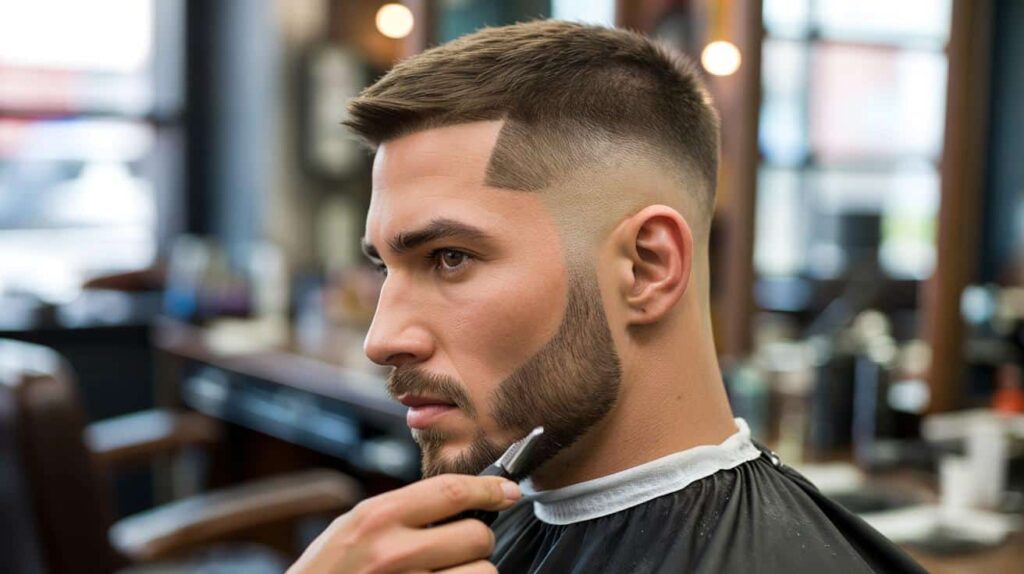
He tilted my head, studying the three‑day scruff I’d stubbornly let grow. “This is fighting your haircut,” he said, half amused, half annoyed. I laughed, but I knew what he meant.
Short hair leaves nowhere to hide. Every line, every shadow, every patchy zone suddenly matters. A beard can rescue the look… or wreck it.

Ten minutes later, he’d reshaped everything and I walked out looking sharper, younger, more deliberate.

Same face. Same hair length. Just one key change in the beard style.
The beard style that really loves short haircuts
Walk through any city on a Monday morning and you’ll spot the pattern immediately. Cropped fades, buzz cuts, short textured tops. And under them? Wildly different beards, from boyish stubble to full lumberjack experiments. Some guys look like they stepped out of a campaign shoot. Others look like they cut their hair and forgot the rest of their face.
Here’s the quiet truth barbers repeat between themselves: short hair works best with structure. That rule doesn’t stop at the hairline. The beard that consistently blends best with short haircuts is a short, well‑outlined beard—somewhere between defined stubble and a tight boxed beard.
Picture a guy with a fresh skin fade and a heavy, untrimmed beard. The head looks small, the jawline buried, the whole face weighed down. Now picture the same haircut with a tight, 5–10 mm beard, cheek lines clean, neckline crisp, sides slightly faded into the haircut. Suddenly the head and face feel like one coherent shape.
There’s a reason: your eyes follow lines. Short hair already creates clear edges around the temples, ears and neck. When the beard echoes that precision—short length, clean borders—the whole look feels intentional. It’s no longer “a beard and a haircut.” It’s one frame around the face.
Barbers see it all day. The most compliments at the end of the chair usually go to that combo: short hair, short structured beard.
The logic is simple. With short hair, volume disappears from the top and sides of your head. If the beard stays big and fluffy, it hijacks all the attention, dragging the visual weight downward. You get a heavy chin and a floating haircut.
A short, structured beard solves that by matching the hair’s tightness. Length between 2 and 7 mm tends to sweet‑spot it for most faces. Long enough to define the jaw, short enough to stay sharp. The cheek line sits a little lower, following the natural hollow under the cheekbone. The neckline stops just above the Adam’s apple, mirroring the nape line.
*Everything feels like it belongs to the same design, not competing elements fighting on your face.*
How to shape that short beard so it actually blends
Start with clippers and one simple rule: keep the beard just a touch longer than your shortest hair on the sides. If your fade goes down to a 0.5, a 2–4 guard on the beard usually works. If you’re rocking a uniform crop around a 3 or 4, go for a 4–6 on the beard.

Trim the whole beard to that base length first. No freestyle yet. Then define the neckline: tilt your head back, place two fingers above your Adam’s apple, and imagine a soft curve from that point to behind each ear. Trim everything below. This separates “neck fuzz” from “actual beard” in seconds.
Finally, sketch in a gentle cheek line using your natural growth as a guide, not a ruler‑straight Instagram line.
This is where most guys slip. They treat a short beard like a lazy default instead of a style. They let it grow, then panic‑shave when it looks messy. Or they copy some ultra‑sharp jawline they saw online, then wonder why their beard looks painted on.
If your hair is short, you can’t afford chaos around the face. The rest of your look is too clean. The forgiving fluff of longer hair is gone, so blotchy, uneven growth shows up more. The trick is to work with your density. If the cheeks are patchy, keep that area as a softer fade, slightly shorter, and let the fuller jawline carry the weight.
Let’s be honest: nobody really does this every single day. But a 10‑minute tidy‑up once or twice a week is what separates “scruffy” from “effortlessly sharp.”
A London barber told me once, “Short hair and short beards are like tailored clothes. They don’t hide you. They reveal you, just in a neater way.” That stuck with me, because it explains why some people suddenly look more confident with barely any change except cleaner lines.
- Keep the beard shorter than your mental picture. Cameras and mirrors read facial hair as fuller than you feel from the inside.
- Use a slight fade between sideburns and beard if your haircut is faded. That small gradient makes everything look professionally blended.
- Trim the moustache clean off the lip line. Short hair plus a messy ‘tache instantly looks tired.
- Hydrate the skin under a short beard. Flakes show faster when the hair is minimal and dark.
- Avoid razor‑sharp geometric cheek lines unless that’s your whole aesthetic. For most faces, a soft but clear curve feels more natural.
Owning the look so it feels like you, not a template
What makes this short‑beard/short‑hair duo powerful is how adaptable it is. Within the same basic idea—a tight, structured beard—you can nudge tiny details and completely change the vibe. Drop the neckline slightly and keep the moustache fuller, you get a more mature, slightly rugged feel. Raise the cheek line and keep everything close‑cut, and suddenly it’s cleaner, almost minimalist.
The fun part is that small experiments show big results. One millimetre up or down on the clippers. A tiny tweak to where the sideburn meets the beard. A decision to let the moustache connect or stay separated. Each little choice shifts how your jaw, mouth and eyes are read by other people.
We’ve all been there, that moment when you glance at a selfie and think, “Why does my head look… off?” Short hair amplifies that sensation because there’s no excess to blur the edges. That’s why this one style—a short, well‑defined beard—keeps coming back in barbershops, even when big beards trend on TikTok.
It respects the haircut instead of fighting it. It frames the face without stealing the spotlight. And it lets your actual features show, rather than hiding them in volume.
You don’t need a perfect jawline or perfect growth pattern. You just need the courage to trim a little shorter than you’re used to and treat the beard like part of the haircut, not an afterthought.

| Key point | Detail | Value for the reader |
|---|---|---|
| Short structured beard | 2–7 mm beard length with clean cheek and neck lines | Blends naturally with short haircuts and sharpens the jaw |
| Match the haircut’s precision | Faded or neat edges in the beard to echo the hair’s outlines | Creates a cohesive, “put‑together” look instead of mismatch |
| Simple routine | Quick weekly trims, soft cheek lines, moisturised skin | Keeps the style low‑maintenance yet consistently fresh |
FAQ:
- Question 1What beard length works best with a buzz cut?
- Question 2Do I need a fade between my hair and beard?
- Question 3How do I fix patchy cheeks with short hair?
- Question 4Should I outline my cheek lines with a razor?
- Question 5How often should I trim a short beard to keep it blended?
