
The forest was so quiet you could hear the crunch of each frozen leaf under your boots. No birdsong, no buzzing, just the low rasp of your own breath coming out in small white clouds. Somewhere under that hard crust of snow, a hedgehog should be asleep, heart slowed, body folded into itself, waiting for April. Instead, on this strange, harsh February morning, fresh tracks cut a nervous line across the path, weaving between roots and bramble.
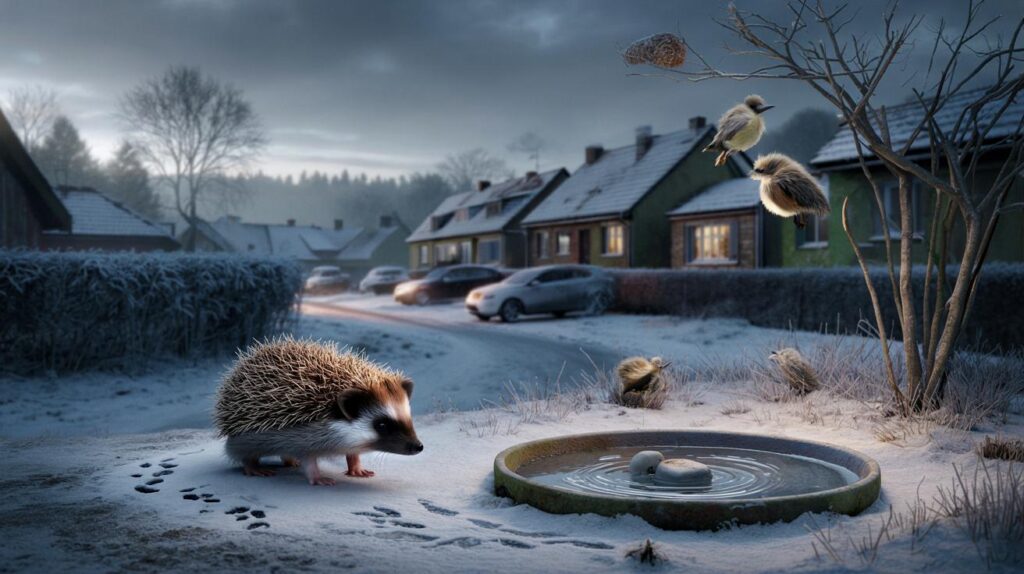
Up above, a grey sky is dragging Arctic air down over fields, gardens, city parks. Meteorologists say this blast of polar cold could stick around.
Arctic February: when weather forecasts clash with nature’s calendar
Across Europe and North America, meteorologists are flagging the same pattern: February could open under a dome of Arctic air, with sharp night frosts and daytime highs barely nudging above freezing. For most of us that means pulling out forgotten scarves and cursing icy car windscreens. For wildlife, it slams straight into the most delicate period of the year.
 A Major Polar Vortex Disruption Is Developing and Experts Say a February Event Like This Is Rare
By early February, many species have already made their seasonal bets. Hibernators have chosen a burrow, amphibians tucked themselves into mud, bats wedged into attics and caves. A brutal cold snap at this point is like pulling the emergency brake on a moving train.
On the outskirts of Bristol last winter, a small team from a local wildlife rescue center counted nine hedgehogs wandering out in broad daylight during a similar late-winter freeze. Their spines were matted with frost, bodies dangerously underweight. One volunteer described picking up a hedgehog that felt “as light as a crumpled paper bag.”
In Germany, biologists monitoring bat colonies under bridges saw repeated wake-ups during a warm spell, followed by a harsh cold return. Each time the bats stirred, they burned through precious fat. When the Arctic air finally arrived, some simply didn’t have enough left to ride it out.
The logic is merciless. Hibernation is a finely tuned energy gamble, based on decades, even centuries, of relatively predictable patterns. An animal goes to sleep on a certain date with a certain fat reserve, “budgeted” to last until food is supposed to reappear. When February suddenly flips from mild to Arctic, that budget collapses.
Worse, climate change is bending the rules at both ends of winter. Warmer spells tempt animals into partial wakefulness, nudging them to move, drink, or forage. Then the late, brutal cold snaps down, with no insects flying, no worms near the surface, ponds locked under ice. It’s a double hit: more energy spent, less food available.
How ordinary people can quietly help wildlife through an Arctic start to February
The most useful actions are small, local, and almost invisible from the street. Start with water. In an Arctic spell, standing water freezes solid, and thirsty animals – from birds to foxes to confused hedgehogs – wander further, burning energy they don’t have. Placing a shallow dish of water in a sheltered corner of a garden, balcony, or courtyard helps more than people think.
Drop a small stone or stick in the dish so that if thin ice forms overnight, there’s still a gap for a beak. Change the water quickly when you grab your morning coffee. It takes under a minute.
Food is trickier. Many well-meaning people overreact and scatter bread, leftovers, anything lying around. Birds fill up on junk calories, foxes raid plastic-packed scraps, and hygiene problems spread fast. Let’s be honest: nobody really does this every single day with scientific care. Better to choose one or two focused supports and stick to them.
For garden birds, unsalted peanuts, quality seed mixes, and fat balls hung away from prowling cats are safer options. For hedgehogs, wildlife groups recommend meaty cat food and fresh water, never milk or bread. If you see a hedgehog out in daylight during a deep freeze, that’s a red flag, not a cute photo op.

*What really shifts things is a change in how we look at the cold itself.* Instead of seeing it only as a nuisance, we can read it as a warning signal for the ecosystems threading quietly through our streets and hedgerows.
“People think climate disruption is all about heatwaves and fires,” says Dr. Laura Jensen, a wildlife ecologist based in Copenhagen. “But these late, Arctic-style February hits are just as dangerous. They knock species out of sync with their own bodies. The margin for error is tiny – sometimes a matter of a few days, or a few grams of fat.”
- Call your local wildlife rescue
If you spot a lethargic, underweight animal in broad daylight during the freeze, especially a bat or hedgehog, ring a rescue center before intervening. - Set up a quiet corner
Leave a small pile of leaves or a wooden box in a sheltered spot. It can become a last-minute refuge for insects, frogs, or a late-moving hedgehog. - Reduce garden “tidying”
Dead stems, leaf litter, and old logs are emergency hotels for overwintering creatures. Over-tidiness can turn a cold snap from tough to fatal. - Join neighborhood watch… for wildlife
A simple shared chat group where people report sightings of struggling animals or frozen ponds can coordinate help without fuss. - Keep pets in check
During the coldest early-morning and evening hours, limit cat roaming and keep dogs on-lead near hedgerows or ponds.
When winter no longer behaves, neither does hibernation
There’s a strange dissonance in watching a blackbird hop across a snowy lawn while reading a push alert about climate records being smashed again. Arctic February conditions and warming trends sound like opposites yet they’re part of the same warped pattern. Meteorologists talk about disturbed polar vortexes and jet streams looping wildly; the effect on the ground looks simpler: winters that start late, wobble between mild and brutal, and refuse to stick to the script.
For hibernating and overwintering species, that script used to be the anchor. Go down at this rough time, come up at that rough time, trust that insects, worms, or thawed ponds will meet you on the other side. When that anchor moves, everything else wobbles.
We’ve all been there, that moment when the weather flips overnight and you step outside dressed for the wrong season, regretting your choice before you’ve even closed the door. Animals don’t get to change coats at the bus stop. A hedgehog that wakes three times in a strange, seesaw winter doesn’t just feel groggy – each wake-up can burn through up to 30% of its fat reserves. One mistimed February cold wave can turn survival into a coin toss.
This is the plain truth: **an Arctic start to February isn’t just “a bit of winter left”, it’s a stress test for the wild neighbors we rarely see.**
The choices we make in those few sharp weeks do ripple outward. A child refilling a frozen birdbath, a landlord allowing ivy to remain on a back wall, a town council delaying a hedgerow cut until spring – none of that looks heroic in the moment. Yet taken together, these gestures buffer the blow of a climate no longer holding its shape.
The meteorologists’ warnings about an Arctic February are one part forecast and one part invitation. An invitation to notice who else is out there when we pull our collars up against the wind. To treat hibernation not as something that happens “out in the wild somewhere” but as a fragile contract playing out under our decking, in our attics, beneath the shrubs outside the supermarket car park.
The patterns are breaking. How we move through this next cold spell will say a lot about the new ones we’re willing to create.

| Key point | Detail | Value for the reader |
|---|---|---|
| Arctic February strains hibernation | Sudden deep cold hits animals already low on winter fat, with food still scarce | Helps readers understand why a “late winter blast” is more than just weather talk |
| Small household actions matter | Water dishes, targeted feeding, and habitat corners offer real survival boosts | Gives concrete, doable ways to help without needing specialist skills |
| Climate disruption is about extremes | Unstable winters with swings between mild and Arctic conditions are the new normal | Frames the cold snap inside the bigger climate story readers hear all year |
FAQ:
- Question 1How do meteorologists know an Arctic start to February is coming?
They analyze large-scale patterns like the jet stream, polar vortex behavior, and ocean temperatures. When those align in a certain way, cold Arctic air can spill south, raising the odds of prolonged freezes.- Question 2Which animals are most at risk during a sudden February cold snap?
Hedgehogs, bats, dormice, certain amphibians, and early-nesting birds are especially vulnerable, along with insects that overwinter in stems, soil, or leaf litter.- Question 3Should I feed every wild animal I see in the cold?
No. Focus on species that clearly struggle in urban settings, like small birds or an obviously underweight hedgehog. Offer appropriate, clean food in moderation and prioritize water and shelter.- Question 4Is it normal to see hedgehogs or bats in daylight during freezing weather?
Not really. A hedgehog out in the middle of the day in sub-zero temperatures, or a bat flying in full daylight in winter, often signals distress and may need expert help.- Question 5What’s the simplest thing I can do if I have no garden?
Place a shallow dish of water on a windowsill, balcony, or shared courtyard, and share trusted wildlife advice in local online groups so people recognize the signs of struggling animals.
