
The first thing you notice is the smell. Not the sharp hit of synthetic fertilizer, but that warm, almost sweet scent rising from damp, crumbly soil. A woman in worn kneepads pushes aside a layer of straw mulch, presses her hand into the earth, and smiles like she’s greeting an old friend. Two plots over, a man in a spotless T‑shirt is waging war with a rototiller, chopping the ground into submission, sweat running down his neck, frustration written all over his face. His tomato plants stand stiff, pale, thirsty. Hers are stocky, dark green, heavy with fruit that hasn’t even turned red yet. Same sun, same water, same city. Very different way of treating the ground beneath their feet.
What if the real secret isn’t what we plant, but how we stop fighting the soil?
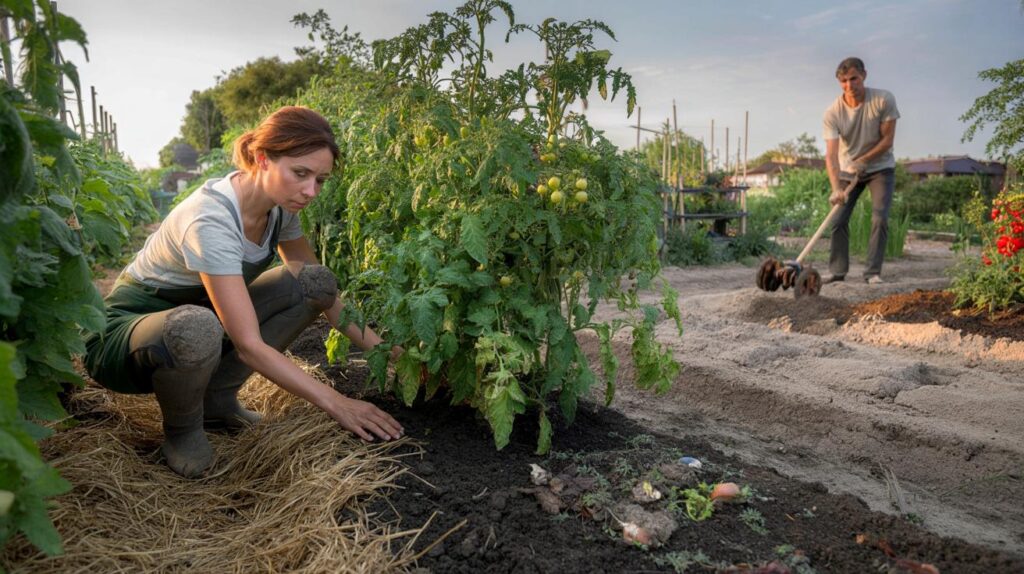
Soil that’s alive grows plants that behave differently
Walk through any neighborhood on a hot June afternoon and you can almost read the gardening stories just by looking at the ground. Some beds are bare, soil raked to a fine, dead-looking powder, each plant marooned like a tiny island. Others are messy in a deliberate way, covered in leaves, straw, or a creeping carpet of green. The “tidy” beds often need constant watering, constant feeding, constant rescuing. The “messy” ones seem to get away with a lot more.
Once you notice the difference, you can’t unsee it. The soil itself looks different. It behaves differently.
On the edge of town, a retired mechanic named Carlos started two side‑by‑side vegetable plots behind his garage. On one, he did what every gardening book from the 80s told him: deep tilling, chemical fertilizer, bare soil between rows. On the other, he tried something he’d heard from a neighbor: keep the soil covered, disturb it as little as possible, feed it with compost. By August, the contrast was almost comical. The tilled bed had hard crust on top and cracks you could lose a pencil in. The other plot? Soft underfoot, dark as coffee grounds, worm tunnels everywhere.
Yield? The “lazy” plot produced nearly twice as many tomatoes and beans, and needed half the watering.

There’s a simple reason for this. Soil is not just “dirt” that holds roots upright, it’s a living system built from fungi, bacteria, insects, and tiny organisms we never see. When we till deeply, leave soil bare, or bombard it with fast‑acting fertilizers, we blow holes in that underground city. Plants then behave like stressed tenants: shallow roots, constant nutrient cravings, low resilience. When we protect that life instead of attacking it, the biology does half the gardening work for us. *Good soil is like a quiet underground workforce that never clocks out.*

Practical ways to garden with the soil, not against it
The first shift is almost embarrassingly simple: stop leaving soil naked. Lay down straw, shredded leaves, grass clippings, even torn cardboard around your plants. This mulch buffers temperature, shields soil life from harsh sun and pounding rain, and slowly feeds the ground as it breaks down. If you’re starting new beds, resist the urge to dig everything into oblivion. Smother the grass with cardboard, add a thick layer of compost on top, then plant directly into that soft layer.
It feels slow at first, but after one season you’ll see the structure change. The soil starts to crumble instead of clump.
 Meteorologists warn early February is shaping up to trigger a rare Arctic destabilization event
The second shift is about how you move your tools. Swap deep digging and heavy rototilling for a gentler touch. Use a fork to loosen, not flip, the soil. Pull weeds by slicing them at the base and leaving roots to decay underground rather than ripping everything out in a fury. We’ve all been there, that moment when a bed full of weeds sends us into full battle mode. **That battle impulse is exactly what exhausts the soil.** Let’s be honest: nobody really does this every single day. So design a system that forgives you. Living mulch, dense planting, and shallow cultivation mean that when you skip a week, the soil doesn’t punish you with a concrete crust and a jungle of invaders.
“Once I stopped trying to dominate my soil and started trying to understand it, everything got easier,” says Marie, a nurse who grows an impressive jungle of food in the narrow strip behind her apartment. “I used to think hard work meant breaking my back with a shovel. Now it means paying attention and letting the soil tell me what it needs.”
- Keep it covered: Mulch with organic matter year‑round to protect and feed the soil.
- Disturb it less: Trade deep tilling for gentle loosening and surface composting.
- Feed life, not just plants: Use compost, aged manure, and homemade teas instead of only synthetic fertilizers.
When you stop fighting, the whole garden changes
Something interesting happens when gardeners start thinking of soil as a partner instead of a problem to fix. The language shifts. People stop saying “my soil is terrible” and start noticing textures, smells, the way water soaks in or runs off. They brag less about new tools and more about the first earthworm they saw in a dead corner of the yard. Gardens that used to feel like an endless list of chores become places of curiosity. You’re no longer racing to keep up with nature; you’re tuning into a conversation that was already happening under your feet.
And that conversation tends to reward patience, observation, and small, consistent gestures rather than heroic interventions.
 Meteorologists warn February may arrive with an Arctic disruption scientists struggle to explain
| Key point | Detail | Value for the reader |
|---|---|---|
| Work with living soil | Protect and feed soil life instead of disturbing it | Stronger plants, fewer inputs, less daily effort |
| Keep soil covered | Use mulches and dense planting to shield the ground | Better moisture, fewer weeds, cooler roots in heatwaves |
| Disturb less, observe more | Gentle tools, compost on top, watch how soil responds | Long‑term fertility and a more resilient, forgiving garden |
FAQ:
- Do I have to stop tilling completely?You don’t have to go cold turkey, but each year, try to till a little less deeply and over a smaller area. Many gardeners switch to broadforks or hand tools and find their soil structure improves dramatically.
- What’s the easiest mulch for beginners?Shredded leaves and straw are simple, cheap, and widely available. Avoid thick, fresh grass layers that can mat and smell; mix them with dry material instead.
- Can I still use fertilizer?Yes, but let compost and organic matter be your base. If you use synthetic fertilizer, treat it as a supplement, not the main meal, so you don’t disrupt soil life.
- Won’t leaving roots in the ground cause problems?Most annual roots break down quickly and become food for microbes and worms. For deep, woody weeds, cut repeatedly at the base to weaken them rather than yanking and tearing the soil.
- How long until I see a difference in my soil?You can feel some changes in just a few weeks—cooler, moister soil under mulch. Bigger shifts in structure and fertility often show up over one to three seasons, and they tend to keep compounding over time.
