
The first cold evening always feels the same. You close the door behind you and suddenly the world goes quiet, your breath a little foggy in the hallway, your fingers stiff from holding your phone outside. The light in the kitchen seems too harsh at first. The fridge door opens, and for a second you just stand there, staring at a lonely carrot, half a block of cheese, and something in tinfoil you probably should have thrown out last week. You’re tired, you’re hungry, and the idea of chopping five different vegetables for a complicated weekday dinner feels like a personal insult.
Then your eyes drift to the oven. That patient, old friend.
You know exactly what you want: a deep dish, a handful of ingredients, and a slow heat that fills the whole home.
Tonight, the oven does the work. Something quietly magical is about to happen.
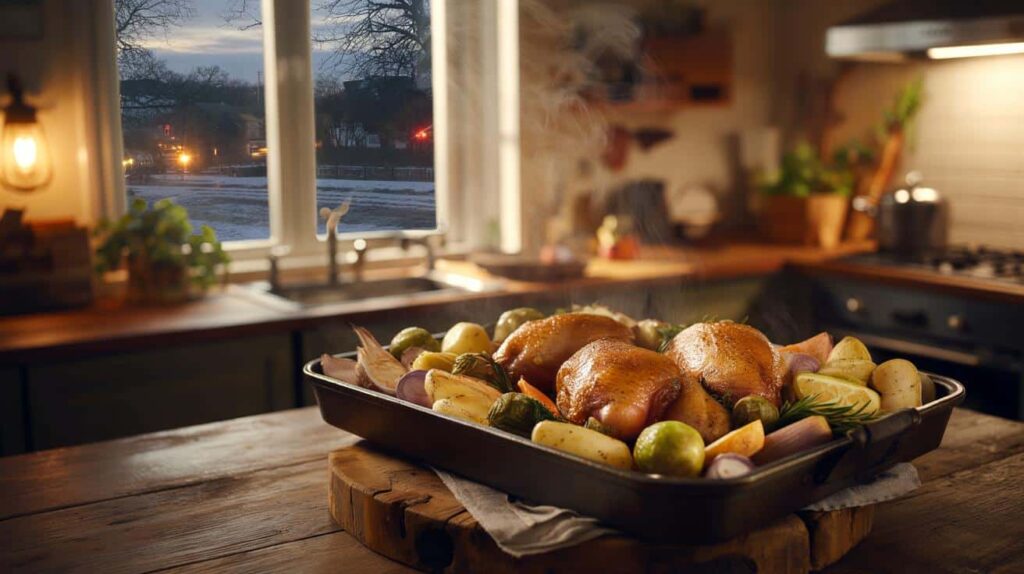
The quiet power of a hot oven on a cold night
There’s a particular sound that only comes from a bubbling oven dinner. That gentle hiss when the sauce starts to thicken around the edges, the faint crackle as cheese blisters and browns, the soft thud of the dish when you set it on a wooden board. On a cold night, that sound feels like therapy. You can practically feel your shoulders dropping a notch the moment the door closes and the warmth leaks out into the kitchen.
You’re not just cooking. You’re resetting your whole evening with one simple motion: tray in, door shut, light on.
Picture this: it’s Thursday, already dark at 5 p.m., and the wind is knocking the branches against the window. You toss chopped potatoes, onions, and carrots into a baking dish, add chicken thighs, garlic, olive oil, a squeeze of lemon and some salt. Five minutes of lazy prep, tops.
Forty-five minutes later, the house smells like a small neighborhood bistro. The potatoes turn golden at the edges, the chicken skin goes crisp, and the vegetables sink into a glossy, savory mix of juices. You finish an email, scroll a bit, maybe fold some laundry. Dinner quietly takes care of itself while you do almost nothing.

There’s a reason these warm oven dinners feel so right in colder seasons. Our bodies crave heavier, slower-cooked food when the temperature drops, and our brains link that long, gentle heat to safety and rest. A simmering dish signals that you’re home for the night, no more rushing, no more negotiating with your schedule.
It’s basic psychology and a little bit of nostalgia. Many of us grew up with at least one memory of opening the oven and getting that wall of fragrant heat in the face, followed by someone saying, “Careful, it’s hot.” That memory stays with you. On gray, wet days, a hot oven dinner is not just about eating. It’s about recreating a moment when everything felt held together.
 Meteorologists warn early February is shaping up to trigger a rare Arctic destabilization event
A simple, flexible tray-bake that never lets you down
One of the easiest warm oven dinners for cold evenings is a tray-bake: everything on one pan, roasted until golden and soft. The beauty of it is how forgiving it is. You start with a base: chunky potatoes or sweet potatoes, maybe some carrots or parsnips, something that can handle a good 40 minutes of heat. Add a protein on top – chicken thighs, sausages, tofu cubes, chickpeas – and then throw in whatever vegetable is risking a slow death in your crisper.
A drizzle of oil, a handful of salt and herbs, maybe smoked paprika or cumin. Toss. Spread. Bake. That’s it.
*You’re basically solving dinner with one tray and a bit of faith in high heat.*
One reader told me she survives every winter with the same base recipe: a big oven dish, four chicken legs, two onions, three carrots, six potatoes, and a head of garlic cut in half. She adds whatever she has on hand – broccoli florets, mushrooms, even halved Brussels sprouts on brave days. “The trick,” she says, “is to throw it in the oven before you have the energy to argue with yourself about ordering delivery.”
Forty-five minutes at 200°C (around 400°F), a quick stir in the middle so nothing burns, and her kids wander into the kitchen on their own, pulled in by the smell.
That’s the kind of dinner that quietly keeps a family afloat in February.
There’s a practical logic behind why this works so well. High oven heat concentrates flavors and textures: vegetables caramelize, meats crisp and stay juicy, sauces reduce into something deeper and more intense. You also get the gift of passive cooking time. While the oven does its slow magic, you’re not stirring or babysitting. You’re free to step away, change into soft clothes, answer that last message, or just sit in silence for ten minutes staring at nothing.
Let’s be honest: nobody really does this every single day.
But knowing you have a low-effort, high-reward dinner in your back pocket turns the coldest evenings from a small dread into something almost comforting.
 Meteorologists warn February may arrive with an Arctic disruption scientists struggle to explain
Little tricks that turn a simple bake into real comfort
There’s a small, almost silly move that changes everything: preheating the oven while you unpack your bag or take off your shoes. That quick blast of warm air when you check the temperature already feels like a tiny boost. While it heats, slice your root vegetables fairly small so they cook evenly, and leave your protein pieces a bit bigger so they stay juicy.
Layer the slowest-cooking things at the bottom of the dish – potatoes, carrots, thick onion wedges – and place the meat or tofu on top so the flavors drip down. A squeeze of lemon or a splash of vinegar at the end makes the whole dish taste fresher and brighter. It’s a 5-second gesture with a 50% flavor jump.
The most common mistake with this kind of oven dinner is cramming everything into the dish like a suitcase before a budget flight. When vegetables overlap too much, they steam instead of roast, and you lose that dreamy golden edge. Give your ingredients breathing space, even if that means using two trays.
Another trap is going too shy with seasoning. Cold evenings dull our senses a bit. You actually want bolder flavors: more salt, more herbs, maybe some crushed chili flakes if that’s your thing.
And if you’ve ever pulled out a half-dry, slightly sad-looking roast, you’re not alone. A quick fix is to cover the dish loosely with foil for the first half of cooking, then remove it so everything can brown.
- Use what you have: Any sturdy vegetable works – potatoes, carrots, squash, onions, fennel, parsnips. The goal isn’t perfection, it’s warmth on a plate.
- Keep a “winter flavor kit”: Olive oil, salt, black pepper, smoked paprika, thyme or rosemary, and a jar of mustard. With these, almost any tray of ingredients becomes a proper meal.
- Think in layers: Base of veg, then protein, then small extras on top – olives, cherry tomatoes, lemon slices, or grated cheese for the last 10 minutes.
- Plan for leftovers: Fill the tray generously. Tomorrow’s lunch tucked into a wrap, reheated with an egg on top, or tossed with pasta saves you another night of decision fatigue.
- Serve it simply: A piece of bread, a spoon of yogurt or sour cream, maybe a handful of fresh herbs. Tiny additions, big comfort.
A dish that warms more than just the plate
There’s something almost communal about a warm oven dinner. Even when you live alone, placing a heavy, steaming dish in the middle of the table makes the evening feel a bit more ceremonial. The oven door opens, a cloud of scented heat escapes, and the room suddenly seems smaller in the good way, as if the walls have moved closer just to hold you in. You slow down when you eat this kind of meal. You spoon out soft vegetables, break into the crisp edge of something roasted, talk more, scroll less.
We’ve all been there, that moment when the day feels too long and the house feels a bit too cold and too quiet. A warm oven dinner doesn’t pretend to solve all that. It just gives you one clear, kind gesture to repeat: cut, toss, roast, share. Or don’t share. Your call.
On the darkest evenings of the year, those small rituals matter. The tray goes into the oven, you press the timer, and for once you’re allowed to let go a little.
This kind of meal doesn’t demand perfection. It just asks you to show up, light the oven, and wait while the heat gently does the rest.

| Key point | Detail | Value for the reader |
|---|---|---|
| One-tray method | Combine protein, root vegetables, and simple seasoning on a single baking dish | Saves time, dishes, and mental energy on busy cold evenings |
| Passive cooking time | Oven does the work for 40–50 minutes with minimal supervision | Frees you to rest, reset, or handle other tasks while dinner cooks |
| Flexible ingredients | Works with almost any sturdy veg and protein, plus pantry spices | Reduces waste and turns “empty fridge” nights into cozy, satisfying meals |
FAQ:
- Question 1How long should a typical oven dinner bake on a cold evening?
- Question 2Can I prepare the tray in advance and bake it later?
- Question 3What temperature works best for a one-tray roast?
- Question 4How do I stop vegetables from drying out in the oven?
- Question 5Is this kind of oven dinner suitable for vegetarians or vegans?
