
The message from the atmosphere didn’t arrive as a headline. It arrived as a strange feeling when people opened their curtains in late January and thought, “This doesn’t look like winter.” Lawns were still green in places that usually crunch under frozen footprints. Birds that should have been long gone were still circling half-empty trees. On weather maps, the jet stream—normally a tight, predictable ring around the Arctic—was already buckling like an overworked belt.
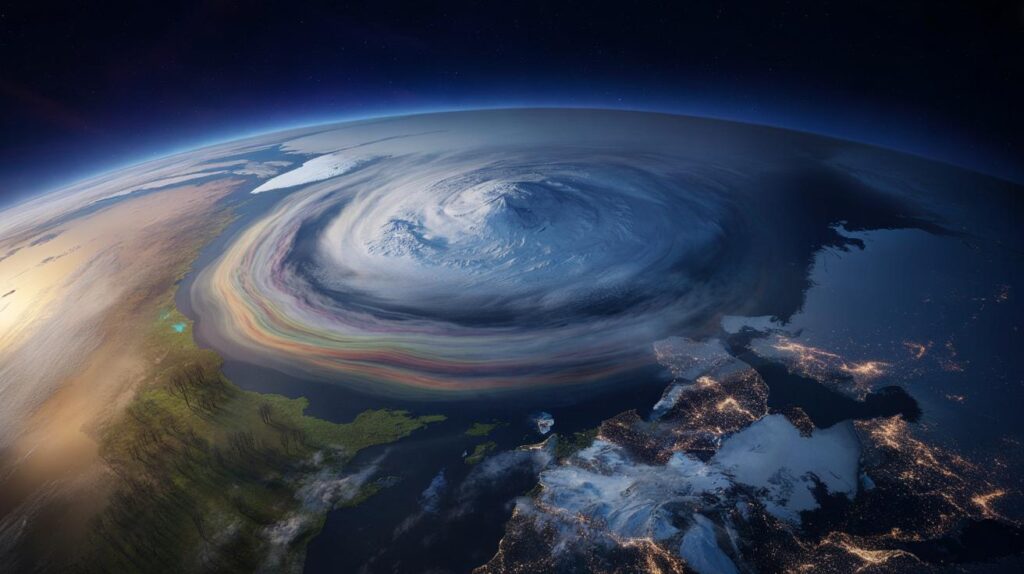
Behind those pretty sunset photos on social media, meteorologists started spotting something that made them sit up a little straighter. High above our heads, on maps the public rarely sees, the Arctic’s protective “lid” of cold air is warping weeks ahead of schedule.
Something up there is breaking pattern.

The Arctic is wobbling early — and forecasters are worried
On the screens inside forecasting centers, the Arctic doesn’t look like polar bears and ice floes. It looks like a spinning target of colors, a tight circle of brutal cold known as the polar vortex. Most winters, that vortex stays relatively stable until late February or even March. This year, the shape is already twisting. The circulation is stretching, sagging southward in places, like a balloon losing air in slow motion.
 Meteorologists warn an abnormally early Arctic failure is emerging just days before February
That early wobble is what meteorologists are now warning about: a dangerously early disruption high in the Arctic atmosphere, forming even before February has properly begun. When that spinning lid of cold air weakens or cracks, the weather below can flip from mild to savage in just a few days. And this time, the pieces are moving into place sooner than expected.
Think back to the February 2021 deep freeze in Texas, when pipes burst and millions lost power as Arctic air plunged far south. That infamous cold spell started with a disturbance high above the North Pole weeks earlier, a shake-up of the polar vortex that set off a domino chain across the Northern Hemisphere. Something eerily similar is now emerging on weather models—only this one is brewing earlier and under a warmer background climate.
Meteorologists point to a cluster of signals: sudden warming of the stratosphere over the pole, rippling wave patterns coming from the Pacific and Eurasia, and a jet stream already looping wildly. None of those guarantees a Texas-style disaster. But they raise the odds of wild swings: balmy days abruptly replaced by snow, ice, and dangerous wind chill in places that thought winter was easing up.
Behind the jargon of “sudden stratospheric warming” and “Arctic disruption” lies a simple mechanism. The polar vortex is like a spinning top of cold air, trapped by strong winds circling the pole. When heat and wave energy surge upward from the lower atmosphere, they can knock that top off balance. The vortex might split into two smaller swirls or slump south over Europe, North America, or Asia.
That tilt or split then reshapes the jet stream—the river of fast-moving air that steers storms. A wavier jet means deeper cold plunges in some places and freakish warmth in others. So when forecasters say an early Arctic disruption is forming, what they’re really saying is: the dice are being loaded for more extremes, just when many people thought winter was calming down.
How to live with an atmosphere that’s suddenly unpredictable
The first practical step in a season like this isn’t glamorous. It’s paying closer attention—really closer—than usual to regional forecasts over the next few weeks. Not just the daily high, but the trend lines, the warnings tucked at the bottom, the updates that mention “pattern change” or “Arctic outbreak.” Those phrases are tiny flags for what’s happening thousands of kilometers away, above the pole.

When meteorologists see the polar vortex destabilizing, they start scanning for where that displaced cold might land. That’s when it helps to shift from “What’s the weather tomorrow?” to “What’s the risk over the next 10–14 days?” A simple habit is to check a trusted weather app and your national meteorological service twice a week, not just when snow is already in the forecast. It sounds small, but in a world of early Arctic disruptions, timing is everything.
We’ve all been there, that moment when a cold snap arrives out of nowhere and you’re scrambling for gloves that somehow vanished last March. This kind of winter pattern makes that scramble more likely. Pipes that were fine during a normal January might freeze after a sudden, intense plunge. Commutes that felt safe on Monday could be coated in black ice by Wednesday morning.
Let’s be honest: nobody really does this every single day. Nobody religiously checks the 10-day forecast and upgrades their home insulation at the perfect moment. Still, in the face of an unstable polar vortex, even small, imperfect steps matter—like leaving a faucet dripping on marginal nights, or keeping a simple car emergency kit for those surprise icy mornings.
Meteorologist Judah Cohen, one of the leading researchers on Arctic disruptions, likes to remind people: “The atmosphere remembers. What happens over the Arctic doesn’t stay over the Arctic.” His point is blunt—the patterns now unfolding overhead can shape daily life weeks from now, thousands of kilometers away.
To translate that into concrete action, here’s a short checklist many forecasters quietly wish people would follow during winters like this:
- Review your home’s weak spots: drafty windows, exposed pipes, old space heaters.
- Keep a 3–5 day stash of basics: food, medication, batteries, and a way to stay warm if power fails.
- Check on vulnerable neighbors or relatives before a cold shot hits, not after.
- Save one or two high-quality weather sources and mute the rest of the noise.
- Plan flexible routines: remote work options, alternate routes, backup childcare.
A new winter normal no one really asked for
The early Arctic disruption brewing ahead of February isn’t just another strange weather headline to scroll past. It’s one more reminder that our sense of the seasons—what winter is “supposed” to feel like—is being quietly rewritten in real time. Climate change warms the background, loads the atmosphere with extra energy, and then that energy expresses itself in messy ways: sudden thaws, violent cold snaps, yo-yo conditions that give people whiplash.
*This doesn’t mean every year will bring record-shattering cold or that snow will blanket cities that rarely see it.* It means patterns are loosening. Boundaries between Arctic and temperate air are blurring and shifting, pulled around by a stressed polar vortex and a wavier jet stream. Some winters will seem oddly gentle, others will snap like a rubber band.
That uncertainty is uncomfortable. Yet it also opens a new kind of conversation—between meteorologists who read the sky like a living text, city planners juggling brittle infrastructure, and families wondering if the kids will even know what “normal winter” means in twenty years. Maybe the most honest response is not panic, but preparation mixed with curiosity. Ask yourself: if the Arctic is starting to wobble earlier and more often, how do you want your life—and your community—to bend, not break, around that new rhythm?
| Key point | Detail | Value for the reader |
|---|---|---|
| Early Arctic disruption | Polar vortex destabilizing ahead of February, raising odds of sudden cold waves | Helps readers understand why forecasts may shift rapidly and feel contradictory |
| Jet stream “wobble” | Wavier jet stream can bring deep freezes to some areas and unseasonal warmth to others | Explains local weather whiplash and prepares readers for sharp temperature swings |
| Practical readiness | Simple monitoring, home checks, and basic supplies reduce risk from surprise cold snaps | Turns abstract climate and Arctic science into actionable steps in daily life |
FAQ:
- Is this Arctic disruption the same as the polar vortex?The polar vortex is the large pool of cold air circling the Arctic. The disruption is what happens when that circulation weakens, shifts, or splits, sometimes sending frigid air far south.
- Does an early disruption mean my region will definitely see extreme cold?No. It raises the chances, but where the cold ends up depends on how the jet stream sets up. Some areas get hit hard while others stay relatively mild.
- Is climate change making these disruptions more frequent?
