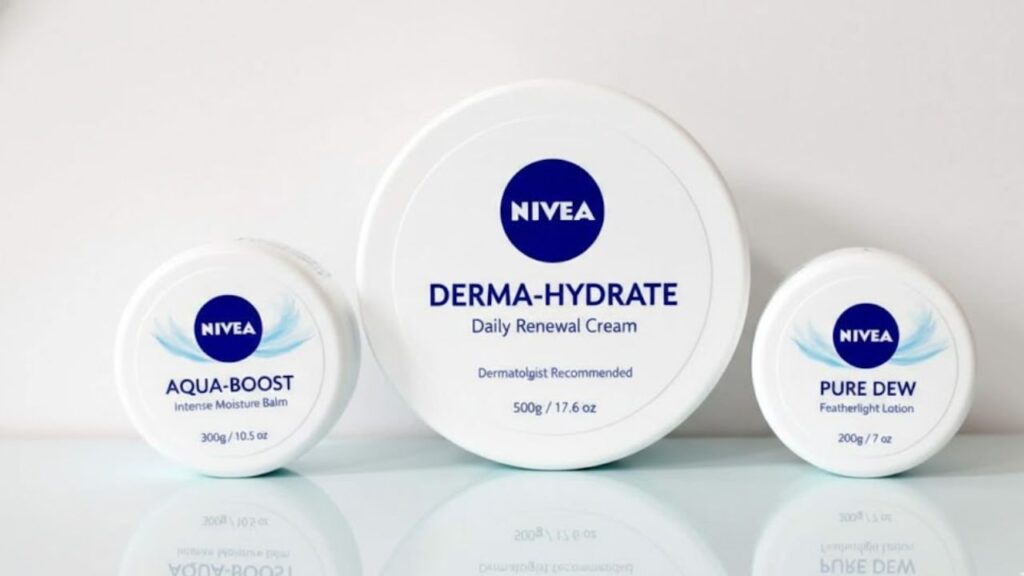
She scans ingredient lists. In one hand, the familiar blue tin from Nivea. In the other, a Neutrogena Hydro Boost tube. Her gaze pauses on a third option she barely noticed before, packaged in a plain, almost dull container. No celebrity endorsement. No loud promise of “glass skin in three days.” Just a simple claim about repairing the skin barrier.
She hesitates, checks the price, and lets out a small laugh. The so-called “boring” cream is nearly sold out.
Something is clearly changing in the world of moisturizers. Dermatologists are quietly elevating a new top choice for hydration and everyday skin health, and it’s not coming from the usual headline brands.
The hydration choice dermatologists now quietly recommend
Ask a few dermatologists, off the record, what they actually use on their own skin, and the answers tend to match. They don’t reach for heavily scented creams backed by TV commercials. Instead, they talk about barrier repair, ceramides, and formulas that simply do their job. No drama. No glow illusion.

Over the last two years, one category has steadily risen to the top of expert recommendations: fragrance-free, ceramide-rich barrier creams, often sold in understated white tubes. Products like CeraVe Moisturizing Cream repeatedly surface at dermatology conferences and across professional Instagram feeds. They may not look exciting, but behind the scenes, they’re everywhere.
This rising favorite focuses less on “anti-ageing” promises and more on day-to-day skin survival. Air-conditioned offices, pollution, retinoids, stress. Skin that needs soothing, not reinvention. The promise sounds almost dull: repair the barrier, retain moisture, support the microbiome. That simplicity is exactly what professionals value.
The data supports the shift. Across Europe and the US, sales of basic, fragrance-free, ceramide-based moisturizers have climbed, while many so-called miracle creams have stalled. CeraVe, barely known to the public a decade ago, is now a standard recommendation in dermatology clinics and a staple in TikTok routines.
A London pharmacist describes a familiar scene. A customer arrives with a half-used luxury jar that cost as much as a restaurant meal. The complaint is predictable: tightness, cheek redness, a burning feeling around the nose. The pharmacist suggests a plain, no-frills barrier cream. A month later, the customer returns with skin that looks calmer, softer, and far less inflamed.
Consumers are growing tired of glow slogans. Attention has shifted toward water loss, redness, and skin tolerance. Suddenly, the quiet science of ceramides and humectants feels more appealing than any celebrity-branded jar.
Why barrier creams are outranking classic brands for daily use
The reason experts are prioritizing these formulas over staples like Nivea or Neutrogena lies in basic skin biology. The outermost layer of the skin, the stratum corneum, functions like bricks and mortar. The cells are the bricks; lipids are the mortar. Traditional heavy creams can feel comforting at first, but they don’t always replicate this natural structure.
Ceramide-based barrier creams are designed to mirror what healthy skin already uses: ceramides, cholesterol, and fatty acids, often blended in precise ratios. When humectants like glycerin and hyaluronic acid are added, hydration is not just surface-level. Water is held within the skin itself. This is why many dermatologists prefer a simple, consistent cream used daily over an expensive product applied occasionally.
This shift isn’t about dismissing older favourites. Nivea and Neutrogena still serve a purpose. The real change is strategic. Experts now treat barrier-first moisturizers as the foundation of a routine, with everything else becoming optional layering rather than the base.
How dermatologists actually apply their top moisturizer
What labels rarely explain is that application technique matters. Dermatologists often refer to the “moisture sandwich.” It sounds trendy, but it’s simply about timing. Start with a gentle, low-foam cleanser. Pat the skin dry until it’s slightly damp, not completely dry.
Apply a thin layer of treatment, such as vitamin C in the morning or a retinoid at night. Wait one or two minutes, then seal everything in with a ceramide-rich barrier cream. This step doesn’t just finish the routine. It locks in moisture and reduces irritation from active ingredients, making previously harsh products easier to tolerate.
 Goodbye Hair Dye for Grey Hair: The Conditioner Add-In That Gradually Restores Natural Colour
In colder months or on particularly dry days, many experts suggest a second, very light layer around the eyes and sides of the nose, where the barrier is naturally weaker. You shouldn’t see a thick white coating. The goal is a thin, even film that quietly does its work.
One common mistake persists. People expect their moisturizer to undo months of stress in a few days. A stripping cleanser one day, an acid toner the next, followed by surprise when the skin feels rough and irritated. Most people don’t do this deliberately; it happens gradually and without much thought.
Dermatologists who rely on barrier creams emphasise consistency over spectacle. The same gentle cleanser and the same barrier moisturizer, morning and night, for at least three weeks. Only then do they evaluate results. It’s not dramatic, but the slow repair changes how skin behaves in real life.
There’s also an emotional comfort to it. On days when the skin burns from too many experiments, that plain tube on the bathroom shelf can feel reassuring.
“When patients simplify to a gentle cleanser and a ceramide moisturizer, two things happen,” says a Paris dermatologist. “Their redness settles, and their relationship with their skin improves. They stop fighting it and start caring for it.”
A simple checklist for choosing the right daily moisturizer
- Check the ingredients early in the list: Look for ceramides, glycerin, and hyaluronic acid to support lasting hydration and barrier repair.
- Choose fragrance-free formulas: Especially if your skin stings, flushes, or reacts easily.
- Match texture to skin type: Creams or balms for dry or mature skin, lighter lotions or gel-creams for combination or oily skin.
- Apply on slightly damp skin: Use the moisturizer within a minute of cleansing to help trap water in the upper skin layers.
- Support it with gentle care: Pair with a non-stripping cleanser and a broad-spectrum sunscreen to avoid undoing progress.
What this shift really changes in everyday life
On a busy morning commute, faces tell similar stories. A shiny forehead from over-mattifying products. Cheeks marked by breakouts and lingering redness. Tired under-eyes rubbed by thinning skin. Different lives, same issue: a weakened skin barrier trying to cope.
When experts recommend ceramide-based, fragrance-free creams, they aren’t speaking only to skincare enthusiasts. They’re addressing anyone who wants their skin to stop itching by mid-afternoon. People who dislike complicated routines but still want to look rested. Those who can’t afford to rotate multiple products.
At a deeper level, barrier-first care redefines what “good skin” means. Less about perfection. More about comfort, resilience, and how skin handles everyday life: winter heating, masks, long hours in front of screens. Instead of chasing constant transformation, the focus shifts to stability.
Most people have experienced that moment when their skin feels unfamiliar. Too reactive, too red, too oily and dry at once. A moisturizer built around daily repair doesn’t solve everything, but it resets the baseline. Mornings become more predictable.
A new skincare logic emerges. Cleanse gently. Nourish the barrier. Protect during the day. Support at night. The product experts now call number one isn’t a before-and-after hero. It’s the quiet constant that makes active ingredients less intimidating and skin easier to live with.
That may explain why this “boring” cream continues to spread through dermatology circles and patient forums. It offers something rare in beauty marketing: a relationship with your skin that feels sustainable. Not flashy. Not cinematic. Just calm, hydrated, and reliable.