
Windows stand wide open, yet the air refuses to move. Families lie sprawled on thin sheets, phones glowing in their hands, searching for a hint of cool that never arrives. The low hum of ageing fans blends with a distant ambulance siren and the strained buzz of a refrigerator fighting to cope.
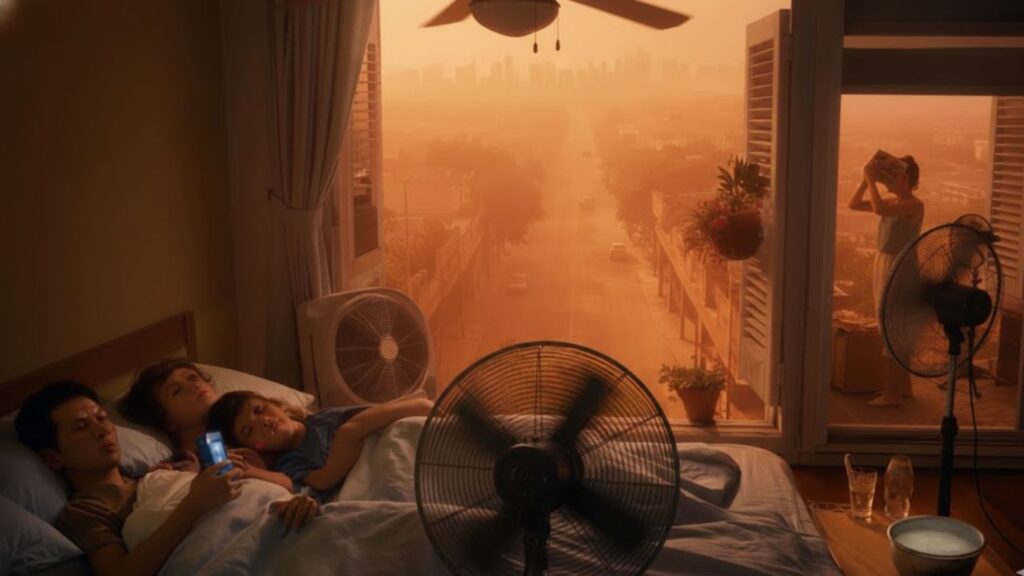
Across the way, a man waters balcony plants already turning brittle at the edges. Below, the street slowly releases the heat it absorbed all day. It feels less like summer and more like being trapped in a train carriage with the heating stuck on full.
Insulux Diabetic Support
What Every Diabetes Patient Should Know
Learn more

We once spoke of heatwaves as rare interruptions. A strange week, then a return to normal. Now that strange week barely ends.

How summer has shifted — and our bodies feel it first
The earliest warning does not come from a weather app. It comes from within. You wake up drained, heavy, as if you slept under damp fabric. Your shirt clings to your back during the commute. Office air conditioning rattles, leaks, and surrenders by mid-afternoon. Conversations shorten. So does patience.
Human bodies evolved for seasons that fluctuate: a burst of heat, a storm, then relief. Instead, warmth lingers. It settles into walls, mattresses, even thoughts. Some call it thermal fatigue — the sense that energy drains away hour by hour. Coffee intake rises while productivity falls. A season once associated with rest now demands extra effort.
Look at the data and the feeling gains a shape. Across Europe, summers are warming roughly twice as fast as winters. In 2022, the UK reached 40°C for the first time on record. In India and Pakistan, repeated heatwaves pushed real-feel temperatures near 50°C, closing schools and straining power grids. In the United States, Phoenix endured an entire month above 43°C. These are no longer outliers; they are fast becoming routine.
Emergency cooling shelters once opened for a few days each year. Now some cities plan them as near-permanent fixtures, almost like libraries. Meteorologists speak less about rare extremes and more about shifting baselines. What qualifies as a “normal summer” quietly rises year after year, while memory clings to cooler childhood evenings rather than scorched pavements.
Climate scientists describe this with a blunt term: loaded dice. Human-driven greenhouse gas emissions have altered the odds. A heat event that once appeared once in fifty years may now arrive once in ten, sliding toward once in five. Warmer air holds more moisture, trapping heat. Oceans warm and help lock high-pressure systems in place over continents. On the ground, it feels like another punishing week. On charts, it appears as a curve that keeps bending upward.
Living with ongoing heat: small habits that matter
A quiet shift is underway in how people cope with hot days. It is not dramatic. It looks like closing shutters early in the morning, not at noon when rooms already resemble ovens. It means choosing lighter, cooler meals so the body does not become its own heat source overnight.
Urban planners call it passive cooling, but at home it resembles rediscovered common sense. Evening cross-ventilation, fans set low to push cooler air along the floor, damp towels placed where breezes pass. In heat emergencies, hospitals rely on a surprisingly simple method: cool the neck, wrists, and feet first, allowing the rest of the body to follow.
Social routines are adjusting too, if quietly. Some workplaces shift meetings to mornings when minds are clearer. Parents delay bedtimes so children can sleep during cooler hours. In warmer cities, the idea of slowing down at midday is returning — not as nostalgia, but as a way to preserve focus and health.
In neighbourhood group chats, someone offers a spare, better-insulated room to an elderly couple whose flat overheats. Supermarkets keep chilled water bottles near entrances, less as promotion and more as subtle support. Beneath these gestures lies a shared truth: homes, jobs, and schedules were designed for a climate that no longer exists.
Climate adaptation can sound abstract in policy documents. In daily life, it appears as reflective blinds, white rooftops, and trees planted for shade rather than decoration. Cities with more greenery already stay cooler at night than concrete-heavy areas, reversing the urban heat island effect. Some local leaders now map the most dangerous streets during heatwaves and prioritise them for trees, fountains, and shaded transport stops. The unspoken concern is clear: if adaptation waits, the coming years will be far harsher than necessary.
 Goodbye Hair Dye for Grey Hair: The Conditioner Add-In That Gradually Restores Natural Colour
Staying safe and steady when heat never fully leaves
One practical habit stands out: organise your day around the hottest two hours, not the overall forecast. Most weather apps highlight a daily peak — treat that window as a red zone. Shift walks, errands, or exercise outside it. Even moving activity two hours earlier can significantly reduce strain on the heart and lungs.
If possible, create a cool room at home. It need not be elaborate. Choose the shadiest space, darken it early, and minimise door opening during peak heat. That is where older relatives rest, children nap, and electronics stay when idle. Hospitals often rely on this principle during heat crises: one optimised room can outperform several mediocre ones. A difference of a few degrees is something the body truly notices.
Struggling in the heat often carries quiet guilt. It is easy to believe others cope better, that discomfort is exaggeration. Heat erodes slowly, encouraging self-blame before environmental awareness. Soyons honnêtes : personne ne fait vraiment cela tous les jours — the flawless routine of hydration, shade, breaks, and electrolytes.
The solution is to lower the bar. Drink water before thirst appears. Replace one hot commute with remote work if possible. Check in on those who live alone with a simple message asking how they are sleeping. On a sweltering afternoon, that matters more than polished infographics.
Public health specialists often repeat a line because it remains accurate:
“Heatwaves kill quietly. They don’t collapse buildings; they overwhelm people who thought they would be fine.”
Translated into everyday life, that advice becomes a short mental checklist:
- Water and shade before noon, not after
- One cool room at home instead of several warm ones
- Check on children, seniors, and pets more often than expected
- Treat red-zone hours as weather warnings, not background noise
- Remember that rest is not laziness when the air feels heavy
Rethinking what “normal summer” now means
The idea of summer as automatically gentle is fading. The emerging pattern is uneven: extended heat, brief storms, nights that stay uncomfortably warm. Bodies and habits are already adapting. Fans rise on shopping lists. Curtains are chosen for sun-blocking ability. Concern from older adults about the next hot spell no longer sounds exaggerated.
Within this change sits a choice. Heatwaves can be dismissed as bad luck, personal inconvenience, evidence of fixed dice ignored. Or they can be read as signals: that cities need more shade than glass, workdays require flexibility over tradition, and energy systems cannot rely indefinitely on fuels that continue warming the atmosphere.
Individually, these adjustments feel modest. Collectively, they accumulate — supporting leaders who prioritise heat resilience, advocating for cool roofs and greener streets, encouraging schools and employers to adopt heat-aware schedules. The summers of childhood are not returning, but neither are people merely helpless passengers.
One day, younger generations will ask what it felt like when heatwaves became routine. The honest answer may be that it felt confusing, quietly alarming, and deeply tiring — before it blended into the background of daily life. That is why the conversation matters now: not to alarm, but to decide what kind of summer is acceptable, and what should never be dismissed as “just the way it is.”

- Heatwaves as routine: Rising frequency and intensity across continents help explain personal fatigue as part of a broader climate shift.
- Small adaptations matter: Cool rooms, red-zone planning, and passive cooling reduce exhaustion and risk.
- Cities must adapt: Trees, shade, reflective surfaces, and flexible schedules highlight what residents can expect from local leadership.
