
The first clue is not on a weather map but at the bus stop. People staring at their phones, scarves half-tied, asking each other: “So… is this thing really coming?” The air feels wrong – too soft for February in the north, too raw for the south – and yet every weather app has turned into a countdown clock.
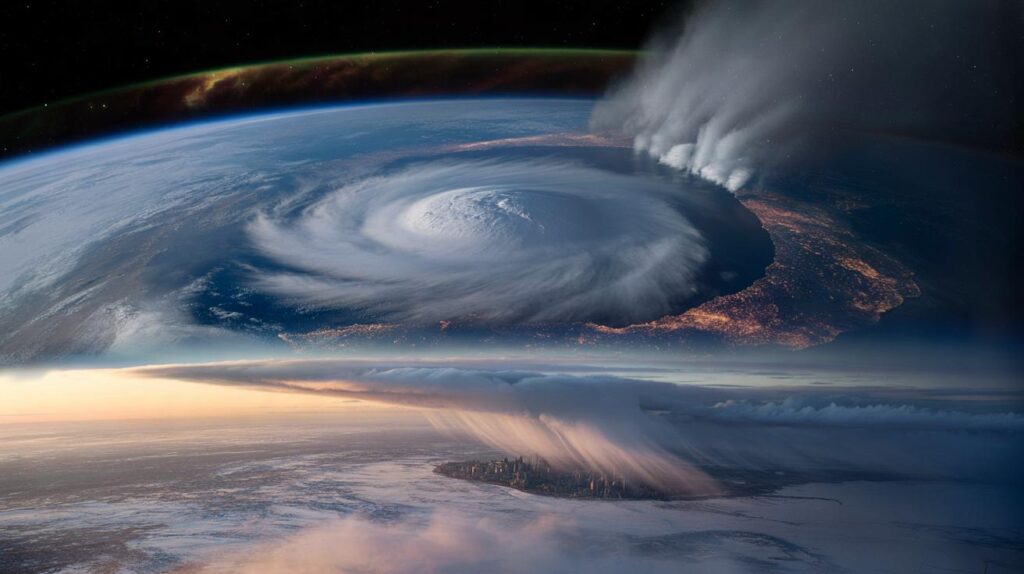
A polar vortex disruption. A phrase that sounds like a sci-fi plot twist, not something you worry about while packing your kid’s lunch.
Meteorologists are warning that what’s unfolding high above the Arctic right now is almost off the charts for this time of year.

And what happens up there rarely stays there.

A historic shake-up in the Arctic sky
Around 30 kilometers above our heads, the polar vortex is doing something it rarely does in February: it’s breaking apart. Picture a colossal whirlpool of icy air, usually locked over the North Pole like a spinning crown. This winter, that crown is slipping, twisting, then snapping in slow motion.
Weather models show a “sudden stratospheric warming” event ramping up – a rapid jump of 40 to 50°C in the upper atmosphere, right in the coldest part of the Arctic sky. That doesn’t mean T‑shirt weather for us. It means the vortex, which normally keeps the worst cold bottled up, is about to be smashed and scattered.
For forecasters who live and breathe this stuff, the charts are jaw-dropping. One senior meteorologist described February’s setup as “borderline unprecedented” in its intensity. Another compared the warming spike to the infamous events of 2009 and 2018, which were followed by brutal late-winter cold in parts of Europe and North America.
You don’t need to understand the equations to feel the unease. Cities that just planted early bulbs might see them buried under snow. Regions that planned for a soft landing into spring could be staring at heating bills that surge back to January levels. All because a swirling column of air, thicker than Mount Everest is tall, is tearing itself apart.
So what does “polar vortex disruption” really mean for life on the ground? The science goes like this: when the stratosphere over the Arctic heats up so violently, the vortex weakens or even splits into several smaller eddies. Those broken pieces can drift south, dragging cold Arctic air down with them. Jet streams buckle. Storm tracks kink. Weather that should stay politely locked in the high latitudes starts gatecrashing mid-latitude cities.
The catch is timing. The disruption up there can take one to three weeks to fully filter down. That’s why you’ll hear forecasters talking about “late February into March” risk. On paper, we’re edging into spring. In the atmosphere, winter might just be warming up for one last swing.
How to live with a sky in flux
The first concrete step is boring but useful: think in weeks, not days. With a polar vortex disruption, the forecast five days out is only half the story. You want to watch the 10–20 day outlook too, especially if you’re planning travel, outdoor events, or anything that depends on stable weather.

Set one or two trusted sources: a national meteorological service, a serious local forecaster, maybe one global model viewer. Glancing at them every couple of days is enough. *You don’t need to become the person obsessively refreshing spaghetti plots at midnight.*
Then there’s the very down-to-earth side. Check the small things that get forgotten when we think winter is almost done. Are your car’s tires still up to ice and slush? Do you have at least a few days’ worth of food that doesn’t need the oven if power flickers? If you rely on medication deliveries, could a delayed truck be a problem?
We’ve all been there, that moment when you thought the worst of winter was behind you and then a late storm shuts everything down. That’s the emotional trap of a big February disruption: mentally, we’re already leaning toward spring. Let’s be honest: nobody really updates their “winter plan” every single day.
Weather and climate scientist Dr. Laura Sánchez puts it bluntly: “A major polar vortex disruption in February is like the atmosphere hitting shuffle on the playlist. You still get winter songs, just not where and when you expected them.”
- For households: Revisit your winter basics for 7–10 more days of possible cold: blankets, batteries, and a backup way to stay warm.
- For commuters: Build in margin for sudden ice, fog, or snow, even if the week starts off unusually mild.
- For parents and caregivers: Have a quick plan for school closures or delayed buses, from remote work setups to neighbor support.
- For outdoor workers: Keep layered gear easily accessible; don’t pack it away just because the calendar says February is almost over.
- For small businesses: Think about supply chains and foot traffic; one unexpected cold snap or storm can change both in a day.
A fragile new normal above our heads
Once you know what’s happening in the stratosphere, it’s hard to unsee it. You start to notice how fragile our sense of “typical” seasons really is. Five days of almost-spring, then a slap of Arctic air. Weeks of drizzle, then a blizzard that arrives like an uninvited guest.
A disruption of this magnitude in February raises uncomfortable questions. Are we just seeing natural variability flexing its muscles, or are we stumbling into a climate where wild swings become background noise? Climate scientists are cautious, but many point to a pattern: a warming Arctic, a wobblier polar vortex, more dramatic lurches between mild and bitter spells in the mid-latitudes.
This doesn’t mean every winter will bring a headline-grabbing disruption. It does suggest that “average winter” is a story we tell more than a reality we live. So people start writing their own micro-strategies: a gardener keeping seed trays ready but never trusting the first warm week. A school district quietly stockpiling snow-day lesson plans online. A city renter saving for better insulation, not just a summer AC unit.
What’s unfolding over the Arctic right now is technical and abstract on the charts, but deeply personal once it reaches your street. You don’t have to fear it. You do have to live with it. And that might be the real shift: learning to treat the sky as something dynamic and slightly unpredictable, not a background screen that never changes.

| Key point | Detail | Value for the reader |
|---|---|---|
| Magnitude of the disruption | Exceptionally strong sudden stratospheric warming in February, weakening and possibly splitting the polar vortex | Helps you understand why forecasters are using unusually urgent language this late in winter |
| Timing of impacts | Surface effects can lag the disruption by 1–3 weeks, shaping late February and March weather | Lets you plan travel, work, and home life with a realistic time window, not just day‑to‑day forecasts |
| Everyday preparation | Recheck winter basics, follow a few trusted forecasts, and allow for abrupt swings between mild and harsh conditions | Reduces stress, surprise costs, and last‑minute scrambling when the atmosphere “hits shuffle” on the season |
FAQ:
- Is this polar vortex disruption proof of climate change?It’s one piece in a bigger puzzle. Individual events can happen naturally, but the backdrop of a warming Arctic may be influencing how often and how intensely these disruptions occur.
- Does a disrupted vortex always mean a huge freeze where I live?No. It increases the odds of colder and more unstable weather in some mid‑latitude regions, but the exact location depends on how the jet stream responds. Some areas can stay mild while others get hit hard.
- How long could the effects last on the ground?Once the disruption filters down, its influence can linger for several weeks, sometimes shaping patterns into early spring with repeated cold shots or stormy periods.
- Should I change my travel plans?You don’t need to cancel everything. It’s smarter to build flexibility into your dates, keep an eye on forecasts 5–10 days ahead, and avoid tight, non‑refundable connections during potential peak impacts.
- Is there anything practical I can do besides watching the news?Yes: review your winter gear, think through backup heating and power needs, adjust your budget for a possible extra burst of energy use, and talk with family or neighbors about helping each other if late‑season storms arrive.
