
The radio crackled first, thin and scratchy over the wind, just as the small sailing yacht cleared the rocky point. A clipped voice broke through the static: “All vessels in the area, be advised: orca interactions reported two miles off your bow.” On deck, everyone glanced at each other, half excited, half tense. It sounded like the kind of warning you dream about and dread at the same time.
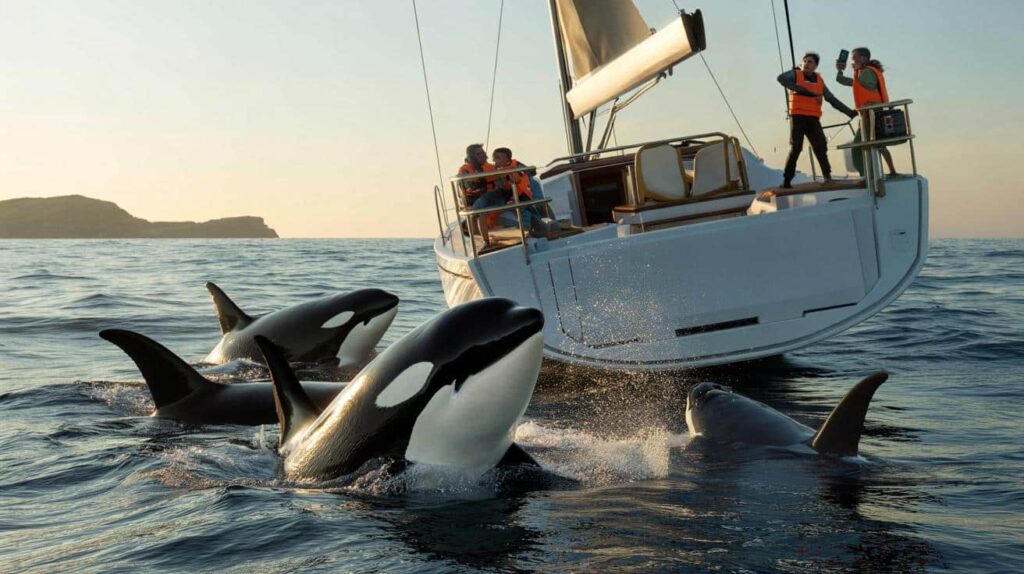
Ten minutes later, the dream part faded.
Black dorsal fins began slicing the surface, fast and purposeful, heading straight for the boat’s rudder. Someone dropped a winch handle. Someone else swore softly. The ocean, usually a place of quiet awe, suddenly felt crowded and strangely personal.

The skipper killed the engine, hands shaking on the throttle. For a long, stretched-out moment, nobody spoke.

Then came the thud against the hull.
When the world’s favorite whale stops playing nice
In the past few years, a pattern has been creeping into marine radio chatter from Spain to Iceland, from the Pacific Northwest to the Strait of Gibraltar. Skippers are reporting orcas not just following boats, but circling them, pushing them, and, increasingly, attacking key parts like rudders. What used to be a rare, almost mythical encounter now shows up regularly in sailors’ WhatsApp groups, port rumors and official bulletins.
The language has shifted, too. People no longer talk only about “sightings”. They talk about “incidents”.
Ask around marinas in southern Portugal or along the Galician coast and you’ll hear the same nervous story told in slightly different ways. A 40-foot sailboat losing its steering in under five minutes. A delivery skipper off Barbate reporting three orcas ramming his rudder like a coordinated demolition team. A French crew filming a juvenile orca surfacing with a torn-off rudder blade in its mouth, as if showing it off.
Spanish and Portuguese authorities logged dozens of such interactions last season alone, enough that some insurance companies quietly updated their small print. For coastal communities that rely on cruising traffic, every new report feels like another small crack in the summer economy.
Marine biologists hesitate to use the word “attack”, preferring “interactions” or “aggressive behaviour”, but the shift is hard to ignore. These animals, especially one Iberian subpopulation, seem to have discovered that rudders are both fragile and interesting. Some scientists describe it as a “cultural fad” among a specific group, passed from one curious individual to its relatives. Others point to stress: dwindling tuna stocks, noise from shipping lanes, the constant hum of human presence.
The plain-truth sentence nobody likes to say out loud is this: boats are the intruders in their living room, not the other way around.
What authorities now say to sailors, fishers and weekend skippers
Marine authorities from Spain to the US West Coast now repeat the same calm script on the radio, and it goes roughly like this: slow down, stay quiet, don’t try to outrun them. If orcas approach, they advise cutting the engine, securing everyone with lifejackets, staying away from the stern, and calling the coast guard with your position.
The idea is simple. A moving boat is interesting, noisy, chaseable. A silent, drifting hull is boring. If you’re in the wrong place at the wrong time, your best move is to become the most uninteresting thing in the sea.

For many skippers, that advice goes against instinct. When you feel a six-ton predator slam into your rudder, every cell in your body screams “go, go, go.” Some gun the engine, some start shouting, some grab boat hooks and smack the water. We’ve all been there, that moment when fear hijacks common sense and turns a calm situation into a chaotic one.
Authorities gently remind people that orcas are highly protected. Striking them, trying to scare them off with fireworks, or veering at them on purpose doesn’t just risk escalating the encounter. It can also land you in serious legal trouble.
On paper, the official guidance looks neat and measured. On a heaving deck with three fins circling your stern, it feels different. As one Spanish coast guard officer admitted off the record, “Nobody reacts perfectly the first time.”
Marine biologist Renaud Martinez, who has studied the Iberian orca population for a decade, puts it bluntly: “They’re smart, they’re social, and they learn fast. If one group finds boats entertaining, that behaviour can spread like a trend in a high school. The worst thing humans can do is turn it into a fight they can’t possibly win.”
- Reduce speed when orcas are sighted within a few hundred meters.
- Keep hands, feet and gear away from the stern and the waterline.
- Contact authorities early with your exact position and situation.
- Avoid dropping objects or fuel into the water as “deterrents”.
- Log the encounter afterward: time, place, number of animals, behaviour.
Living with a new kind of ocean anxiety
For coastal sailors, this strange wave of orca behaviour has changed the emotional map of familiar routes. Some now plot their passages at night, hoping to avoid peak feeding times. Others hug the coast, preferring shallow waters where orcas rarely venture. A few simply don’t sail those areas anymore.
This low, constant anxiety is new. The sea always had its risks, but they used to feel random: a storm, an engine failure, a hidden rock. Now there’s the idea of a conscious animal, apparently choosing your boat out of a dozen, nudging it, testing it, learning from it.
That shift provokes complicated feelings. Respect, fear, guilt, even a strange admiration. These are animals we grew up admiring in documentaries and theme parks, plastered on children’s pajamas and travel posters. They were the friendliest face of the wild ocean. *Seeing them push back, assertive and unpredictable, scratches that picture.*
Let’s be honest: nobody really reads every line of those marina advisories or safety briefs every single day. Most people only dig into the guidelines after they’ve seen a video of a rudder snapping like a twig or heard a first-hand story at the harbor bar.
What’s happening now feels like a negotiation, even if only one side is aware of it. Our boats are more numerous, faster, louder. Their world is smaller, busier, poorer in big fish. Somewhere in that pressure cooker, a group of orcas started turning the tables, one rudder at a time.
Whether you’re a sailor, a coastal resident, or just someone scrolling on their phone far from the sea, this slow-motion shift matters. It touches on how we move through wild spaces, how we react when nature stops behaving like a backdrop and starts acting like a neighbour with its own agenda.
The next time a scratchy radio voice announces “orca interactions reported ahead”, more people will be listening. The question hanging in the air is simple and uncomfortable: are we ready to share the water on their terms as well as ours?

| Key point | Detail | Value for the reader |
|---|---|---|
| Rising orca–boat incidents | Clusters of aggressive interactions, especially against rudders, reported in several regions | Helps readers understand why warnings and headlines are suddenly multiplying |
| Official safety guidance | Slow down, go quiet, protect people on board, contact authorities, avoid retaliation | Gives practical actions to reduce risk and stay within the law during an encounter |
| Deeper context | Possible links to orca culture, stress, and changing oceans | Invites readers to see beyond fear and consider what the behaviour might be telling us |
FAQ:
- Are orcas really attacking boats on purpose?Reports suggest some groups, especially off the Iberian Peninsula, deliberately target rudders, but scientists frame it as learned behaviour or play, not a calculated “war on boats”.
- Has anyone been killed in these incidents?No human fatalities have been linked to these recent orca–vessel interactions, though there have been injuries, damaged boats and some sinkings.
- What should I do if orcas approach my boat?Reduce speed, avoid sudden changes in direction, keep people away from the stern, cut the engine if advised, and radio local authorities with your position and situation.
- Can I use sound devices or fireworks to scare them off?Most marine authorities discourage this, as it can harm the animals, escalate behaviour and leave you facing legal consequences under wildlife protection laws.
- Is it safe to keep sailing in affected areas?Risk has increased but remains relatively low; following local guidance, planning routes with updated information and staying alert significantly improves safety.
