<strong>Across Europe and the US, a strangely simple ritual is gaining fans: a quick spray of vinegar at the front door.
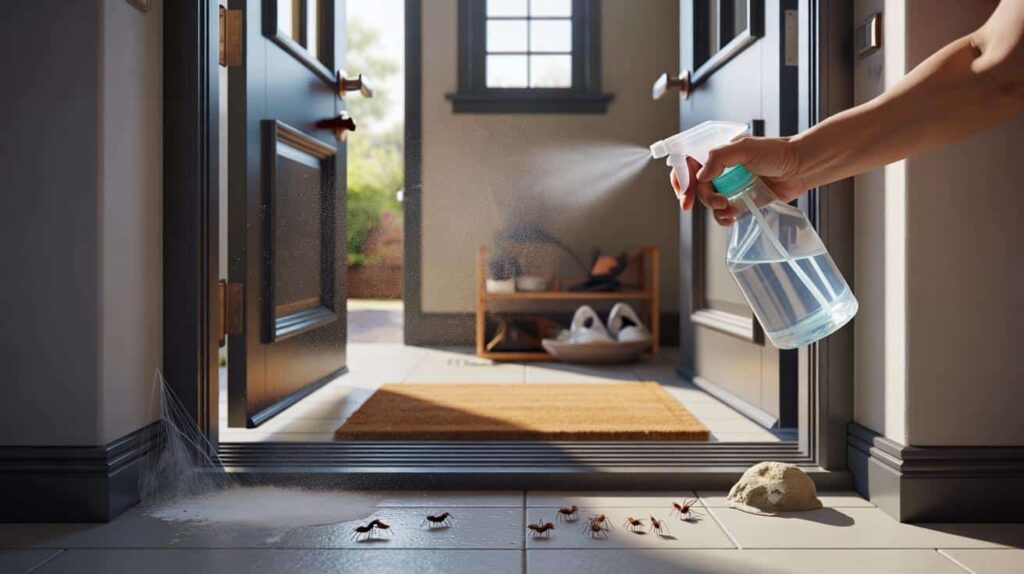
What started as an old-fashioned cleaning trick has turned into a curious mix of pest control, odour fixing and even “energy cleansing” for the home’s entrance.
Why are people spraying vinegar at the front door?
White vinegar has long been a staple in kitchen cupboards for cleaning ovens, kettles and bathroom tiles. Recently, though, its role has shifted from hidden cleaning ally to something more visible and symbolic: a spray right where guests step in.

Fans of the trick say it brings three main benefits: it keeps insects away, helps neutralise smells near the entrance and offers a simple eco-friendly alternative to harsher sprays. Some also see it as a small daily ritual to reset the mood of the home.

Used at the front door, vinegar acts as a low-cost shield: it deters pests, refreshes the air and signals a “clean slate” as you walk in.
How vinegar works as a natural barrier
From a practical standpoint, the most tangible effect is on small household intruders. The strong, acidic smell of white vinegar is unpleasant for many insects, which tend to avoid areas where the scent lingers.
Insects that commonly avoid vinegar
- Ants – They navigate by scent trails; vinegar disrupts these routes and makes the area less attractive.
- Spiders – While they are useful predators, many people prefer not to meet them at the front door; vinegar can discourage them from nesting nearby.
- Cockroaches – Sensitive to strong smells, they often steer clear of repeatedly treated areas.
This makes the doorstep and hallway an obvious zone for a vinegar spray: it targets the main access point where insects tend to slip in through tiny gaps.
The front door is a strategic line of defence: treating it with vinegar helps reduce the number of bugs that ever make it inside.
How to use vinegar at the entrance
The method is straightforward and costs pennies compared with branded repellents or fragrance diffusers.
Basic spray recipe
| Ingredient | Suggested ratio | Notes |
|---|---|---|
| White vinegar | 1 part | Use plain distilled vinegar, not cleaning vinegar with added agents. |
| Water | 1–2 parts | More water means a gentler smell and less risk of damaging delicate surfaces. |
| Optional: a few drops of essential oil | Per 250 ml of mix | Lavender, lemon or eucalyptus can soften the vinegar scent. |
Pour the mixture into a clean spray bottle. Shake briefly before each use, especially if you add essential oils, which can separate.
Where to spray around the door
Specialists in natural cleaning usually recommend focusing on areas where insects are most likely to cross or hide:
- Along the door frame, especially the lower part.
- On the floor just inside and outside the threshold, if the material tolerates mild acidity.
- In small cracks or gaps near the frame, where ants and other insects often squeeze through.
- On skirting boards and dark corners close to the entrance.
Always test the solution on a discreet spot first, particularly if you have natural stone, untreated wood or delicate finishes. Vinegar can etch marble and damage some varnishes over time.
Front-door vinegar as an “energy cleaner”
Beyond its purely physical effects, vinegar has picked up a second reputation: as a tool for cleaning the “energy” of a home. Followers of feng shui and other harmonising practices sometimes talk about heavy or stagnant vibrations collecting near entrances, where outside and inside meet.
For those who embrace this view, the front door is more than a piece of wood and metal. It is seen as a symbolic filter. A quick spray of vinegar on the frame or threshold is treated as a small ritual to reset the atmosphere.
In household rituals, vinegar spray is seen as washing away the emotional residue of the day before anyone steps further inside.
Even if you are sceptical of energetic language, many people appreciate the psychological effect: the deliberate act of spritzing and wiping the entrance can feel like a brief pause and mental reset after work, school or a stressful commute.
Odours, cleanliness and why the entrance matters
The front area of a home often catches the worst of daily life: wet shoes, pet smells, cigarette smoke drifting from outside, food aromas from neighbours, even hallway damp in older buildings.

Vinegar is well known for neutralising odours rather than just masking them. Its acidity reacts with molecules responsible for bad smells, especially those from smoke and cooking fats. A diluted spray near the entrance can help prevent that stale, closed-in scent that greets you at the door.
Some household surveys in German-speaking countries show people using vinegar at their entrance for several reasons, from smell control to insect deterrence, with many also citing environmental concerns. That reflects a broader move away from heavy chemical aerosols and towards multipurpose, biodegradable products.
Environmental and health angles
Compared with many commercial sprays, white vinegar has a short, simple ingredient list. It breaks down easily and does not normally release persistent residues into the air or onto surfaces.
For households with children, pets or allergies, this can be a strong argument. Many plug-in fragrances and insect sprays rely on synthetic perfumes or insecticides that can irritate sensitive lungs or skin. Vinegar smells strong at first but usually fades as it dries.
That said, not everyone tolerates it. People with asthma or fragrance sensitivity can find the initial odour harsh. Good ventilation and light dilution with water help, as does limiting how much you use at one time.
Potential risks and limits of the method
As with all home hacks, there are limits and caveats.
- Surface damage – Do not use undiluted vinegar on marble, limestone, unsealed grout or waxed floors; etching and dull spots can appear.
- Serious infestations – Vinegar may slow down occasional ants or roaches, but it is not a replacement for professional pest control when infestation signs are clear.
- Metal fittings – Prolonged, heavy use on some metals close to the door, like untreated brass, can promote corrosion.
- Overpowering smell – In tiny, poorly ventilated hallways, start with a weaker mix and fewer sprays.
Vinegar spray works best as a supportive habit: part cleaning, part prevention, not a magic cure-all for every problem at the entrance.
Practical scenarios where it makes sense
Imagine a ground-floor flat close to a bin area. Ants appear each spring and the entrance often smells faintly of rubbish on warm days. A daily or weekly vinegar routine along the doorstep and skirting boards, combined with basic cleaning, can make the flat less attractive to both insects and odours.
Or think of a busy family home with pets. The hallway collects muddy paws, wet coats and sports shoes. Spraying and quickly wiping the door frame and floor with diluted vinegar after big outings helps keep the first impression fresher, even before a full clean of the house.
Related habits that amplify the effect
People who adopt the vinegar-at-the-door ritual often combine it with other simple practices to strengthen the overall impact.
- Placing a sturdy doormat outside and a washable one inside to catch dirt and moisture.
- Sealing visible gaps around the frame with caulk or rubber strips, so fewer insects can get through.
- Using a small shoe rack or tray near the entrance so street dirt does not spread through the home.
- Adding a bowl of baking soda nearby to further absorb persistent smells, especially in cramped hallways.
Seen together, these habits form a light but effective barrier: less dirt, fewer insects, cleaner air and a more controlled transition from outside to inside.
Terms and concepts worth unpacking
When fans call vinegar an “energy cleaner”, they are usually speaking metaphorically. They may not be referring to measurable physics but to the feeling a room gives when it has been aired, tidied and wiped down. Vinegar, with its sharp smell and association with deep cleaning, becomes a handy symbol for that reset.
On the more technical side, the key word is “acidic”. Vinegar is a dilute solution of acetic acid. That acidity helps cut through mineral deposits, soap scum and some organic residues, which is why it is effective in kitchens and bathrooms and, by extension, at the often-neglected front door area.
Used with awareness of its limits and of the surfaces in your home, a humble spray of vinegar at the entrance can act as both a practical tool and a small, daily gesture that makes coming home feel a little lighter.