<strong>Across kitchens, bathrooms and bedrooms, an unlikely household item is suddenly being spared the bin and given a second life.
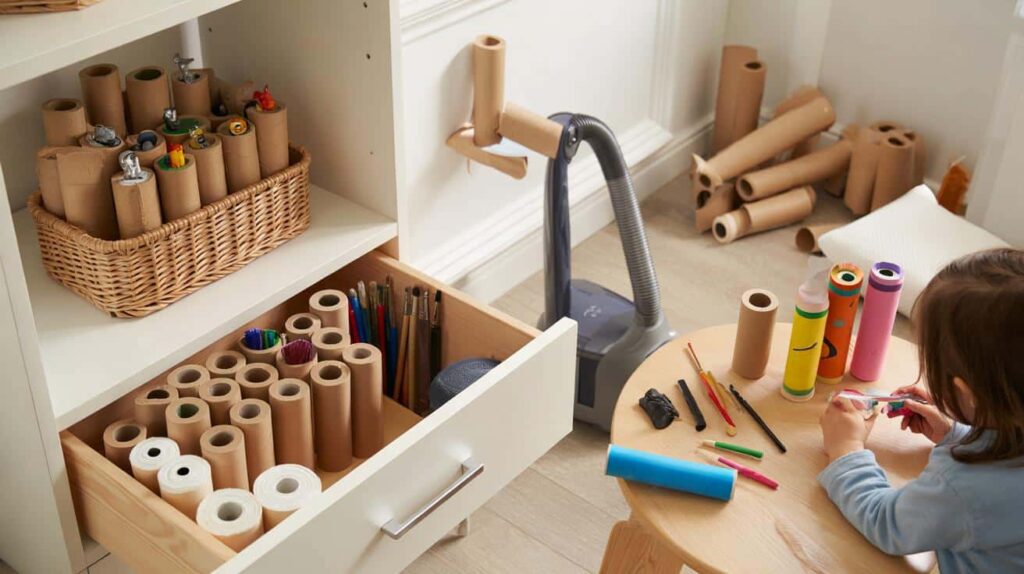
Once seen as pointless rubbish, the cardboard cores from toilet rolls are now being neatly stacked in drawers, baskets and craft boxes. Behind this quiet shift sits a mix of thrift, creativity and a growing reluctance to throw away anything that might still be useful.
From rubbish to organiser: why cardboard tubes are staying
For years, the end of a toilet roll meant one thing: the cardboard tube went straight into the rubbish or recycling bin. That automatic gesture is changing. More households are deliberately keeping the tubes, not out of laziness, but because they have realised how useful they can be.

People are turning a throwaway item into a free tool for storage, cleaning and DIY projects around the home.

The timing is not random. Rising living costs and a stronger focus on waste reduction have pushed many people to look again at what they already have. A sturdy cardboard cylinder that arrives in your bathroom several times a week is hard to ignore once you start seeing it as raw material.
How a simple tube becomes a storage tool
The most common new role for toilet roll tubes is as a low-cost organiser. Their rigid shape and compact size make them ideal for taming the kind of chaos that tends to grow in drawers and on shelves.
- Cable management: Fold a charging cable and slide it into a tube to stop it knotting or fraying in a drawer.
- Drawer dividers: Stand several tubes upright in a box or drawer to sort small items like pens, makeup brushes or batteries.
- Scarf and tie storage: Thread ties or rolled-up scarves through tubes to keep them from creasing.
- Wrapping paper sleeves: Slit a tube lengthways and clip it around rolls of gift wrap to stop them unravelling.
Parents also report using tubes to keep kids’ small toys together. Cars, figures or building blocks can be grouped in labelled tubes and then stacked like mini filing systems.
For people short on space, dozens of small objects can be controlled with something that used to sit at the bottom of the bin bag.
Cleaning jobs where cardboard tubes excel
Cardboard might not sound like a cleaning tool, yet the shape and softness of these tubes work surprisingly well in awkward areas. They can be squeezed, bent or flattened slightly to reach places that normal sponges and cloths struggle to access.
Reaching tight gaps and dusty corners
One simple trick involves combining a tube with a vacuum cleaner. Slip the tube over the nozzle and press the end into a new shape. This allows you to:
- Reach deep into window tracks and sliding door rails.
- Clean between radiator fins.
- Get behind heavy furniture or appliances without moving them.
- Extract dust from keyboard edges and speaker grilles.
The slightly rough texture of the cardboard helps catch dust, and the tube can be recycled once it becomes too worn. Some people also use the tubes to wipe down skirting boards or to push a cloth into narrow spaces, such as between a fridge and a wall.
In cleaning cupboards, tubes can double as holders. Placed upright in a box, they keep spray bottles and brushes from falling over, or they can be used to separate bin liners and small rubbish bags.
Crafts and learning: turning waste into projects
For families, toilet paper tubes are becoming a default supply for arts and crafts sessions. They are safe for children to handle, they take paint well and they are easy to cut with blunt scissors.
What once looked like grey waste now appears as building blocks for rockets, castles, animals and homemade toys.

Creative ideas for kids and adults
Children’s projects often start with a simple tube and a bit of paint. From there, they can build:
- Binoculars made by taping two tubes together and adding string.
- Miniature puppets, with drawn faces and scraps of fabric as clothes.
- Desk organisers for pencils and crayons.
- Advent calendars by arranging and numbering multiple tubes.
Teachers and parents also use them in learning activities. Tubes can stand in for building columns in basic engineering tasks, or as counting tools in early maths lessons. Dropping beads or marbles through them can help explain gravity and cause-and-effect to younger children.
| Use | Main benefit |
|---|---|
| Home organisation | Reduces clutter without buying new storage boxes |
| Cleaning aid | Reaches narrow or awkward spaces more easily |
| Kids’ crafts | Provides cheap, safe material for creative play |
| School projects | Supports hands-on learning with recycled materials |
Why this small habit says a lot about changing homes
The growing interest in reusing toilet roll tubes reflects wider shifts in how people think about their homes. There is more pressure on budgets, and fewer people want to buy new plastic storage when they can repurpose what they already own. At the same time, concern over waste makes even tiny recycling decisions feel meaningful.
Social media has played a role too. Platforms are full of short clips showing “life hacks” that promise to save money and space. A trick that starts as a single post about tidying cables with cardboard can spread quickly and become normal behaviour in thousands of households.
A small, everyday object has turned into proof that low-cost, low-effort changes can make a home run more smoothly.
Points to keep in mind before reusing tubes
There are a few practical details worth considering. Cardboard absorbs moisture, so tubes should only be kept in dry areas. Using them to store items under the sink or in a damp cellar can lead to mould or bad smells. They also tear when overloaded, so heavier objects need sturdier containers.
Some people are cautious about hygiene because toilet rolls sit in bathrooms. For peace of mind, many keep tubes only from well-ventilated rooms or from spare rolls stored in cupboards. Others simply let tubes air out before use and avoid using them in direct contact with food or personal care products.
Practical scenarios for everyday life
Imagine a small flat with limited storage. The owner keeps a box of clean cardboard tubes in their wardrobe. Over a weekend, they use them to separate socks by colour, group cables behind the TV and build a quick pen holder for a tiny desk. No money spent, three problems eased.
In another case, a parent stores a bag of tubes in the kitchen for rainy days. When plans are cancelled and the children are restless, the tubes become rocket bodies, tunnels for toy cars or stands for paper flowers. The activity costs almost nothing and keeps cardboard out of the bin a little longer.
Related activities and broader benefits
Reusing toilet roll tubes often goes hand in hand with other small changes: keeping glass jars for food storage, cutting old T-shirts into cleaning rags, or using shoe boxes as drawer organisers. The combined effect can be noticeable. Less packaging is thrown away, new plastic items are bought less often, and the home gradually feels more ordered.
These habits do not solve the bigger problems around waste and consumption, but they give people a sense of control over their immediate space. A flimsy cardboard tube, once ignored, becomes a reminder that a more practical, less wasteful home often starts with the things we used to throw away without thinking.