Building endurance plays a major role in overall wellness. It gives you the stamina needed to handle everyday responsibilities and enjoy hobbies without constant fatigue. Strong endurance supports both physical and mental well-being while helping keep your heart and lungs functioning efficiently. Simply put, endurance helps you stay active and independent as the years go by.
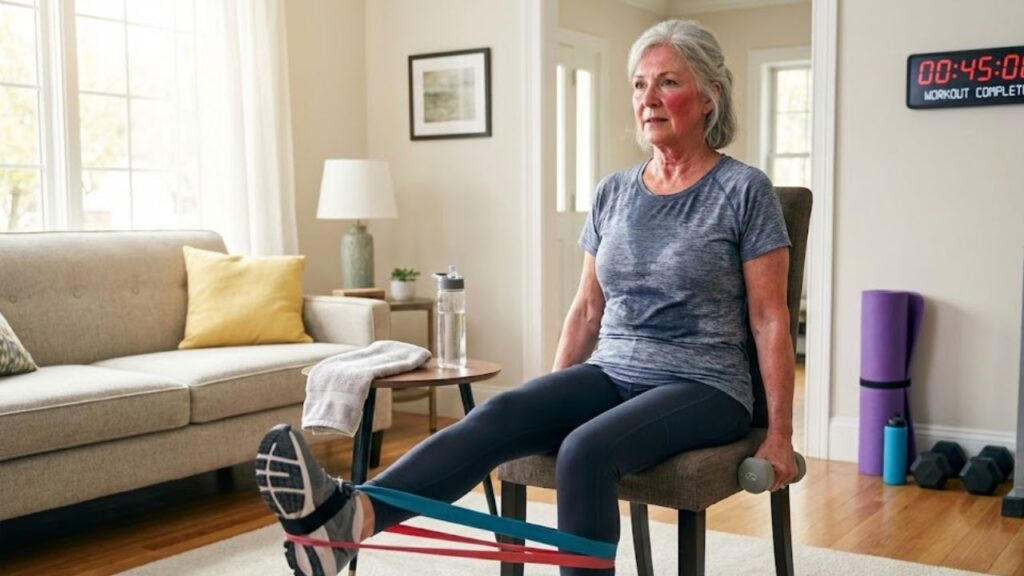
“As we age, both muscular and cardiovascular endurance naturally decline due to factors such as muscle fiber loss, reduced heart efficiency, stiffer arteries, and lower oxygen utilization,” explains Eric North, The Happiness Warrior—a wellness speaker and advocate for purposeful aging. “These changes reduce stamina, but consistent physical activity can significantly slow the decline and preserve much of the body’s functional capacity.”
North adds that key shifts include muscle atrophy—especially fast-twitch fibers— along with a lower maximum heart rate and less flexible blood vessels. Together, these changes affect how efficiently the heart delivers oxygen, although the body adapts to maintain daily function.

The Long-Term Health Benefits of Endurance
Endurance is closely linked to better long-term health because it enhances mitochondrial function, cardiovascular health, and important metabolic markers. These improvements often lead to higher energy levels and a reduced risk of chronic conditions such as heart disease, diabetes, and stroke.
 Bold Architectural Haircuts Signal High Confidence at Work, Experts Say - Here’s Why People Notice
“While strength training is essential for slowing muscle loss known as sarcopenia, endurance training directly supports the heart, lungs, and cellular energy systems,” North notes. “This provides broader, whole-body benefits that are critical for aging well.”
A Simple Four-Minute Chair Workout Test After 60
To help assess where your fitness stands, experts recommend a short four-minute chair workout. If you can complete it comfortably, it’s a strong sign that your endurance level is excellent and well-maintained.
Why Chair-Based Workouts Are So Effective
“There are plenty of programs suggesting you need expensive equipment or complex routines,” says Erin Richardson, Corporate Director of Aging & Functional Ability at Sun Health. “In reality, one of the most effective tools is something most people already have—a simple chair.”
Research shows that adults over 65 who perform controlled, repeated chair-based exercises often improve lower-body strength, experience better health outcomes, and maintain greater independence.
One of the most practical chair movements is standing up from a seated position. The sit-to-stand motion is a daily functional activity that plays a key role in preserving independence with age.
 Goodbye Hair Dyes Grey Coverage Trend Keeps Growing - The Natural Finish Is Pulling People In
“Chair exercises are also effective because they prioritize safety,” Richardson explains. “They reduce fall risk, accommodate mobility limitations, and allow people to focus on control and strength rather than fear of injury.”
Chair Exercises That Test and Build Endurance
Sit-to-Stand Movement
“The focus should be on slow, controlled motion—avoid dropping back into the chair,” Richardson advises. “Using armrests is fine at first, but the long-term goal is to stand without arm support.” This movement strengthens the quadriceps, which are essential for everyday actions like rising from a chair or toilet.
- Start seated near the front of a sturdy chair, feet flat beneath your knees.
- Lean slightly forward.
- Stand up without using your hands or knees if possible.
- Lower yourself back down with control.
- Count how many repetitions you can complete in 30 seconds.
- Rest briefly, then repeat for 3 to 4 rounds.
Seated Weight Shifts
This exercise helps improve trunk stability, which is important for daily tasks like dressing or putting on socks.
- Sit upright while holding a light weight in one hand.
- Reach comfortably to the side, forward, and across your body.
- Return to the center after each reach.
- Switch sides.
- Perform 5 to 10 reaches in each direction per side.
Seated Marches
“This movement strengthens the hip flexors, which are essential for weight shifting and initiating walking,” Richardson explains.
- Sit tall with feet hip-width apart.
- Lift your left knee to about hip height, then lower.
- Repeat with the right knee.
- Maintain good posture without leaning back.
- Complete 3 to 5 sets of 10 to 20 marches per leg.
- For added difficulty, use ankle weights.
Seated Resistance Twists
This exercise mirrors everyday actions such as reaching into cupboards or turning to grab items.
- Sit upright in the chair.
- Anchor a resistance band at your hip with one hand.
- Hold the band with the opposite hand.
- Rotate your torso away from the anchored side while reaching upward.
- Switch sides after completing all repetitions.
- Perform 3 to 5 sets of 10 to 15 reps per side.
“These exercises are highly adaptable,” Richardson notes. “They can be made easier or more challenging and often progress to standing movements over time. The priority should always be safety, posture, and control—keep your feet grounded, sit tall, and relax your shoulders.”