Your core is one of the most active and essential systems in your body. Often described as your body’s central hub, it supports the spine and pelvis, improves posture, and helps maintain balance. Every movement you make—walking, bending, reaching, or standing—relies on a strong, responsive core to keep you stable and mobile throughout the day.
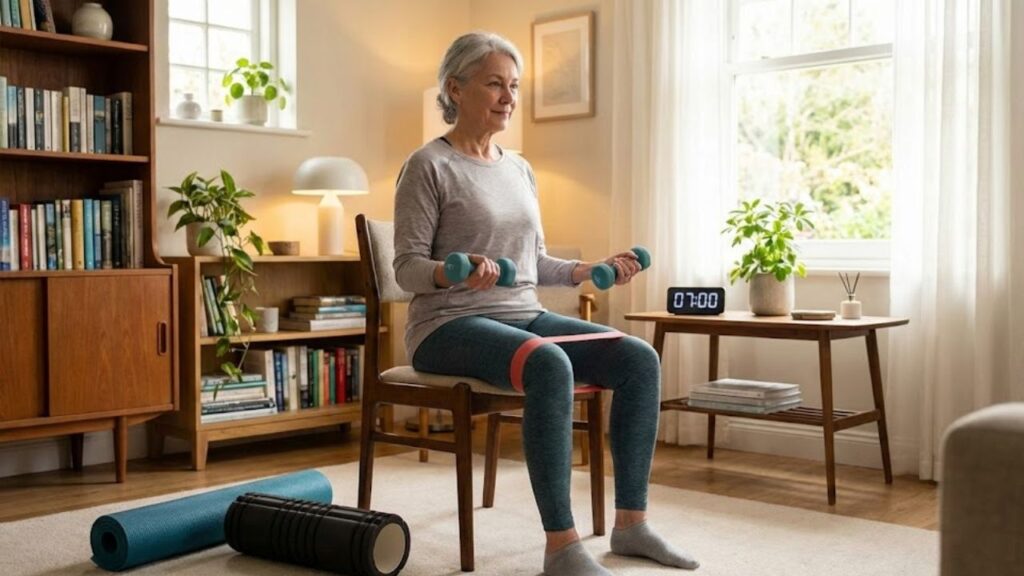
As you grow older, maintaining core strength becomes even more important. A well-conditioned core makes daily tasks feel easier, reduces strain on the body, and supports independence. The good news? You don’t need floor exercises to build it. Experts now recommend a simple chair-based routine that delivers impressive results after 60.
Why Chair-Based Core Training Works Better After 60
Eric North, known as The Happiness Warrior, explains that chair workouts can outperform traditional planks for older adults. A short, seated routine allows for safer, more consistent movement while avoiding the stress of floor-based positions. This approach encourages proper muscle engagement without discomfort or fear of injury.

Chair exercises are highly adaptable, making them suitable for all fitness levels. By focusing on functional movement patterns and reducing joint strain, this style of training supports balance, posture, and real-world strength. With fewer physical barriers, older adults can train regularly and build a stronger, more supportive core for everyday life.

Seven-Minute Chair Routine to Rebuild Core Strength
Seated Knee Lifts
Sit upright with your feet placed hip-width apart on the floor. Slowly lift your left knee up to hip height, then lower it with control. Repeat on the right side, alternating legs in a steady marching motion. Continue for 30 to 60 seconds, focusing on controlled movement and core engagement.
Seated Bicycle Crunches
Sit near the edge of the chair and place your hands behind your head. Lean back slightly and begin a pedaling motion with your legs. As you lift one knee, twist your torso and bring the opposite elbow toward it. Continue alternating sides for 30 to 60 seconds, maintaining a smooth, controlled rhythm.
Seated Russian Twists
Remain seated with your hands clasped together or placed behind your head. Keep your feet flat on the floor, or lift them slightly to increase difficulty. Twist your torso from side to side, activating the oblique muscles. Perform this movement for 30 to 60 seconds with steady control.

Heel and Toe Taps
Sit tall and brace your core. Extend one leg forward, tap your heel, then pull your toes back toward you. Alternate legs while keeping your torso stable and engaged. Continue for 30 to 60 seconds, focusing on balance and coordination.
Chair Sit-to-Stands
Sit at the front edge of a sturdy chair with your feet planted beneath your knees. Lean slightly forward and stand up without using your hands or knees for support. Slowly lower yourself back down with control. Perform this movement for 30 to 60 seconds, emphasizing steady strength and balance.
Seated Side Bends
Sit upright and place one hand behind your head while the other reaches toward the floor. Bend gently to the side without leaning forward, keeping your body aligned. Complete all repetitions on one side before switching. Continue for 30 to 60 seconds per side.
Cool-Down Stretch
Finish with a gentle stretch by lacing your fingers together and pressing your arms forward. Alternatively, perform a cross-body shoulder stretch to release tension. Hold the stretch for 30 seconds while breathing deeply and relaxing the muscles.